Before the explanations, try this
Think back to the last time you watched porn. What was going on in the hour before?
Pick the one that's closest.
Your answer stays on your device.
If you're wondering about what causes porn addiction, there's probably a more personal question underneath: Why am I so hooked on this? Why can't I stop, even when I try really hard?
The short answer is that porn is highly, frustratingly addictive and the reason is that it gets its hooks in your brain on two different levels.
The first is the reward loop. Porn is a supernormal version of something your brain is built to chase, so it learns to want it fast. The second is the "painkiller effect". Porn is very good at getting you out of your head and there's something soothing about it. The more emotional pain you're carrying, the more you need it. Understanding these two loops holds the key to overcoming the addiction.
TL;DR: Porn addiction usually comes from two loops. The reward loop: porn is a supernormal reward (free, endless, novel and private) that the brain learns to want fast. The relief loop: porn becomes your way out of boredom, stress, loneliness or shame. Porn is doing an emotional regulation job for you (and unless you find a better alternative, it's hard to break free).
Why is Porn so Addictive?
Let's take a closer look at these two loops:
Loop 1: The Reward
Imagine a hunter-gatherer finding a bush full of berries, or a watering hole busy with animals to hunt. That's a big win, and the brain makes sure it doesn't go to waste. It says: remember how you got here, remember what you did, and do it again. That's how rewards shape behavior. Whatever got you the win gets stamped in (this, btw, is one of the major functions of dopamine).
One of the biggest wins you can get is what researchers would call "mating success" and most of us just call "getting laid". On an evolutionary level, staying alive and reproducing are the top priorities. If there's a choice between food right now and sex right now, sex might even win, because you can always get food later. So your brain is built to notice the signals of a mating opportunity and chase them hard.
What are such mating signals? For a straight man, it's seeing the shape of a woman's naked body, seeing a hip-to-waist ratio and breast size that indicates she is fertile, seeing her move and act in ways that indicate she is ready and willing to do the deed with you.
In other words: seeing a naked woman move in a seductive way for you? That's the evolutionary jackpot!
Porn takes those signals and turns them up to 11. This is what's called a supernormal stimulus: a hyper-dose of something you're programmed to seek out. Porn pushes every button extra hard: exaggerated bodies, the way she moves, and then the endless supply. Here's a woman, here's another woman, here's another woman.
To your brain, that's a chance to reproduce not with one woman but with a dozen in a single session. From an evolutionary perspective, that's extreme success.
So the berry logic kicks in: remember this, do it again, as often as you can. When mating opportunities were scarce, that made sense. Take every one you get. Spam the button. But now you live with an absolute excess of it, and it never ends.
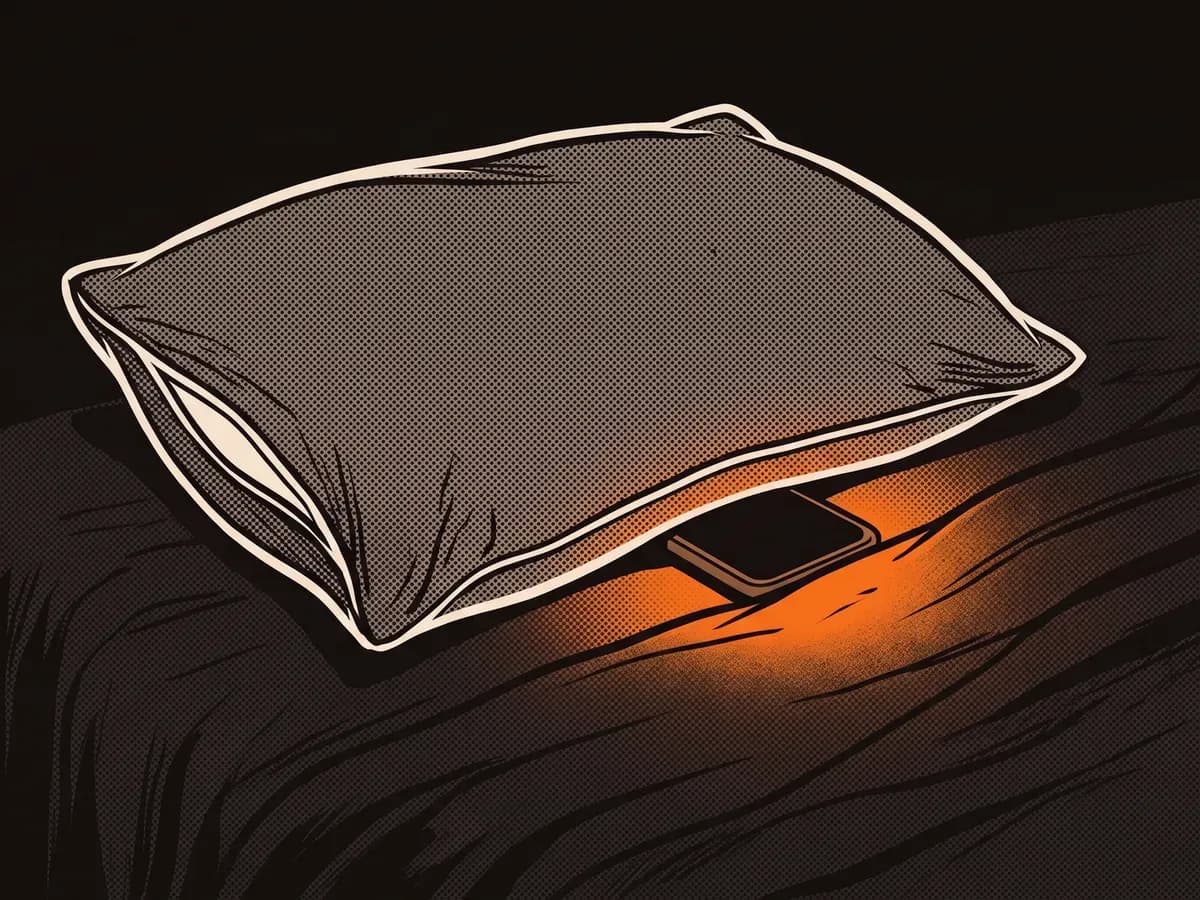
Your brain also learns what comes right before the reward: phone in bed, alone in the house, nothing to do. Those cues can fire a craving before you've decided anything.
Worse, porn crowds out the real thing. Why would you put yourself out there and risk rejection for one potential mating opportunity, when you can get what feels like a dozen right now on your phone, with no chance of rejection? That's why your brain rates porn so highly.
Loop 2: The Relief
Because porn feels so good, it also makes for a great painkiller. It gets you out of your noisy mind. It distracts you from bad feelings. And that gets wired in as a second habit: when I feel bad, I can reach for this thing that feels great, get relief, and at least for a moment feel better.
For a lot of men, shame also plays an important role. Porn is the place where, all of a sudden, you're welcomed. You're allowed to be sexual. You're allowed to be a pervert. Everything is a yes, where in the real world it often feels like everything is a no.
The reality of dating for many men is extremely frustrating. You're swiping endlessly on dating apps. Every swipe feels like a tiny rejection. And the rare moments you do get a match, you exchange a few messages and then get ghosted.
And dating in the real world? Well, people go out less than ever, so the opportunities are thinning. And many young men grew up with a lot of messaging around me-too and stories of evil men victimizing women - valid stories, but they didn't come with a healthy, positive example. So we retreat. Better safe than sorry.
So you're feeling lonely, frustrated and ashamed of your sexual desires because you've been told they are evil and predatory. And porn is the one place where you get relief from that. Where you are greeted with open arms (and legs) and your desires are welcome.
A Personal Struggle
I learned how strong this loop is about a year after I'd quit porn. At this point in time, I'd already done a lot of work on myself and made great strides in recovering from my porn addiction.
That included working on resolving my deeply seated feelings of sexual shame and also working on my dating life. I was in a good place and I felt like I really didn't need porn anymore.
That was until I went through a particularly nasty breakup... I remember a day after we'd already split when my ex wanted to talk on the phone. She really knew how to push my buttons. By the end of that call I felt like crap. I was sad, agitated, angry. It felt like it was all my fault and that there was something deeply wrong with me. In many ways it was a bit like being my teenage self again.
That's when I relapsed. I remember even having a thought like, I just need a painkiller right now. I wasn't reaching for porn because I was horny. I was reaching for porn because I couldn't sit in that emotional pain anymore.
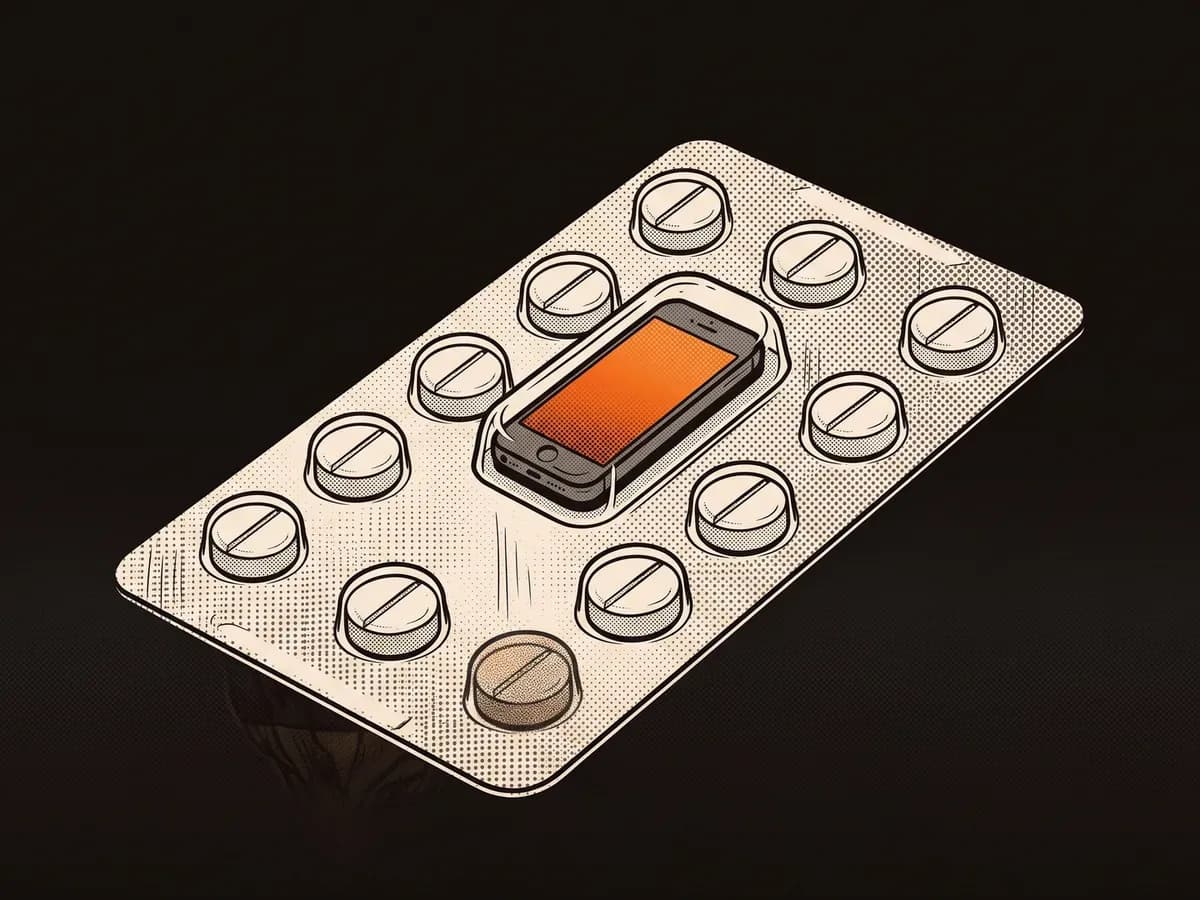
I'm telling this story to illustrate the power of the relief loop: if porn weren't also soothing, if it weren't an escape, it would be much less potent.
What Makes the Reward Loop So Strong?
Three things. Porn never quite satisfies, so the search keeps going. Dopamine keeps teaching your brain the cues that lead to it. And most men started young, when the brain learns fastest.
Why Nothing Satisfies - The Hungry Ghost Experience
If you've been in it, you know what the pull feels like from the inside. At first there's excitement about finding something. Very quickly, that gets replaced with endless seeking. You've got a video running, but you're not even watching it. You're scanning the related videos and opening them in more tabs. You end up spending almost all your time searching and very little of it actually watching anything.
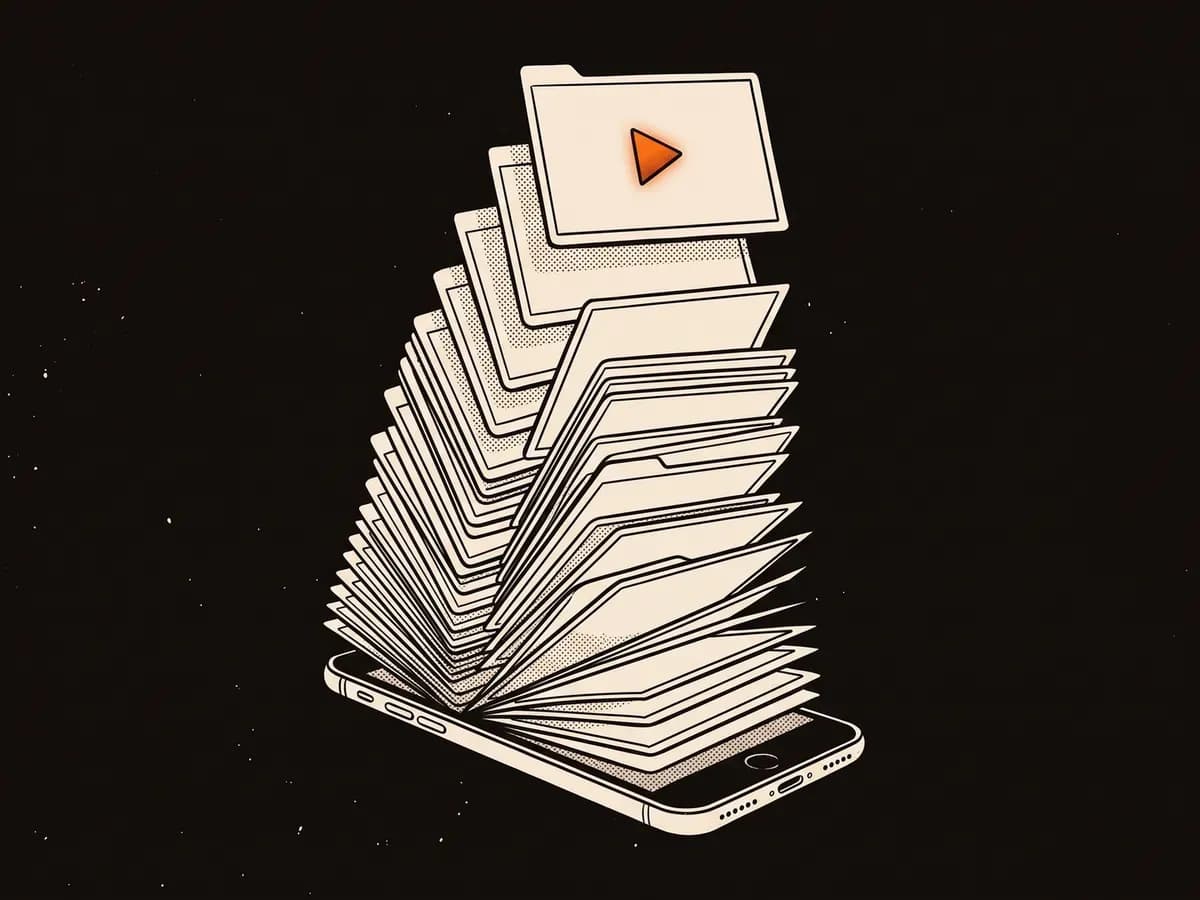
Two small brain-imaging studies fit that picture. In one, men with compulsive sexual behavior wanted explicit videos more than a comparison group did, but didn't like them any more. In the other, men seeking help for problematic porn use reacted more strongly to signals that porn was coming, but no differently to the porn itself. It's like you're looking forward to porn more than you actually enjoy it.
Here's my reading of why. Porn pushes buttons that strongly suggest you're being successful. But it's missing something. There isn't a real person there. There's no emotional connection.
In a cruel twist, porn gives you so much of something you desire, but it also gives you nothing real. So you keep seeking, chasing the next hit, often into more extreme or niche content. For most men I've talked to, that hit never comes back. It's the hungry ghost experience: you're constantly searching and never satisfied.
This strengthens the addictive loop, because satisfaction would mean completion.
Starting Young
The younger you are, the higher your brain's neuroplasticity. That means you learn faster and you pick up new habits more easily. And if your first encounter with the world of sexuality and desire happened with porn, then that became your normal.
I was 13 the first time I saw pornography. In the QuitByHealing survey, 83% of respondents started between 10 and 15. A study that followed 337 Croatian teenage boys found that boys who watched more at the first survey, and whose use kept growing, had more problem use later. So did boys with more negative emotions at the first survey: the relief loop, showing up early.
The age boys first see porn may not have changed much over time, but what they see and how much of it has. A few decades ago, teenage boys would get their hands on a discarded nudie magazine and pass it around. Now, every boy has virtually unlimited access to hardcore porn. Which means that it's much more likely that a habit forms early. In a 2025 survey of 1,020 young people aged 16 to 21 in England, 70% had seen porn online, up from 64% two years earlier, and more than a quarter had seen it by age 11.
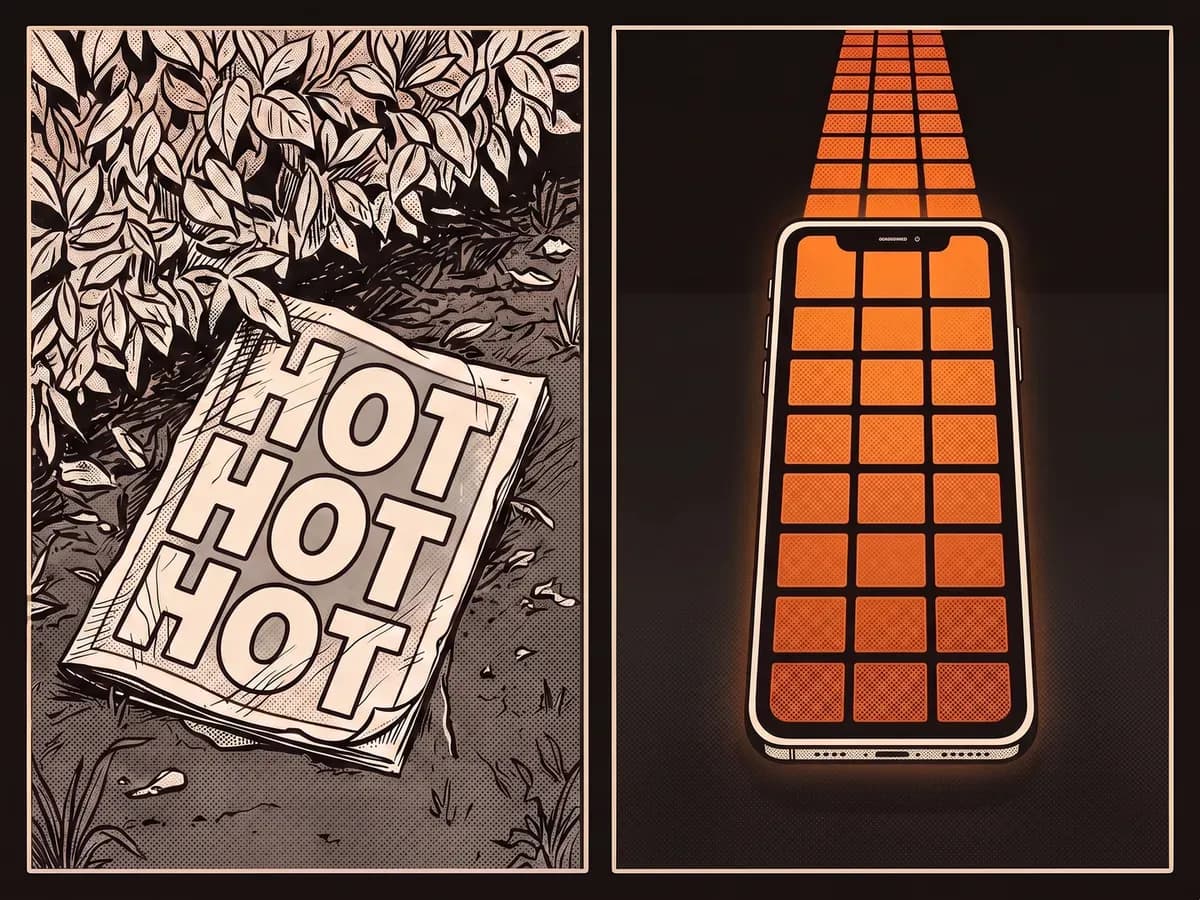
What all this amounts to is yet another reason why porn is so addictive: you likely encountered it early in life, your young eager-to-learn brain formed the habit quickly and that makes it harder to undo.
But none of this is a life sentence. No matter your age, your brain can still change, old habits can still be broken.
Why Do Some People Get Hooked And Others Don’t?
The reward loop works on everyone. What differs is the relief loop: how much pain a man is carrying, and whether he has healthy ways to deal with it.
There's research on this too: in a 2024 survey of 1,002 people, those who struggled more to manage their emotions, and those with more anxious attachment, tended to have more severely problematic porn use.
I see it in my work all the time. The deeper a man is in emotional suffering, the more likely he is to be addicted. When someone comes to me with a severe addiction, I can often see it in his face and posture: he holds so much tension. And as we work together, I can see that tension relaxing and at the same time, the addiction loses its grip.
So what's this emotional pain we're talking about? For most men, it doesn't show up in obvious ways, because we're good at distracting ourselves from it or pushing it down.
The First Indicator: Boredom
Boredom is the trigger men name most often. In our survey, 70% named it as a major obstacle to staying porn-free. But boredom itself is rarely the real cause.
Think about it: boredom is a very mild form of discomfort. It doesn't make sense to assume that you can't handle the feeling of boredom to such a degree that you end up relapsing on this thing you've been trying so hard to break free from. So what's really going on?
It's a common affliction in modern life that we cannot be alone with our thoughts. In every quiet moment, we reach for the phone. And even during low-attention activities like commuting, getting groceries or doing the dishes, we drown out our thoughts with podcasts, music, audiobooks...
The reason for this is that most of us don't like what happens when we slow down and remove all distractions. The first things that bubble up in our minds are often unpleasant. We're reminded of unresolved issues, feelings of inadequacy and regretful memories surface.
My theory is that this is happening because we carry around a backlog of unprocessed emotions. Feelings want to be processed, but we haven't been taught how to do this in a healthy way (this is especially true for men, whose only guidance is some version of "suck it up and keep going").
The more unprocessed emotions in the backlog, the more "dangerous" it feels to have any quiet moment, because if we do, all those things come rushing to the surface.
In my work, I've discovered that there are 5 levels to this which you can picture as an iceberg of emotional pain. Porn (or any compulsive behavior) is the tip and it serves to protect you from having to feel the layers underneath, where each one is harder to feel than the one above:
- Boredom. The door. Not so dangerous in itself, but it lets the rest in.
- Suppressed emotion. Stress, sadness, anger or grief you never learned what to do with.
- Boundary violations. A job, relationship or family situation that keeps crossing a line, and that you feel you can't change. A toxic boss is the classic example.
- Shame and loneliness. Feeling unwanted, alone, not good enough, or that your sexuality is wrong. You do not want to feel your shame, or all the stories that come with it.
- Existential dread. Feeling lost, hopeless, questioning the point of existence itself.
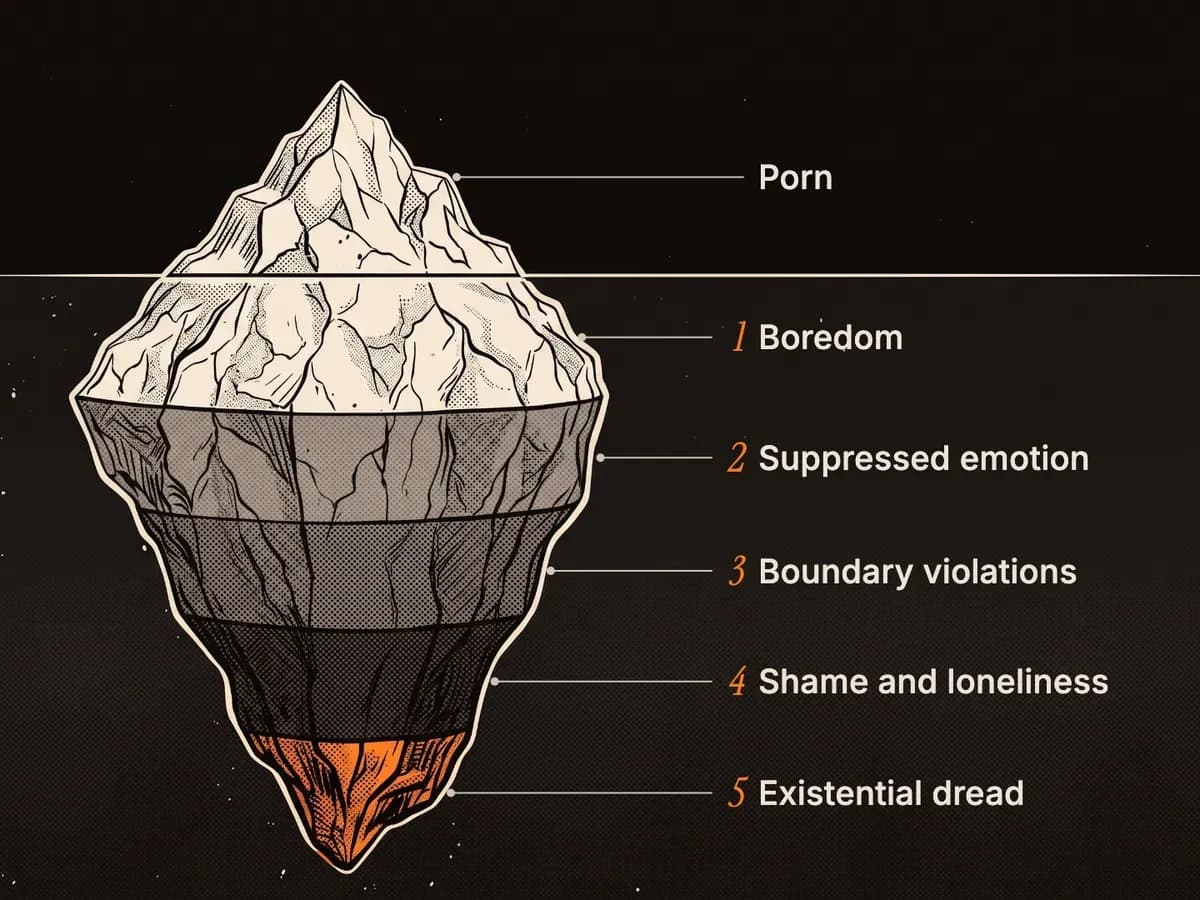
This is why so much of what I teach is about how to deal with your emotions in a healthy way. The better you are at this, the less you need to use porn to distract yourself, soothe your pain or escape the present moment.
A Story of Shame and Little-t Trauma
I want to share my story as an example of "little-t trauma", a term that describes the many small ways we experience pain, disappointment, loss etc. throughout life. You don't need to look for a big, terribly traumatic moment to explain why you're stuck in an addictive loop.
In my case, it seems like there was a wellspring of sexual shame waiting for release. Waiting for a coping mechanism. Honestly, I don't fully know where it came from.
I have the sexual shame and repression of someone who was brought up in a super strict religious household. But I wasn't. All of my grandparents are Catholic. But neither of my parents is strongly religious. I can't remember any time when I was explicitly shamed for my sexuality, there's no dramatic moment of being severely punished because I was caught masturbating or something like that. As best I can tell, there was enough religious guilt and shame left over, as a residue, and I picked up on it.
So in my case porn landed on a psyche that was really interested in sex and, at the same time, felt sex was forbidden, and somehow not for me.
There were also other sources of emotional pain, especially in my teens. I was struggling badly at school and felt like an outsider. I was constantly crushing on girls, but never had a girlfriend. Obviously I'm one of the losers, so why would she?
Then here were the women on the screen, giving me every signal of wanting me, of welcoming me. It was a perfect escape from sexual shame, from feeling unwanted, from the fear of rejection. I believe that's what got me so hooked so quickly.
And I know I'm not alone in this. There's an undercurrent of shame about sexuality (and often overt sexual shaming that affects men differently from women) that runs through many cultures and families.
Loneliness
Shame and loneliness feed each other, and loneliness might be the most common pain I see. In our survey, 53% rated their social life 1 or 2 out of 5. I suspect iPad childhoods, COVID isolation and dating apps have all made this worse. We're disconnected, and that's a driver of addiction.
In single men, the most common thing I see is a wound around their worth as a partner: their attractiveness, their loneliness, the frustration of constant rejection. It sounds like this: I have all this sexual desire and it feels unattainable for me. It's because I'm not good enough, not handsome enough, not successful enough. It's my fault, and there's something wrong with me.
Men in relationships have solved that problem, on paper. But often the relationship doesn't meet their actual sexual needs, because there are parts of themselves they hide from their partner. The hiding comes from shame, and it breeds tension, resentment and a lot of unresolved emotion. What they're missing is the ability to really connect with their partner. (I go deeper on this in Monogamy, Desire, and the Lie That's Fueling Porn Addiction.)
The Opposite of Addiction is Connection
The writer Johann Hari put it this way: the opposite of addiction is not sobriety, the opposite of addiction is connection.
Imagine you grew up feeling accepted instead of criticized and compared. You had real role models, like an athletic older cousin who took you under his wing. When you started getting interested in girls, older guys said, welcome to the club, let's deal with what's going on here. And the girls grew up without being slut-shamed, so your first awkward attempts to flirt had a much better chance of going well.
Given all that, how interested do you think you'd be in porn? You'd still be interested. But it would be unlikely to get you hooked, because you could have the real thing, and the real thing is better.
It works the same way in adult life. Some men walk around almost like shells, and they're the ones most likely to be hooked on something. The ones bursting with life are usually too busy for it. When I'm like that, I rarely end up alone at home and sad, which is exactly when porn use tends to happen.
I talk through this idea in this video:
How Does Shame About Porn Use Keep the Cycle Going?
We've already looked at sexual shame as a driver of porn addiction. What makes it worse is when we add a layer of shame about using porn on top of that.
Shame turns the relief loop into a cycle. Porn gives you a brief moment where your sexuality feels okay and welcome. The shame and guilt afterwards confirm that there's something wrong with you. And that feeling is exactly what you'll want to escape next time.
The loop looks like this:
- Need. Something from the iceberg: boredom, stress, loneliness, rejection, shame.
- Urge. The craving shows up, offering a way out.
- Relief. Porn works, for a few minutes.
- Shame. There's something wrong with you for doing this.
- More need. You feel worse than before, and the loop starts again.
I felt terrible shame about masturbation even before I ever used porn. It felt like a secret I had to keep. And it gets worse if you start watching stuff that's extreme or questionable. If someone saw me watch this, what would they think of me? That drives the behavior deeper and deeper into the shadow of shame.
Why Doesn’t Willpower Fix It?
Almost everyone who first tries to quit porn uses the same approach: willpower, also known as "trying really hard".
And this almost always fails.
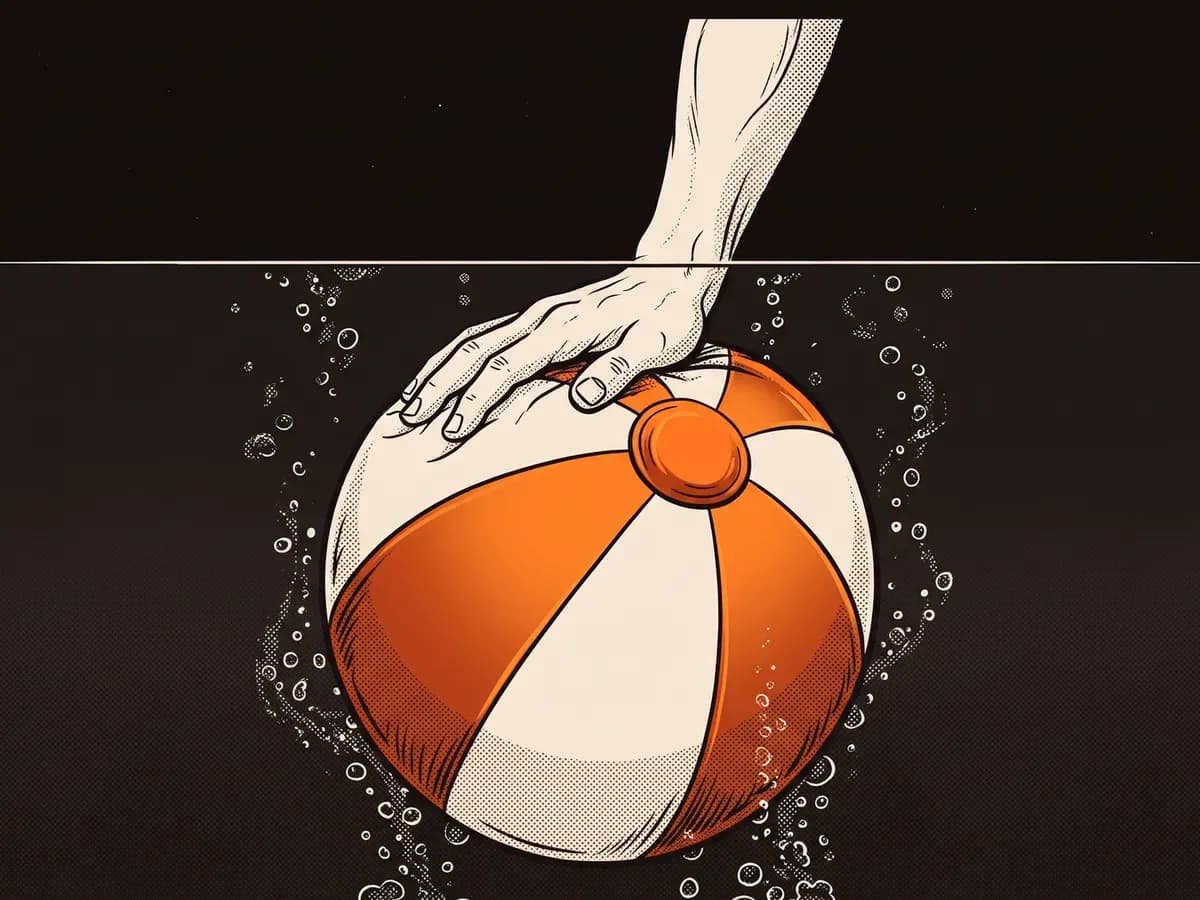
The problem is that willpower leaves both loops intact. The cues from the reward loop still fire. The pain behind the relief loop is still there, and now the painkiller is gone. You may be able to hold out for a surprisingly long time on willpower alone. But eventually, something breaks.
I had a personal experience that really drove this home for me. I was in my early 30s and living in Bali at the time. I was running a successful business, I was in good shape, I'd been pursuing self improvement for a long time at this point and it had paid off... but I was still using porn on an almost daily basis.
I knew this wasn't good for me, so I did what many guys in this situation do: I started a 30-day NoFap challenge. No porn, no masturbation, no sexual activities for a whole month.
I had enough willpower to make it through those 30 days. I sat through strong cravings followed by a miserable flatline, but I didn't break.
It felt so unpleasant that the moment day 31 hit, the first thing I did was watch porn. I remember the relief. It was almost like I'd been holding my breath for 30 days, and finally I could breathe again.
I think this story shows that willpower wasn't the issue, I had plenty of that. But I hadn't done anything to address my underlying issues. I was just depriving myself of something and it didn't feel like this was improving my life in any way.
Now, if I could give younger me some advice, here's what I'd say: quit porn, but allow yourself to still masturbate. Porn is the real problem, so focus on eliminating that. And also, do some introspective writing every day, to process what comes up. Learn to sit with your feelings without forcing anything. Then, see what you feel like after 30 days!
What's Driving Yours?
Look at where your life feels stuck. When I coach men, the answer usually shows up in their work, their relationship or their family: a dead-end job with a toxic boss, a relationship that isn't satisfying, or what am I supposed to do with my life?
If you did the quick check at the top, find your answer here. The first item is the reward loop. The rest are the relief loop, in iceberg order.
- Habit and cues (the reward loop). Urges at the same time and place: phone in bed, alone at home. Where I'd start: notice the cue and change the setup (context-dependent cravings).
- Boredom. Reaching for your phone the moment nothing is happening. Where I'd start: sit still and let the dirt settle for a few minutes.
- Suppressed emotion. Using after a hard day without knowing why. Where I'd start: let yourself feel it: move your body, talk to someone, write, meditate.
- Boundary violations. Using most after work, or after contact with one particular person. Where I'd start: change the situation, not just how you cope with it.
- Shame and loneliness. Secrecy, a crash of self-disgust afterwards, porn as the only place you feel wanted. Where I'd start: real connection (friends, a team, a men's group), and accepting the part of yourself you've been hiding.
- Existential dread. Feeling lost or hopeless, hours of porn and games instead of the life you want. Where I'd start: get heard, get encouragement, and focus on one thing at a time (when you feel hopeless).
Three ways to go deeper:
- Sit still and do nothing. See what comes up. What's the first thing that makes you go, ugh, I don't really want to think about this? That's a hint.
- Do a brain dump. Write down everything you're fed up with, about yourself and your life. Some of it will be an easy rant about your stupid boss. Then you might get to something where you think, oh man, I really don't want to write this. I don't want to admit this. That resistance is a hint that you've found one of the more active causes. (The Introspective Writing Crash Course teaches this kind of writing.)
- Talk to the part that wants to use. There's a part of you that wants to get your life together. And there's another part that doesn't give a shit about any of your life goals. It just wants to use. Can you invite that part in and not resist it for once? What does it want? What does it need? (Shadow work is built around this.)
If something heavy comes up, like old trauma or thoughts that you don't want to be alive, stop the exercise and talk to someone you trust or a professional. If you're in danger, contact local emergency services.
For a fuller read, the free recovery assessment takes about three minutes and shows which pressure point is most likely driving your use.
What Does All This Mean for Quitting Porn?
You now have an understanding of the two different behavior loops (reward and relief) and the various factors that make porn so addictive. But how do you apply all this to help you actually quit?
The reason I've explained all of the above is because awareness itself is a big part of the solution. Once you see that your porn use isn't so much the problem as it is a solution that helps you deal with underlying issues, one of two things happens.
Can I Get a Witness?
Some of your unprocessed emotional burdens just want to be seen. I know that might sound a bit strange, but it's the best way to describe this phenomenon. Say you finally allow yourself to feel some grief that you've pushed down until now. You feel sad, you maybe have a good cry... and then it's done.
Once you finally allow the grief and sadness to be seen and felt, it stops burdening you. It's no longer lurking in your emotional backlog, threatening to bubble up to the surface any time you aren't distracted. It no longer needs constant soothing.
The same is true for underlying issues such as sexual shame. A big part of the solution is to actually allow yourself to feel those feelings and to stay with them long enough to see what comes next.
Often, what comes next is simply relief.
But sometimes, what comes next is homework.
There's Work to Do
The difficult emotions that come up will sometimes point you to something that needs to change in your life.
For example, some men I've worked with have come to realize that they've kept many of their desires secret from their partner. They're afraid she'll be disgusted. And so, they "need" porn as an outlet, to get relief from this shame and to have a place for these unmet desires to go.
When this comes up, there's work to do. The oftentimes scary work of actually allowing your partner to see parts of you that you've kept hidden. Which also means entering into deeper intimacy with them (and that's a whole scary proposition of its own).
That's just one example. Your underlying issues might point you to other areas of your life. Maybe it's a toxic work or personal relationship that you finally have to do something about. Or it's time to stop coasting and start pursuing meaningful and challenging work. Or countless other things.
A Note on the Evidence
Most of what's here comes from my own recovery and my work with men. The research I've linked mostly shows associations, and our survey is a self-selected group of people who came to us for help. "Porn addiction" isn't a formal diagnosis either: the closest is compulsive sexual behavior disorder in the WHO's ICD-11. I make the case for calling it an addiction anyway in Is Porn Addiction Real? If you're dealing with trauma or depression, please talk to a doctor or therapist.
What I Wish Someone Had Told Me at 20
I wish someone had helped me understand that it's not my fault I got hooked on porn, because it's a highly addictive thing. But also, in no uncertain terms, that it was doing harm to me, and that the more I did it, the more problems I'd face in the future.
And I wish someone had helped me understand how much of a driver sexual shame was in my specific case, and helped me work through it, so that I wouldn't have felt alone in this struggle. That would have made a huge difference for me.
So let me ask you: what is porn doing for you right now?
Sources
- Voon V et al. (2014). Neural correlates of sexual cue reactivity in individuals with and without compulsive sexual behaviours. PLOS ONE.
- Gola M et al. (2017). Can pornography be addictive? An fMRI study of men seeking treatment for problematic pornography use. Neuropsychopharmacology.
- Fernandez DP et al. (2023). Effects of a 7-day pornography abstinence period on withdrawal-related symptoms in regular pornography users. Archives of Sexual Behavior.
- Rousseau A et al. (2021). Theoretical antecedents of male adolescents' problematic pornography use. Journal of Sex Research.
- Children's Commissioner for England (2025). "Sex is kind of broken now": children and pornography. Online survey of 1,020 people aged 16 to 21.
- Wizła M, Lewczuk K (2024). Attachment insecurity, emotion regulation difficulties and compulsive sexual behavior disorder or problematic pornography use. Archives of Sexual Behavior.
- O'Neil E (2025). The Geography of Isolation. Third Place Index.
- Slavin MN et al. (2020). Child sexual abuse and compulsive sexual behavior: a systematic literature review. Current Addiction Reports.
- Kraus SW et al. (2018). Compulsive sexual behaviour disorder in the ICD-11. World Psychiatry.
- Bőthe B et al. (2020). High-frequency pornography use may not always be problematic. Journal of Sexual Medicine. (Supports the FAQ answer on whether watching is unhealthy.)
- QuitByHealing recovery assessment, June to August 2026, 89 respondents, self-selected.
Frequently Asked Questions
Why is porn so hard to quit?
Because it does two jobs at once. It's a supernormal reward your brain learns to want fast, and for many men it's also their main way to escape stress, loneliness or shame. Quitting takes away the relief without meeting the need underneath, so the pull stays strong until that need gets dealt with.
Is porn addiction real?
It's recognized, though not under that name. The WHO's ICD-11 includes compulsive sexual behavior disorder, which covers out-of-control porn use, and files it as an impulse-control disorder. The DSM-5 doesn't include it. Whatever the label, millions of men keep doing something they can see is harming them, and can't stop. That suffering is real.
Can your brain recover from porn?
Yes. Brains keep changing throughout life, and a habit learned young can be unlearned. The research so far doesn't show that porn causes lasting brain damage. If you've been hooked for many years, expect change to take a while, and in my experience it goes much better with a plan than with willpower alone.
What happens when you stop watching porn?
It varies. Many men notice strong cravings at first, and some go through a flatline with low libido. A seven-day randomized trial found no average withdrawal effect in regular users, though it studied university students, mostly without serious problems. The feelings you used porn to avoid often come up, and that's useful information about what's driving you.
Is watching porn unhealthy?
Research shows plenty of people watch without clear problems, and how often you watch doesn't define a problem by itself. In my view porn is still bad for you, because it trains your sexuality around a screen and crowds out real connection. It's a clear problem when you can't control it, it harms you, or it's your main way of coping.
Is porn addiction caused by trauma?
Not necessarily. Studies find childhood sexual abuse is linked to a higher risk of compulsive sexual behavior, but they can't show it's the cause for any one person. Many men get hooked without dramatic trauma. In my case, a background of shame about sex, loneliness and feeling unwanted was enough.
Is porn addiction a dopamine addiction?
Dopamine is part of it. Its main job is wanting and learning: it drives the search and helps your brain learn the cues that lead to porn. What makes porn so sticky is that it also brings relief from bad feelings. The idea that porn permanently damages your dopamine system isn't supported by the research.
Why am I addicted to porn?
Usually because porn is doing a job for you: relief from boredom, stress, loneliness, rejection or shame. Try sitting still for a few minutes, or writing down everything you're fed up with, and notice what you least want to look at. That resistance often points to the cause.
About the Author
Shane is a serial entrepreneur with a long-standing obsession for personal development and life optimization. He has a habit of buying more books than he can ever read. During his childhood his worldview was significantly influenced by Jackie Chan movies, the Vorkosigan Saga and the writings of Miyamoto Musashi.

Shane Melaugh
There is a Better Way to Quit.
Stop relying on sheer willpower. Learn the step-by-step psychological framework that makes quitting inevitable.