Feeling Hopeless? The Relapse Trigger Nobody Talks About
Hopelessness is one of the biggest hidden drivers of addiction relapse. Viktor Frankl came out of a Nazi death camp with two specific techniques that shift your state without requiring the world to get better first.
 Shane MelaughPublished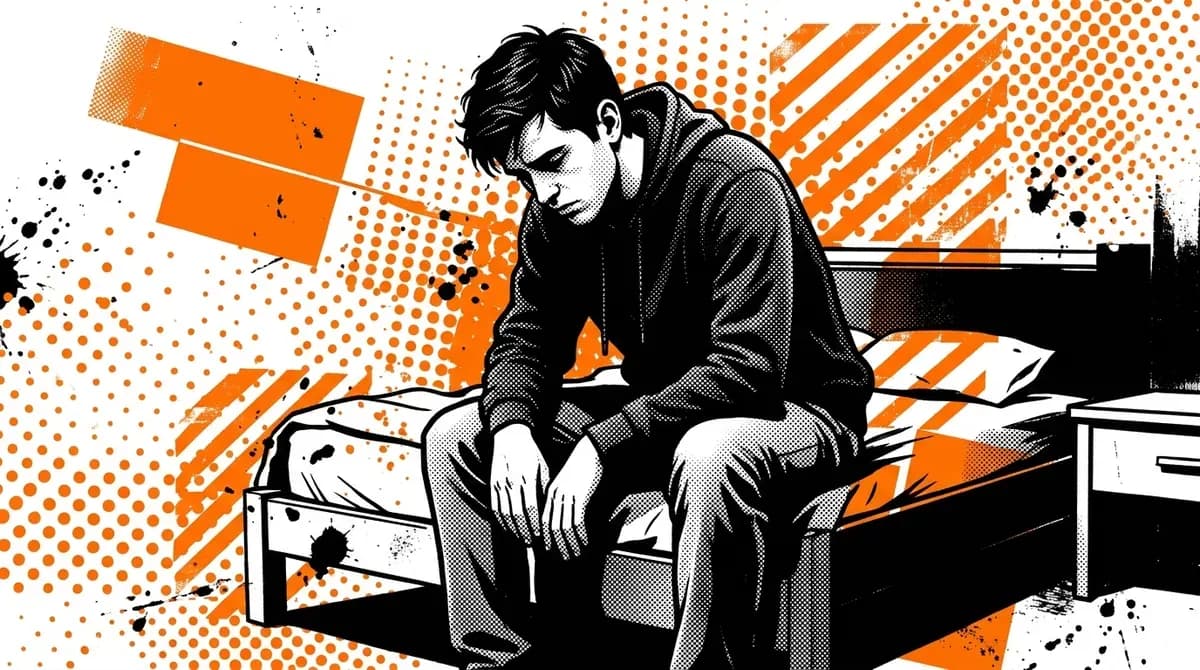
Scroll through your feed and you'll probably find content about at least one active war, a political meltdown, an AI jobs apocalypse, and a housing market update (hint: you won't ever be able to afford a home) in short succession. Mixed in with some content about how you're not jacked enough, not rich enough and don't have a sharp enough jawline to ever make it.
And in the middle of all that, you're trying to improve yourself...
You're struggling to build good habits. You're slaving away at your studies, your job, your side hustle. You're trying to quit your bad habits - quit porn or alcohol or whatever your favorite poision is.
And somewhere in the background, a voice says:
What's the point of any of this?
In a world that feels hopeless, why even try?
TL;DR: Hopelessness is a primary driver of relapse. Researchers call it the Existential Escape Hypothesis. You don't need the world to get better to fix this. Two specific techniques from Viktor Frankl's research (de-reflection and pro-social micro actions) can shift your state in minutes and break the self-reinforcing cycle that keeps you stuck.
How the Feeling of Hopelessness Makes You Relapse
The conventional conversation about addiction recovery focuses on cravings, triggers, and withdrawal. It mostly skips over something more fundamental: the "what's the point" feeling that makes you want to torch your streak entirely.
Researchers have a name for this: the Existential Escape Hypothesis.
We all (at least occasionally) have to deal with terrifying feelings about existence: mortality, meaninglessness, a world spinning out of control. Rather than sit with them, we reach for whatever numbs them. Terror management research reveals the pattern: the more aware we become of our own vulnerability, the stronger the pull toward escape behaviors.
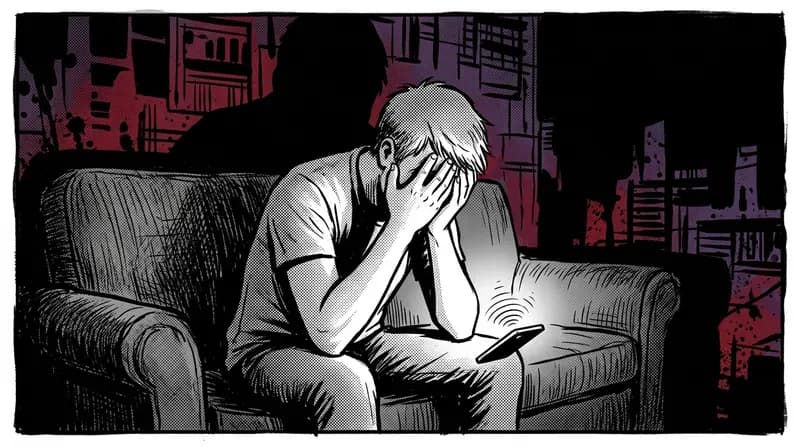
Unfortunately, the escape strategy makes things worse, not better. The more you numb out, the more dysregulated your nervous system gets. The more dysregulated it gets, the more overwhelming everything feels. The more overwhelming everything feels, the harder it is to resist numbing out again.
It's a loop that tightens on itself.
If you've ever tried to quit porn or any other compulsive behavior, you've experienced this for yourself. Even if you're motivated and normally have decent amounts of self control, you have these moments of weakness where you relapse anyway.
It's not always a matter of cravings or urges. It's more about using the addictive thing to numb out, so you don't have to feel these feelings of hopelessness and dread.
If you've ever thought screw it, what's the point right before falling back, this is what was happening.
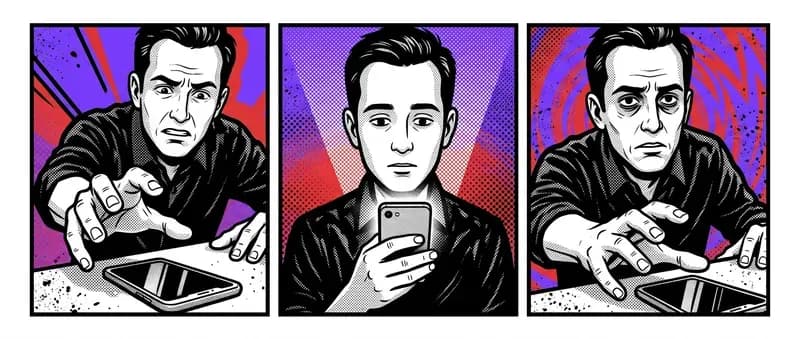
We're also seeing this play out on a massive cultural scale. Six to nine hours a day on screens, on average. This isn't because our phones are so great, it's because we have such a strong need to numb out.
A 12-week longitudinal study tracking smartphone use found consistent associations between heavy phone use, elevated stress, and worsened mood. In addition to the phone as the favorite mode of escape, most people need multiple coffees to function and something to come down in the evening. Use of opiods are steadily climbing... Basically, nobody's coping particularly well.
And the better-informed you are, the worse it gets. Your news feed adds to the endless anxiety.
How Can You Stop Feeling Hopeless?
There are two practical tools I want to share with you, that can shift your mind away from doom and gloom and towards more possibiliy and lightness.
But before we get to those, there's one important mindset shift that made a huge difference for me. This isn't so much about something you do as it is a different way to view the world.
You see, a lot of our misery and anxiety comes from one simple thinking mistake we tend to make. And it's a mistake that keeps getting reinforced by media, news stories, social feeds etc.
The story is that A) things are bad and getting worse and B) things used to be better.
Was There Ever a Time When Things Weren't This Hard?
Have you ever thought something like: things are uniquely terrible right now, worse than ever, and if only I'd been born in a different era...
That story is understandable. It's also wrong.
To illustrate, let's take one problem that people love to complain and worry about: the housing crisis.
This is a real problem and it's affecting many people, especially younger people.
It's true that even people with decent careers can't afford homes without going into crushing debt. And if you can't afford a home, that raises questions about settling down and starting a family. These are real, existential questions.
But this reality comes packaged with a stroy that tells us previous generations just floated through life on affordable mortgages and economic tailwinds.
My grandparents' generation could buy a nice home on a working-class salary, no problem. That's true. And then, they saw the value of that home increase pretty much non-stop for decades. That's also true.
And here's another little detail that's equally true: they had to go fight in a world war. They watched friends die. They risked death and mutilation on the front lines. And then, yes indeed, they came home and bought cheap houses. The ones that made it, anyway.
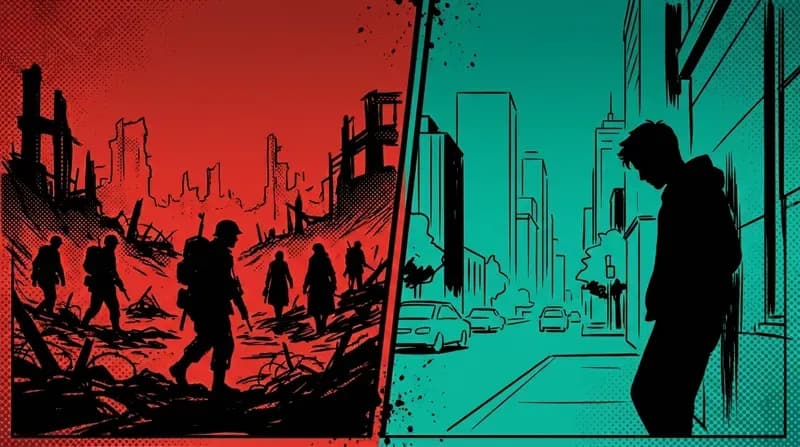
Take a moment to think about that.
Would you take that trade? Would you go risk your life in a bloody war for a few years in exchange for cheaper housing?
I wouldn't.
Which means: I'd rather be me than my grandparents.
And what about other generations? We love to rag on the boomers for having it easy. They didn't have to deal with WWII.
But the boomers had their own wars (Vietnam draft, anyone?). They had their own recessions, epidemics, crises... Every generation has.
No matter how far back in history you go, you find humans having to deal with incredibly difficult challenges. Wars, conquests, plagues, famines, ice ages...
The golden era where everything was comfortable and manageable has never existed. It's always been hard.
This is important to realize: you do not have to wait for external circumstances to improve before taking back control. The challenges are real. They've always been real. And human beings are extraordinarily capable of surviving difficulty and finding meaning inside it. We've been doing this for millennia. The question is whether you have the tools to navigate your current state.
The best evidence I know of comes from an unlikely source.
Two Techniques From the Man Who Found Meaning in a Death Camp
Viktor Frankl was a neurologist and psychiatrist. He was also a Holocaust survivor, a prisoner in Nazi death camps who watched most of his family killed. And instead of being destroyed by that, he spent the rest of his life studying what gives human beings a sense of meaning and what keeps people going even in the worst possible circumstances.
His research produced two specific, practical techniques you can use right now. The central insight has held up: meaning in life is now recognized as one of the most robust protective factors against depression, anxiety, and addiction.
Technique Nr. 1: De-Reflection
The Existential Escape Hypothesis describes what happens when you collapse inward, cycling through my problems, my future, how everything out there is affecting me. That loop of self-concern is the engine of hopelessness. Running it repeatedly makes it worse.
Frankl's concept of de-reflection is about moving your attention away from that inward spiral and toward something that pulls you outside yourself.
Here's what most people get wrong: they think any distraction does this. It doesn't. Scrolling your feed is still running the self-concern loop, because your algorithm is tuned to your existing anxieties. Half the things making you feel hopeless probably came from that feed in the first place.
But I have great news: de-reflection isn't some dry, difficult self improvement chore. It's not another thing you "should" do.
In fact, one of the best ways to do it is to get immersed in a really good story. Go watch a great movie. Or better yet: read a novel you can get totally absorbed in.
The immersive quality of a long-form story requires you to step outside your own frame and into someone else's.
After a bad news day, one of those afternoons where everything feels pointless, nothing recalibrates you faster than a couple of hours with a good book.
But I get it: reading a book can be challenging when you're deep in a doom-scroll hole and accustomed to the swipe-swipe-swipe kind of hyper-stimulation. So start with a movie.
Let yourself get pulled into a movie and watch it without distraction. Best case scenario: the story is so good that you wish it didn't end so soon. That's good motivation to reach for a book, which you know will last longer.
Technique Nr. 2: Pro-Social Micro Actions
Pro-social micro actions are small things you do for other people. Examples from studies include:
- Sending a note of appreciation to someone.
- Celebrating someone else's success.
- Reaching out to a friend who's struggling and offering to listen.
- Making someone a small gift.
- Bringing someone a coffee.
- Volunteering.
Doing this has been shown to shift your state away from doom-and-gloom very quickly and give you a new sense of aliveness and connection.
In a way, this is the active version of the same principle as in the first technique. You're moving your focus away from self-concern, but this time in a more active manner.
A really simple step you can try right now is: send someone a genuine appreciation message.
Make sure it's not generic - don't just send "hey, hope you're well." or something like that. Instead, think of a highly specific way to express your appreciation for someone.
For example, I might text a good friend something like: "hey, thanks for being there for me the other day. I really appreciate how reliable you are and how you always have my back."
That takes sixty seconds and it can make someone's entire day.
It seems paradoxical but it works every time: the moments when you most want someone to reach out and appreciate you are exactly the moments when doing it yourself works best. When you're feeling unseen and depleted and wishing someone would notice, inverting it and doing it for someone else shifts your state more directly than waiting.
It's not about suppressing your own need. It's about recognizing that acting outward is a more reliable path to feeling better than waiting for the world to respond to your inner state.
For anyone doing the deeper work of addressing the underlying wound that drives the addiction, these practices aren't extras. They're part of the foundation. Practical tools for breaking the self-concern loop in the moments when hopelessness is most likely to cost you your recovery.
The world is going to keep being what it is. Crises aren't going away. You don't have to wait for them to.
Try the appreciation message tonight. Whoever comes to mind first, send it. See what happens.
About the Author
Shane is a serial entrepreneur with a long-standing obsession for personal development and life optimization. He has a habit of buying more books than he can ever read. During his childhood his worldview was significantly influenced by Jackie Chan movies, the Vorkosigan Saga and the writings of Miyamoto Musashi.
Shane Melaugh