Is "Porn Addiction" Actually a Real Addiction? Settling the Debate
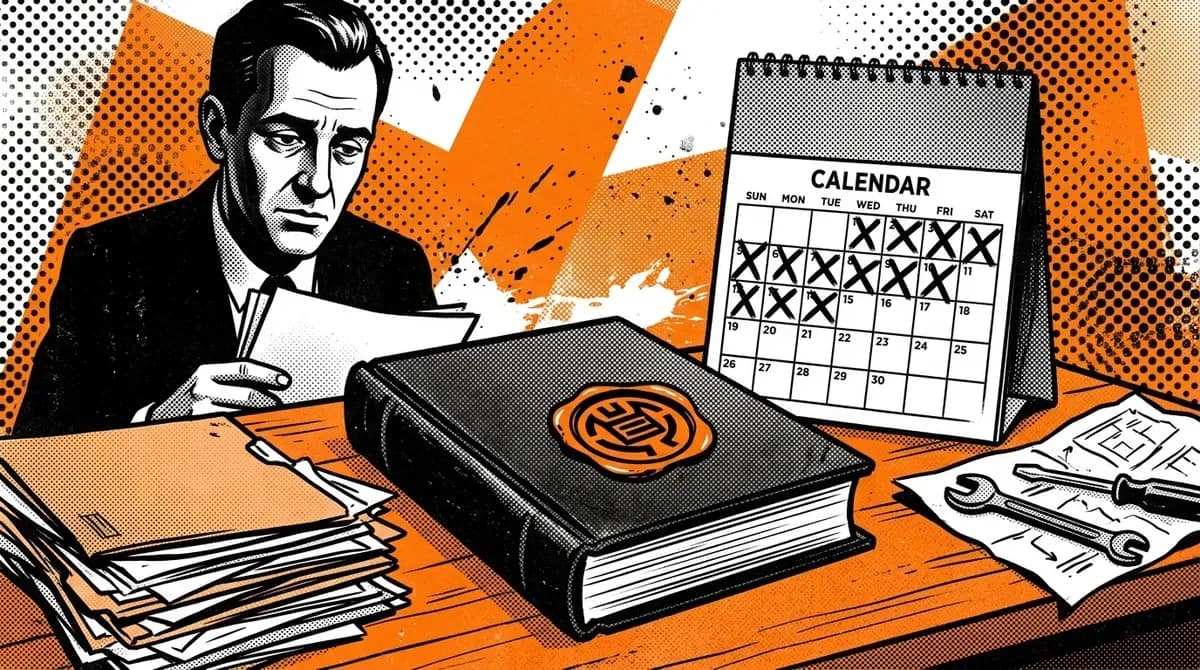
You post something on social media about the problem of porn addiction, and within the hour someone's in your replies: "it's not even a real addiction, bro." They link a thread. They quote a psychologist they half understood. They feel very smart.
That's roughly how this conversation goes online, every time. Someone admits to genuine suffering, and someone else shows up to argue about paperwork. Is it really addiction, though? becomes a big debate while distracting from the real issues.
So, let's settle this question once and for all: is porn addiction a real addiction or not?
TL;DR: The "porn addiction isn't real" argument leans on a technicality (it's not officially in the DSM) that falls apart under scrutiny. But the technicality was never the point. What actually tells you if you have a problem isn't a manual, it's whether you can quit for 30 days. Most men who try, can't.
Is Porn Addiction Listed in the DSM?
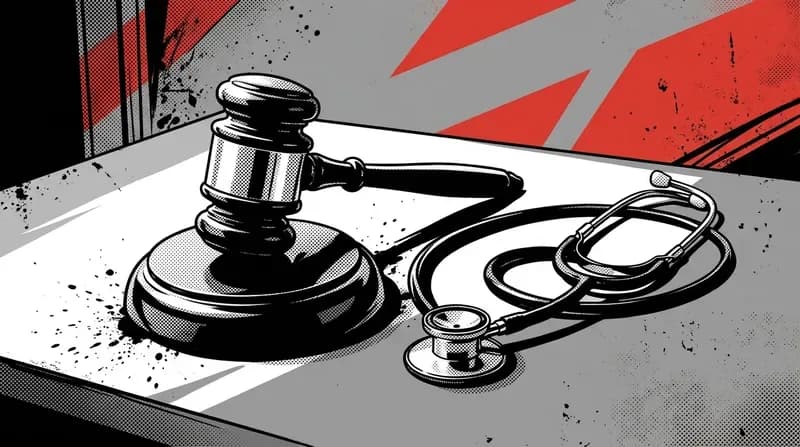
The DSM-5 or "Diagnostic and Statistical Manual of Mental Disorders" is sometimes referred to as the Bible of Psychiatry. The DSM lists conditions like Major Depressive Disorder (MDD) and Borderline Personality Disorder (BPD) but it does not include an entry for Porn Addiction.
This is one of the reasons you'll see people make the "it's not a real addiction" argument.
But it's a weaker argument than it sounds, because the DSM is not the ultimate source of truth for what is and isn't real. It's less an objective scientific register than a document built through professional consensus about symptom clusters, not lab tests.
In practical terms, it's mainly a legal and insurance document. It determines what treatments are covered by insurance companies and who can be sued for malpractice.
That's a useful thing for a manual to do. It is not the same thing as an objective register of what's real and what isn't. Plenty of conditions have waited years, sometimes decades, to get added, not because they weren't real, but because the committee process is slow and political.
Also, if you like legal definitions, this one is worth considering: The ICD-11 (International Classification of Diseases 11th Revision, the World Health Organization's big fat manual of health conditions) lists Compulsive Sexual Behavioral Disorder, and it explicitly covers compulsive porn use. So even on the "which official book says so" playing field, the skeptic loses. They just didn't check the other book.
Doesn't Real Addiction Require Dangerous Withdrawal?
Here's another argument you'll often see: if you were to lock someone with a severe heroin addiction in a room, with no way out and no way to access their substance, they'll suffer extreme and even dangerous withdrawals. In fact, quitting cold turkey without medical supervision could even be fatal.
But if you lock a porn addict in a room with no way to access porn? They'll probably have a miserable week, but withdrawals certainly won't kill them.
They would not be in medical danger. No fevers, no seizures, no metabolic crash, nothing close to what happens with opioid or severe alcohol withdrawal.
That's honestly the strongest version of the skeptic's case, and I don't hear it nearly as often as the DSM one. Credit where it's due.
It still doesn't hold up.
Why?
Because addictions are not defined by the severity of withdrawals.
Case in point: nicotine is one of the most addictive substances we know of, and quitting it doesn't put you in a hospital bed. On the other hand, gambling has no substance in your bloodstream at all, and the DSM still classifies it as an addiction. "Dangerous withdrawal" or "chemical dependency" is not connected to whether something is addictive or not.
But More Importantly, None of This Actually Matters
I've just brought some perspective to the debate, but it won't stop people from debating. Instead of listing ever more arguments and counter-arguments, I want to get to the actual heart of the matter. Which is: whether porn addiction is a "real addiction" or not simply doesn't matter.
What matters is the struggles and suffering of individuals who are excessive porn users.
If the DSM added porn addiction as an official diagnosis tomorrow, nothing about your life would change. You wouldn't be more or less addicted than you are right now. You wouldn't be suffering more or less than you already are. A new line in a manual doesn't erase erectile dysfunction, doesn't restore your ability to feel present with a partner, doesn't clear the brain fog, doesn't lift the low motivation or the flat, grey mood (a.k.a. dopamine depletion) that heavy users often experience.
Official researcher papers mostly avoid the word "addiction" and use "problematic pornography use" instead. It's not because the researchers don't think it's serious. It's their way of sidestepping a semantic fight while still describing something that clearly causes harm and is hard to escape. Which, if you think about it, is a very academic way of doing exactly what this article is trying to do.
The One Caveat: Don't Make "Addict" Your Identity
There's one thing worth noting about using the term "addiction": it's a heavy word.
Calling porn use "just a bad habit" instead of "an addiction" can make change feel more available. A habit may feel easier to break, while an addiction may feel like a permanent prison cell.
I mention this because while addiction makes us suffer, we can also get kind of comfortable in our suffering.
"Poor me, I'm a porn addict, my brain is broken, my life is ruined, what can I possibly do about it..." the story goes. It can become an excuse to stay stuck. "I can't quit anyway, so why even try" becomes one of the common beliefs that keep you stuck.
If you notice that pull toward feeling like a victim, the move isn't to shame yourself out of it. It's to get curious about the part of you that wants to hold on to this identity. What is it protecting you from? What does it let you off the hook for? My free shadow work course walks through exactly this kind of inquiry. That question opens more doors than "just stop calling yourself an addict" ever does.
The Challenge: How to Know if Your Porn Use is Problematic or Not
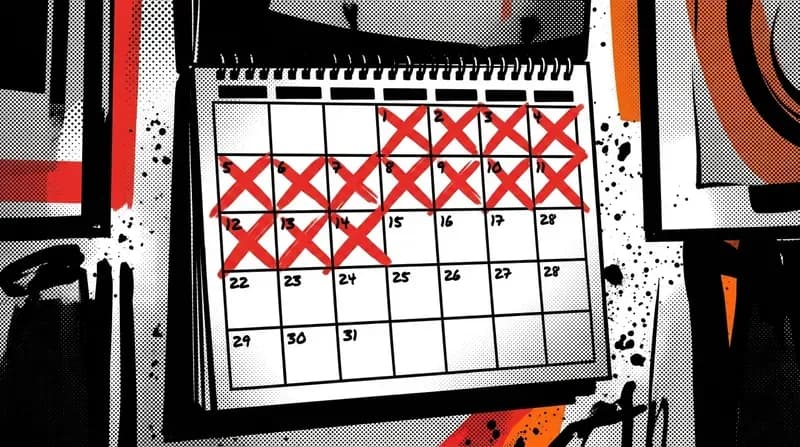
Forget the definitions. Here's the actual test. Decide to stop watching porn for 30 days, starting today, and see what happens. Not cutting back, no weaning off. Just full stop, right now. Then pay attention to what happens.
For most guys, this is hard to do. In fact, the majority of men who will tell you that they aren't addicted to porn will fail this simple 30 day challenge. And what does that tell you?
Compare that to pizza. I love pizza, no qualifiers. You probably do too. And even if you really, really like pizza a lot, I bet you could easily NOT eat pizza for 30 days. Heck, you probably routinely go 30+ days without eating pizza, without even trying.
There are many pizza lovers in the world. There are no pizza addicts. On the other hand, there are millions of men who don't even like porn that much, who would like to stop using it, but who just can't make it happen. Liking something a lot isn't the same as being unable to stop.
Call it what you want, I use the word "addiction" because that's what it describes.
So skip the debate next time it shows up in your replies. Ask yourself two questions instead: is my use of porn causing harm, and would I be better off if I wasn't a heavy user? If the answer points toward "stop," my full step-by-step recovery process is here to help you.
If you already know the honest answer, you don't need the DSM's permission to act on it.
About the Author
Shane is a serial entrepreneur with a long-standing obsession for personal development and life optimization. He has a habit of buying more books than he can ever read. During his childhood his worldview was significantly influenced by Jackie Chan movies, the Vorkosigan Saga and the writings of Miyamoto Musashi.

Shane Melaugh
There is a Better Way to Quit.
Stop relying on sheer willpower. Learn the step-by-step psychological framework that makes quitting inevitable.