How to Stop Gooning: Quit the Trance, Not Just the Porn
Want to stop gooning but keep losing whole nights to it? The pull usually comes from the trance more than the porn: for a few hours it switches off stress, loneliness and boredom. Five practical steps to stop, what to expect when you quit, and when to get help.
 Shane MelaughPublished Updated
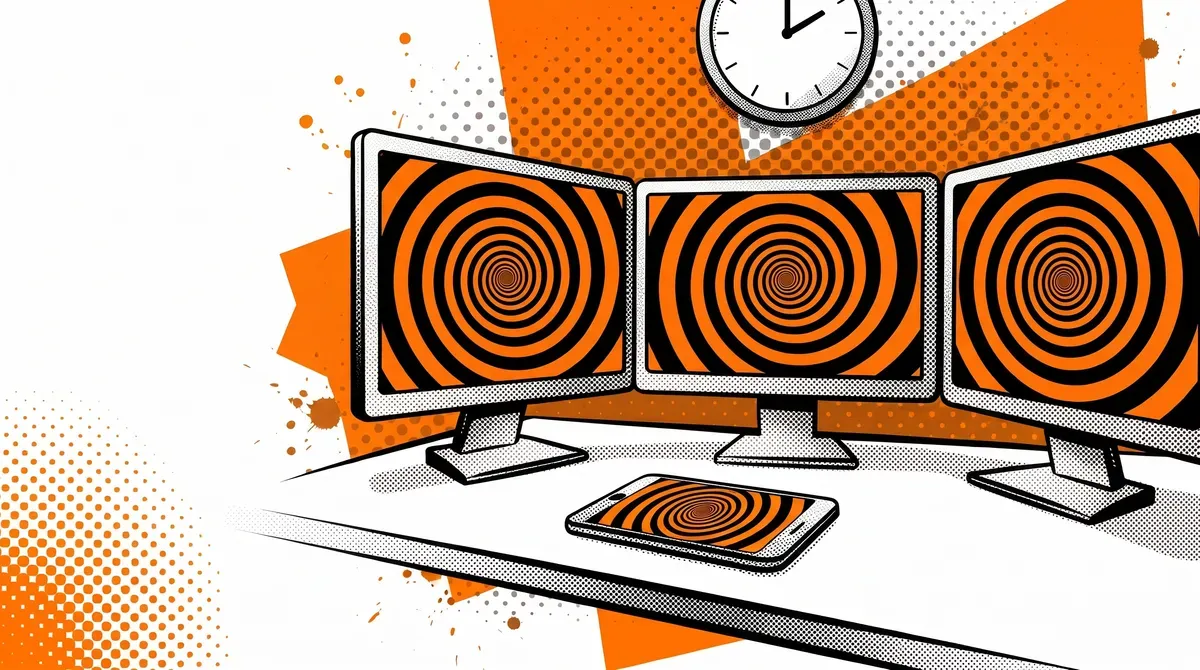
You sit down for a few minutes. Maybe it's been a long day, maybe there's just nothing else going on. Then you look up and it's 2 a.m., you've got more tabs open than you can count, and you feel worse than when you started.
If you're here, you want to stop. And wanting to stop hasn't been enough.
TL;DR: Gooning is hard to stop because the trance is doing a job for you: it switches your feelings off. So stopping means two things: making the trance harder to slip into, and learning to handle what it was switching off.
First, Know What You're Actually Quitting
Gooning means long masturbation sessions, usually to porn and often on several screens at once, where you hold off finishing to stay in a switched-off, trance-like state people call the "goon state". It's also an online scene with its own slang and communities.
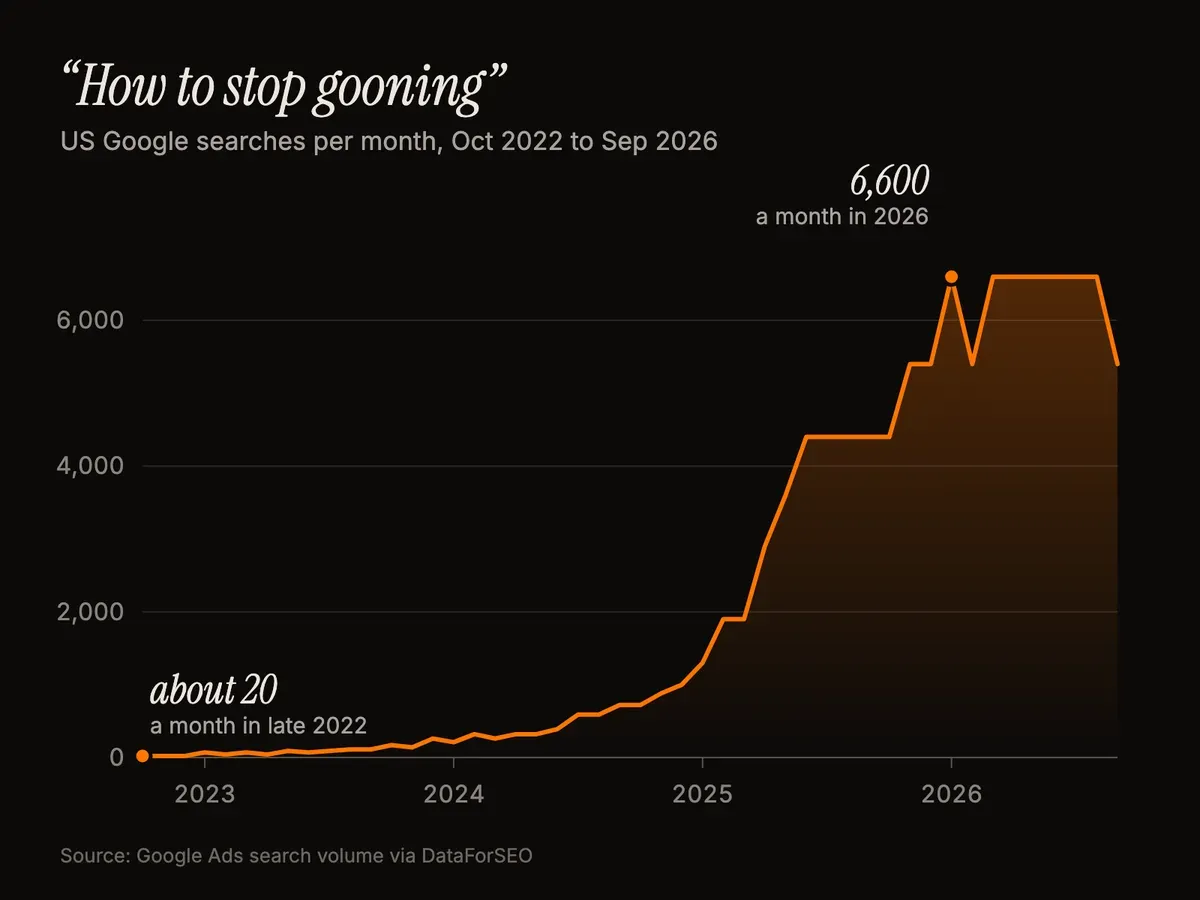
Some people do it without any distress, and I'm not here to lecture them. This article is for you if you want to stop, or you're worried about how much of your life it's taking. If that's you, you're far from alone: in the US, Google searches for "how to stop gooning" went from about 20 a month at the end of 2022 to about 6,600 a month in 2026.
The porn is the delivery system. What you're hooked on is the trance.
When I was deep in my own porn addiction, it was never about one clip. I was displaying what I call hungry ghost behavior: frantically seeking, and most of the time not finding what I was looking for. I'd have so many tabs open, searching and searching. Using porn felt like scratching an itch that gets itchier the more you scratch it.
So why did porn have such a grip on me? Because it gave me relief. I wasn't doing well. I was lonely, I was struggling with money, I didn't have a job. Anything that gave me a break from all that was extremely appealing, and for me, that thing was porn.
But the relief never lasts. A session might take 30 minutes, and then it's over and you're back in your life, feeling everything you were trying not to feel. So what if you could stretch the relief out? What if you could keep that switched-off, distracted state going for hours instead of minutes? That's gooning.
Gooning itself hasn't been studied yet, but research on problematic porn use backs this up: using porn to escape stress and bad feelings goes with losing control more than how often you use it does (Csányi and colleagues, 2026).
Why Gooning Is So Hard to Quit
Gooning rarely starts as gooning. In my experience, and with the men I've talked to, the excitement of finding something gets replaced with endless seeking. One clip becomes ten tabs. Ten minutes becomes three hours.
If that sounds familiar, you're not alone. Researchers see the same pattern in large groups of men. In two big samples from the US and UK, edging, jumping between clips and multi-hour binges tended to go together, and needing more porn or more time to get the same effect was the main link to losing control (Ince and colleagues, 2024). Another study found that how long someone's longest session lasted predicted whether they sought treatment (Lewczuk and colleagues, 2021).
Edging as a Loophole
If you've ever tried NoFap, you know the rule: the streak resets when you finish. So edging starts to feel like a way to keep the streak alive and still get your fix. Lots of guys make exactly this trade to protect a streak, and it backfires.
Edging doesn't make porn safer. When you edge to porn, sessions stretch out and you keep clicking for something new, which is exactly the pattern in the research above.
The fix I recommend is to count your porn-free days, and make getting that count to 100 your priority. If you view anything pornographic, it goes back to zero. It doesn't matter if you looked for a long time or a short time, or whether you finished.
Masturbating without porn doesn't touch that count. You can keep doing it as much as you want, because masturbation isn't the problem here (I explain why in this video). If you also want to quit masturbating, count those days separately. The porn-free count still comes first.
And if the porn-free counter does reset, your progress doesn't. Step 5 covers why that difference matters so much.
Shame Feeds the Addiction
You cannot shame yourself out of an addiction. The shame itself feels really bad, and the addictive behavior is one of the ways you escape bad feelings. So the harder you beat yourself up after a session, the more you need the next one.
With gooning there's an extra twist. Part of the online scene treats being "addicted" to porn, and giving in to it, as part of the turn-on (Monea, 2024). So the harsh "your brain is melting" style of quitting advice can end up feeding the very thing it's trying to stop.
That's why everything below is built on being honest about the habit and kind to the person doing it.
How to Stop Gooning: 5 Steps
Steps 1 and 2 make the trance harder to slip into. Steps 3 to 5 deal with what it was doing for you.
Step 1: Notice the 10 Minutes Before
Every session starts before you open anything. Something happens first: a feeling, a place, a time of day.
You can start right now. Think back over your last three sessions, or everything from the last week, and for each one write down three things:
- Where was I? (bed, desk, couch, bathroom)
- When was it? (time of day, day of the week)
- What was I feeling in the 10 minutes before? (bored, wired, lonely, stressed, flat, "nothing")
From now on, do the same after any session or close call. You'll see a pattern fast. Home alone after work with nothing planned. Lying in bed with your phone because you can't sleep. Right after a bad call, a rejection, or a day where nothing went right. Sunday afternoon, with the whole empty day stretching out ahead of you.
If you want a head start, the one-question self-check at the top of my article on what causes porn addiction asks a version of this: what was going on in the hour before?
The pattern tells you where to put the next steps. The place and time go into step 2. The feeling goes into step 4.
Step 2: Make the Setup Harder
Gooning needs a setup: time alone, a private screen (often several), and nothing else planned. Make each one harder to get.
- Get screens out of the bedroom. Charge your phone in another room overnight. If bed is where it happens, bed is where you most need a screen-free rule.
- One screen, not several. If you've built a setup for sessions, take it apart. Move the extra monitor, change where you sit.
- Change the place. Moving your desk around, or swapping the chair you always use, often makes cravings weaker, because your brain links the urge to the place (more on that in why your environment matters).
- Leave the communities. Servers, subreddits, accounts and playlists built around sessions keep pulling you back in. Leave, unfollow, log out.
A word on blockers. They can be useful, but they're almost never a solution. By the time you try to open a porn site, you've already been triggered. A blocker adds a bit of friction, and that can stop an impulsive decision. But it doesn't work once you've switched into the version of you who doesn't care anymore, and there's always a workaround.
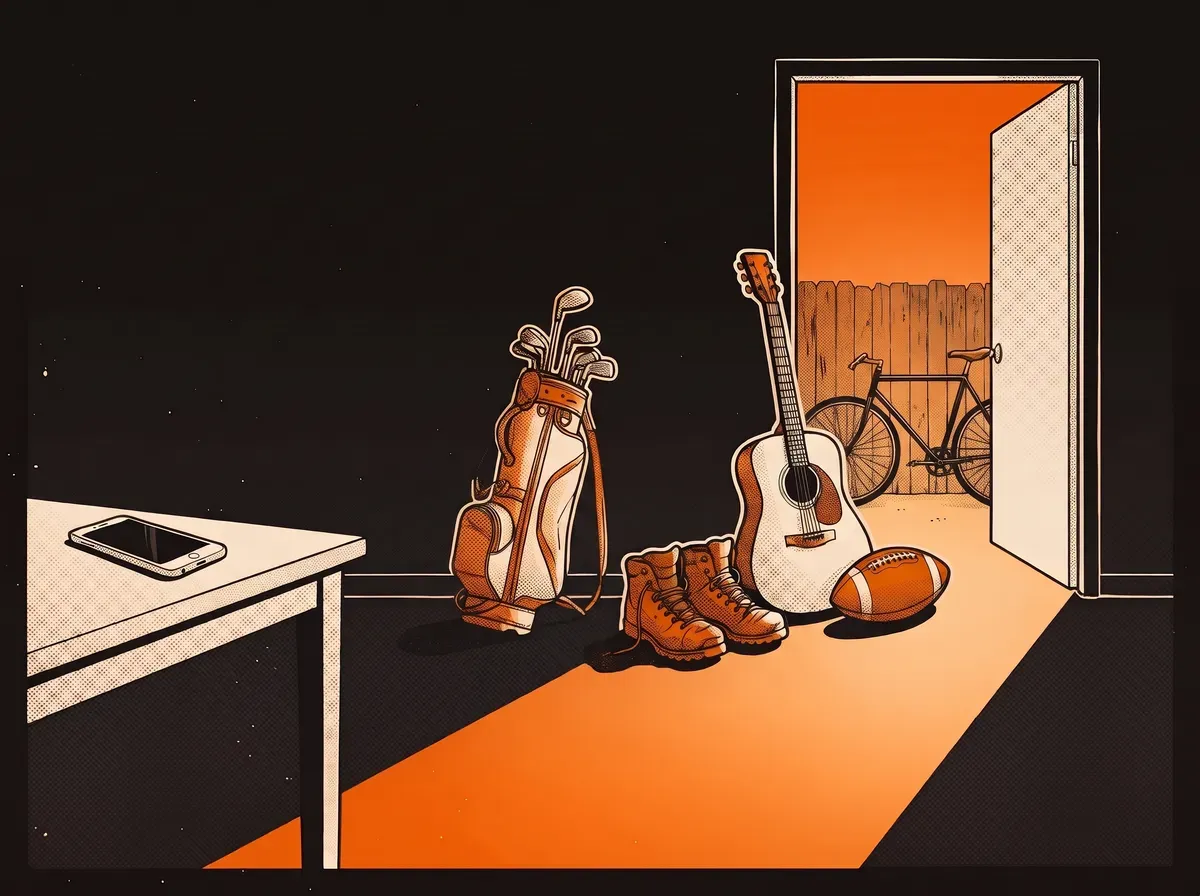
Removing things is the smaller part of the work. If that's all you do, quitting starts to feel like a life where you can't have nice things. The bigger part is what you put in their place.
So fill the empty hours. The riskiest time is unstructured time alone, so if Saturday afternoon is when it happens, put something in Saturday afternoon, ideally something with other people in it. And take this as an invitation. What gives you real satisfaction? What do you wish there was more of in your life? What makes you feel alive, and what sparks your curiosity? Fill your days with those things, and go looking for new ones.
Notice that gooning doesn't make you happier. It gives you a few hours of relief, and overall it makes your life worse. Clearing it out makes room for a richer life, and that's the real point of all this.
Friction buys you a few minutes when an urge hits. Step 3 is what to do with them.
Step 3: Stay With the Urge
When an urge hits, most people do one of two things. They give in. Or they fight it: cold shower, push-ups, scroll something else, grit their teeth until it goes away.
There's a third option, and it's the one that changes things: do nothing. Feel the urge without acting on it and without pushing it away.
I remember walking home from the gym one day when I got hit by an urge. This was after I'd quit porn, in the middle of my Spartan Mode Challenge, which meant no porn, no masturbation and no sex. Back when I was addicted, there would have been only one possible outcome here. This time I paid attention to the feelings. I felt them, but that's it. I didn't try to push them away and I didn't try to hold on to them. The urge faded after maybe a minute or two, and by the time I got home my mind had already moved on.
Later that night, lying in bed alone, the same thoughts came back and I felt the urge rising again. Once again I did nothing. And they were nice, pleasant feelings, actually. Arousal and desire are kind of a warm, tingly feeling in the body. I let the thoughts and feelings play out, I relaxed, and eventually I fell asleep.
How to do it:
- Notice it and name it. "There's the urge."
- Find it in your body. Chest, stomach, jaw, restless legs, a buzzing in your hands.
- Stay with it. Don't feed it with images and don't fight it. Breathe and watch what it does.
- Let it change. Often it gets stronger first. Then it peaks and starts to fade.
When you sit with an urge, don't be surprised if something else comes up underneath it: sadness, loneliness, anger, sometimes tears. Whatever comes up is your first hint at the actual underlying issue. That's what step 4 is for.
You may have seen the advice to set a 10-minute timer and wait it out. A timer is fine. Use it as time to notice what you're feeling, not as a countdown to giving in.
Addiction research has a version of this, called urge surfing. In a trial with smokers, it changed what people did with their urges more than how strong the urges were (Bowen and Marlatt, 2009). You don't need the urge to go away. You need it to stop being an order.
There's a full guide in urge surfing, and a deeper version of the practice in sitting in the fire.
Step 4: Meet the Need Underneath
Step 1 showed you what usually comes before a session. Step 3 shows you what's under the urge. Now do something about it in your actual life. Where I'd start depends on what you found in step 1:
- Lonely: contact, not content. Text a friend, call your brother, go somewhere with people in it. A class, a club, a team, a men's group.
- Stressed or wound up: something that brings your body down. A walk, a workout you actually enjoy, a long shower, a few minutes of slow breathing, lying on the floor and letting yourself feel it.
- Bored, or flat about life: something to look forward to, with some challenge in it. A project, a skill, a trip, a plan for the weekend.
- Can't sleep: a wind-down that doesn't involve a screen in bed (I've written about sleep and porn too).
- Rejected, hopeless or empty: don't sit alone with it. Talk to someone. If it's dark, use the lines further down.
Whatever you choose, make it something you enjoy. If your plan is to force yourself through a solo workout you hate every time you want to goon, you're trying to replace something that feels positive with something that feels negative, and that's very hard to do. Instead: I'm not going to do the gooning anymore, but I'm going to do something I enjoy.
What Gooner Games Give Away
There's a whole genre of gooner games, where you have to play for a while before you see anything sexual. And there are anime full of fan service: lots of cleavage, a panty shot here and there, nothing close to porn. Why would anyone put up with all that gameplay and teasing, when unlimited porn is free and one click away?
I think it's a hint at what we're actually after. Porn makes a promise it can't keep. It offers instant gratification, and clearly that isn't what we want, or we wouldn't keep looking for something more. What these games add is a path to the reward: the pursuit, the challenge, the reward at the end of something difficult, not right away. Some back and forth. Some flirting that doesn't have to go anywhere.
That's something real life can give you and porn never will. There's a whole world of playful, fun interaction between men and women that never turns into sex and doesn't need to. Go dancing, and you get to enjoy dancing with women and watching them dance, and they're enjoying it too. It doesn't have to lead anywhere. There's something really nourishing about that, and porn, with endless reward and nobody on the other side, can't give it to you. Your life can.
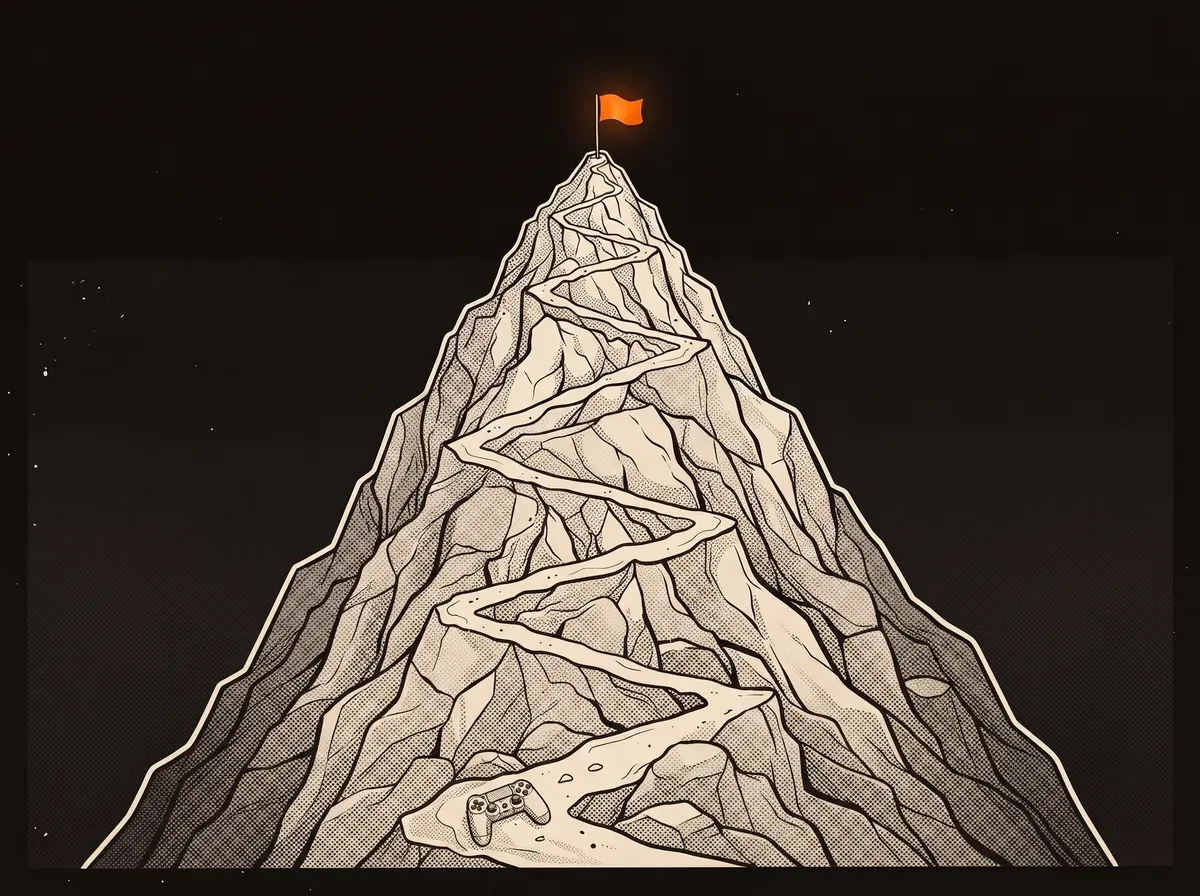
Anything that says "here's how to avoid scratching the itch" is going to be hard. The way to make it easier is to stop feeling the itch so often. Think of the most alive man you know, someone who's bursting with life. One thing about that guy is he's probably too busy for it. I've seen this in my own life: when I'm really bursting with life, I'm so engaged with it that I don't have much time where I'm just alone by myself, sad, at home. And alone, sad, at home is exactly where most sessions start.
If you want a simple way to map this out, the rule of opposites turns whatever your gooning looks like (alone, passive, hidden, on a screen) into a list of things to move toward. And replacement habits covers how to make the new thing stick.
Step 5: After a Lapse, Review It, Don't Write It Off
You'll probably slip at some point. What you do in the hour after matters more than the slip.
First, don't reset your progress to zero in your head. When the number you've been building goes back to zero, it feels like all your progress is lost. And ironically, that's what leads to the extreme binge: if it's all lost anyway, you might as well make the best of it, right? That belief becomes a self-fulfilling prophecy, because you end up binging your way back to square one.
It's more like going to the gym. If you train every day for 30 days and then skip once, you don't lose all your gains. Skipping once barely makes a difference. The danger is that it opens the door to skipping again and again.
Then zoom in. Take the slip and go, "Okay, what happened here?" Write about exactly what happened: where you were, how you were feeling, what happened outside you and what happened inside you. You don't have to wait for your next slip to do this. You can do it right now with the last one.
And watch how you talk to yourself while you do it. What if you treated yourself the way you'd treat a little brother you love dearly? You can see he's doing some stuff that's not good for him, and you still think: I love you so much. I'm so much on your side.
One exercise I use myself: I write down what's going on and what my situation is. Then I read back what I wrote and imagine it's a friend telling me this. How would I treat this friend? This has been a really powerful exercise for me.
Being kind to yourself isn't the same as letting yourself off the hook. It may not be your fault that you got hooked, but it is your responsibility to change your behavior.
Over time, you'll notice something. It takes bigger and bigger knocks, higher and higher stress, before you even consider going back. That's what progress looks like.
What Happens When You Stop Gooning
Things often get worse before they get better. When you remove the thing you were using to cope, whatever it was covering comes back up: the boredom, the loneliness, the stress. Even that is a move in the right direction, because now you can deal with it.
In my experience, most guys struggle most in the first five to ten days. For the first few months urges come in waves, and over time the waves get weaker and further apart.
You might also hit the opposite problem. Instead of urges, nothing comes up at all, and you start worrying: I don't even wake up with morning wood anymore. That's the flatline, and plenty of people go through it. Here's what the flatline is and how to get through it.
What you shouldn't count on is superpowers. Whether you get the energy, confidence and magnetism NoFap promises is more like rolling the dice. If you get no superpowers, or even the opposite for a while, you're not doing it wrong.
There's no fixed timeline either. What you do get back right away is time. If gooning was taking three or four hours a few nights a week, that's ten hours or more a week to put into the things in step 4.
When to Get More Help
Get support beyond this article if you've been trying for months and can't cut down, if it's costing you sleep, work, money or relationships, or if it's tangled up with depression, anxiety or trauma.
The approach with the most evidence is cognitive behavioral therapy (CBT) with a therapist who works with compulsive sexual behavior, though the research is still limited (Antons and colleagues, 2022). Acceptance and commitment therapy (ACT) and mindfulness-based approaches have small trials behind them. Peer support groups are another option, and they're free.
I've put together a guide to getting help for porn addiction that compares these options side by side, with a short tool to help you pick. If you want a structured program from me, that's the QuitByHealing program. It's mine, so weigh my bias accordingly.
If you're thinking about suicide or hurting yourself, please talk to someone now. In the US or Canada, call or text 988. In the UK and Ireland, call Samaritans free on 116 123. Anywhere else, Find A Helpline lists free, confidential lines in more than 175 countries. If you're in immediate danger, call your local emergency number.
Start Tonight
You don't need the whole plan at once. Start with step 1: the three questions, after the next session or close call.
And the next time the urge comes, before you do anything, ask yourself one question. What would you be feeling right now if the trance weren't an option?
Frequently Asked Questions
How long does it take to quit gooning?
There's no set number of days. In my experience the first week or two is the hardest, and urges keep coming in waves for a few months, getting weaker and further apart. How long you've been gooning, and what it was doing for you, matter more than any day count.
Why do I feel horrible after gooning?
Because you come out of the trance into everything you were avoiding, plus the hours you lost and, often, shame. That crash makes the next session more likely, because the session is how you escape bad feelings. Treat the feeling as information about what you were running from, not as a verdict on who you are.
Is edging better than finishing?
Not when it's edging to porn. Edging usually means longer sessions and more clicking around for something new, and that long, novelty-chasing pattern is what researchers find in people who've lost control of their porn use. If you count days, count porn-free days on their own, and let any porn reset that count, whether you finished or not.
Do I have to stop masturbating to stop gooning?
No. In my experience, quitting porn and masturbation at the same time often backfires: a few days in you can't stand it, you relapse, and because you've 'failed anyway' it turns into a binge. Count your porn-free days and make getting that count to 100 the priority. Masturbating without porn doesn't reset it. If you also want to quit masturbating, count those days separately.
Is gooning every day bad?
How often you do it isn't the whole test. The signs that it's become a problem are losing control (sessions running far longer than you meant, failed attempts to cut back), it crowding out sleep, work, friends or dating, and using it to get away from how you feel. If you goon every day and you want to stop but can't, that's the pattern this article is for.
What app can help me stop gooning?
Blockers and recovery apps add friction, and friction can stop an impulsive decision on a weak night. They don't touch the feeling that sends you looking, and there's always a workaround once you've decided you don't care. Use one if it helps, but pair it with the steps in this article, especially staying with the urge and meeting the need underneath.
My son or partner is gooning. What should I do?
Start with a calm, private conversation, not a confrontation. Shame feeds this habit, so treating it as a crime tends to push it further underground. Ask how they're doing (sleep, mood, friends) as much as about the porn. If it's your partner, talk about how it affects you rather than diagnosing them. If your son is under 18, help him find age-appropriate support: his doctor, a school counsellor, or in the UK, Childline on 0800 1111.
About the Author
Shane is a serial entrepreneur with a long-standing obsession for personal development and life optimization. He has a habit of buying more books than he can ever read. During his childhood his worldview was significantly influenced by Jackie Chan movies, the Vorkosigan Saga and the writings of Miyamoto Musashi.
Shane Melaugh