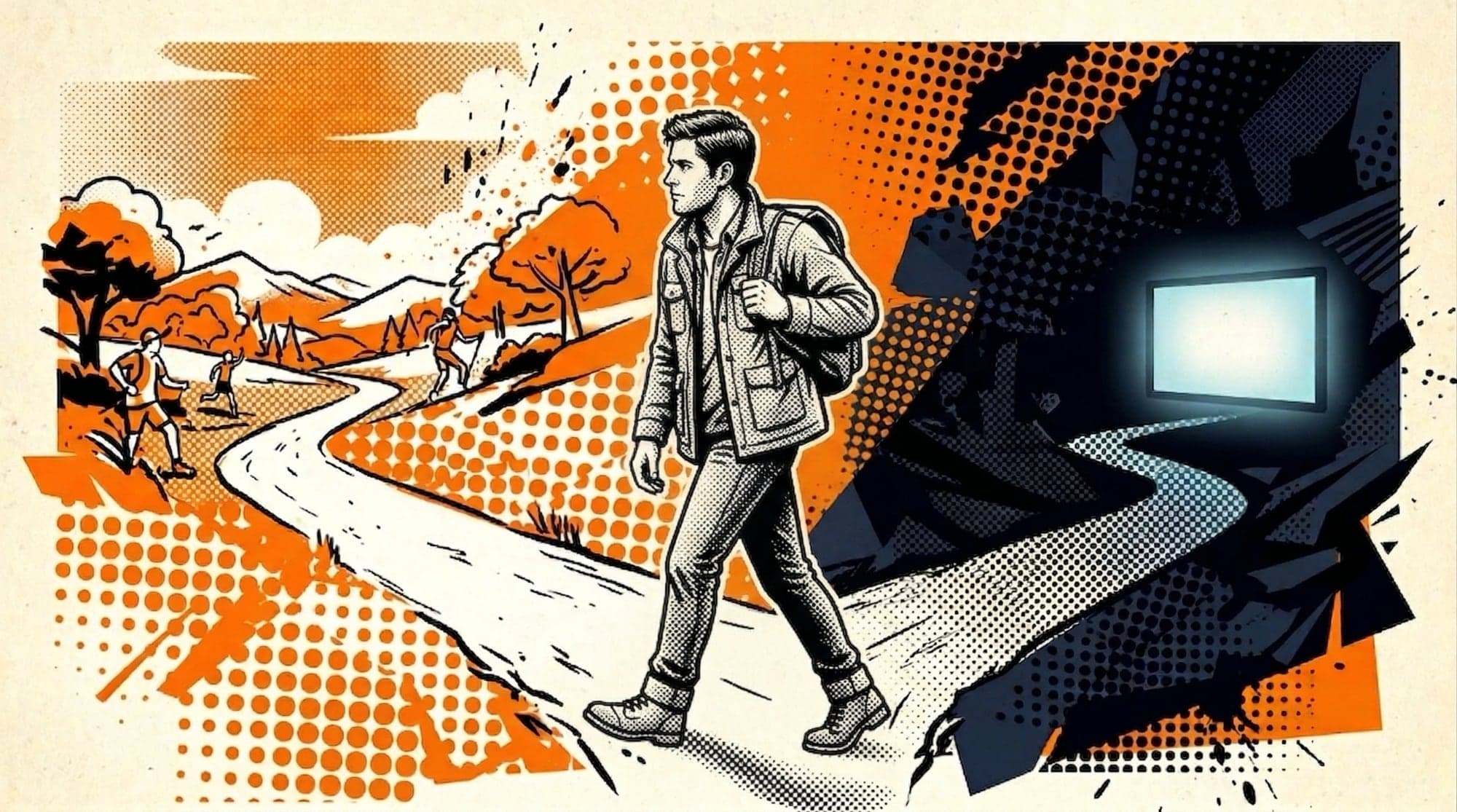
Guy A quits porn and replaces it with long gaming sessions. He relapses within a few weeks.
Guy B quits and picks up Brazilian Jiu-Jitsu. Three months later he says the training changed his life. He hasn't looked back.
Same starting point. Completely different outcomes. The difference wasn't motivation or determination. It was the replacement.
Here's what I've found working with men on this: not all replacement habits help you heal. Some are just as problematic as the habit you're trying to leave behind, just in a more socially acceptable package. And some will accelerate your recovery faster than almost anything else.
The difference isn't obvious unless you understand why certain habits work.
TL;DR: Replacing porn with any distraction isn't enough — the best replacements actively rewire your brain, train impulse control, and move you out of the solo-screen environment where addiction lives. The worst ones keep you stuck in the same room, on the same screen, triggering the same patterns.
Why a Replacement Habit Isn't Optional
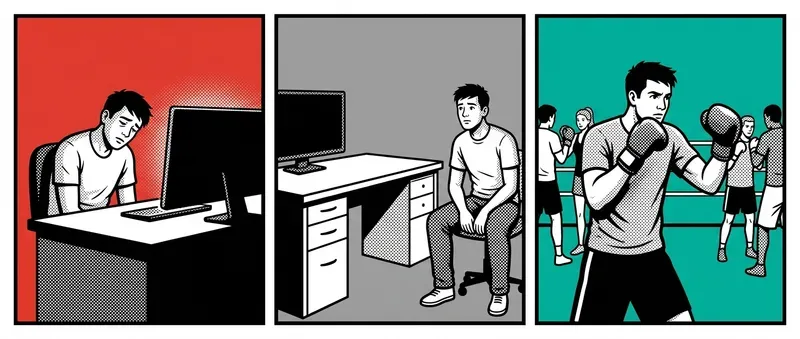
When you try to just stop something without replacing it, you're fighting on the hardest possible terms. You're leaving a gap in your day, a gap in your dopamine cycle, and a gap in what you do when boredom or stress hits. That gap will fill itself. Usually with the thing you were trying to quit.
This is why understanding the habit loop matters so much. The cue-routine-reward cycle doesn't disappear when you remove the routine. The cue is still there, the craving is still there, and without a new routine to run, you default to the old one. Research on recovery strategies consistently shows that substitution outperforms elimination — strategy matters far more than pushing through on sheer determination. You're not trying to remove a need. You're redirecting it.
But the key word is redirecting, not just occupying. The best replacement habits don't just fill time. They actively work against the addiction by rewiring the same brain systems porn was hijacking.
The Gold Standard: Exercise
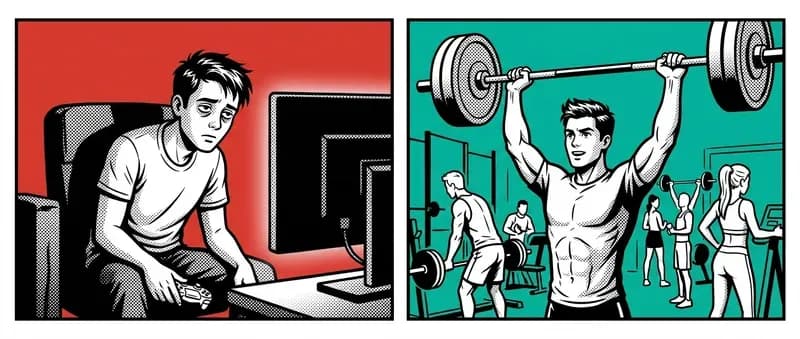
Exercise is the single best replacement habit for porn addiction. Not because it keeps you busy, but because it attacks the problem at the biological level.
Here's the mechanism. When you do intense exercise, your brain increases production of something called BDNF. Brain-Derived Neurotrophic Factor. John Ratey, a neuroscientist at Harvard, calls it "Miracle-Gro for the brain" in Spark, and that's not an exaggeration. BDNF promotes the growth and connection of new neurons. One of the core things you're trying to do in recovery is rewire your brain: break the automatic loops that run toward porn and build new pathways that run somewhere else. BDNF accelerates that process significantly.
There's a second benefit that's particularly relevant for addictive behaviors. Training teaches you to override your impulses. Some days you don't want to go. You're sore, you're tired, you have ten good reasons to skip. And you go anyway. Every time you do that, you're practising the exact same neural circuit you need to resist an urge. The part of you that can say no to the automatic pull and do something else instead. That part gets stronger with practice.
And then there's the metabolic angle. Your physical health and your mental health are not separate things. As Anna Lembke documents in Dopamine Nation, chronic exposure to spiky dopamine sources doesn't just create psychological dependency. It reshapes your brain's capacity to feel pleasure from anything. Exercise is one of the most effective ways to restore that capacity, because it works directly on the reward system rather than around it. Men with active addictions almost universally have compromised metabolic health. Improving the body directly improves the conditions for brain recovery.
Sorry to Break the Bad News: Gaming is Not a Good Replacement Habit
I know this is an incredibly lame thing to say and I don't want to be the guy who's like "you're not allowed to enjoy fun things anymore"...
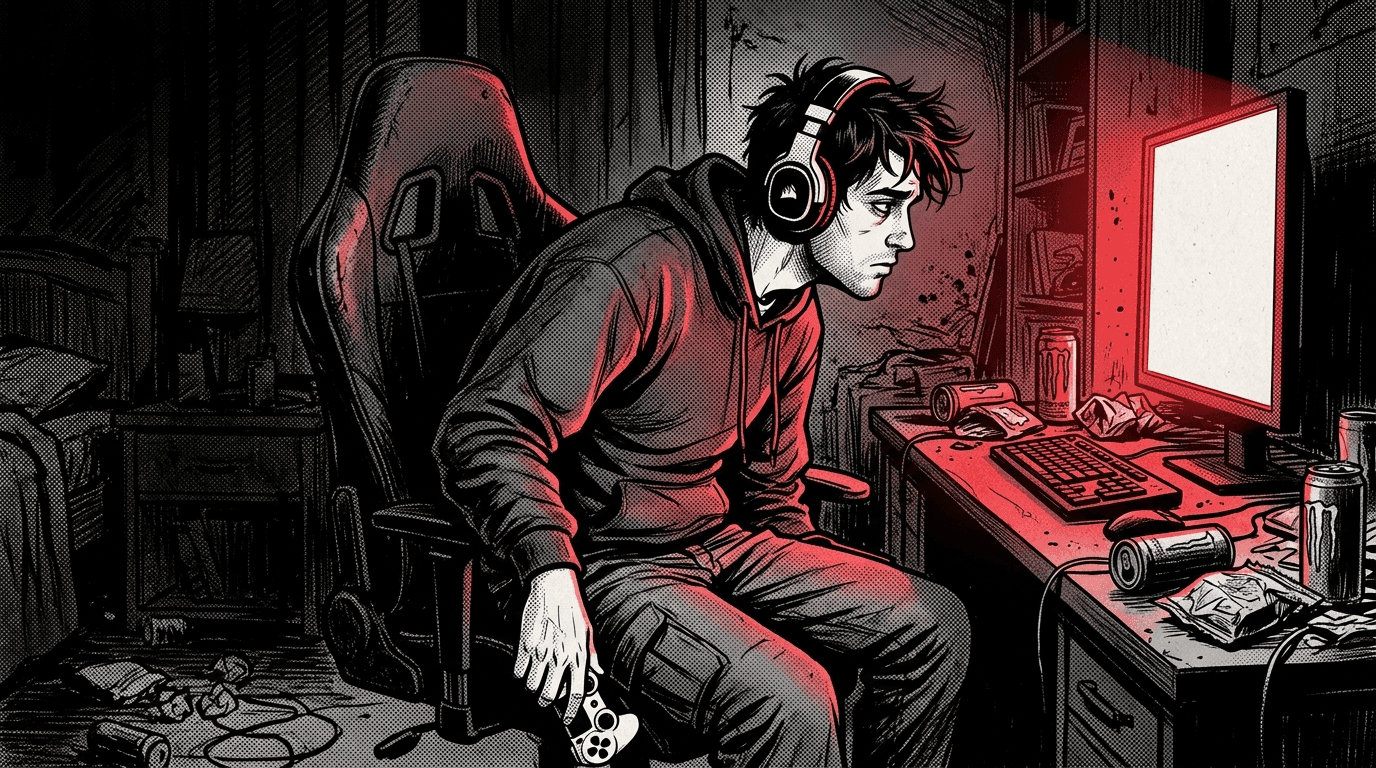
...but gaming is a terrible replacement habit. And I need to mention this because it's also a very common one. It's one many guys default to when trying to quit.
The first problem is environmental. Think about what both activities look like in practice: you're alone, in a room, usually dark or dim, staring at a screen, stimulated by what's happening on it. Modern games are engineered to keep you hooked. That's not an accident, that's the business model. (Anyone remember back when games were made to be fun? Yeah, nowadays we can't have that anymore. Fun might interfere with the games-as-a-service microtransaction slot machine business model.) They exploit the same dopamine mechanics as porn. You can grind for hours without really enjoying yourself, which is exactly what compulsive porn use feels like. You're not healing your brain from overstimulation. You're just pointing the cannon somewhere different.
The second problem is proximity. When you're gaming at home on your computer, you are ten seconds away from pornography. The context is identical. Your environment is still the same one where the habit lives. So when an urge hits, and they will, you're already there.
I'm not saying gaming is evil. It can be a fine hobby in the right place. But as a replacement for porn addiction, it keeps you in exactly the wrong conditions.
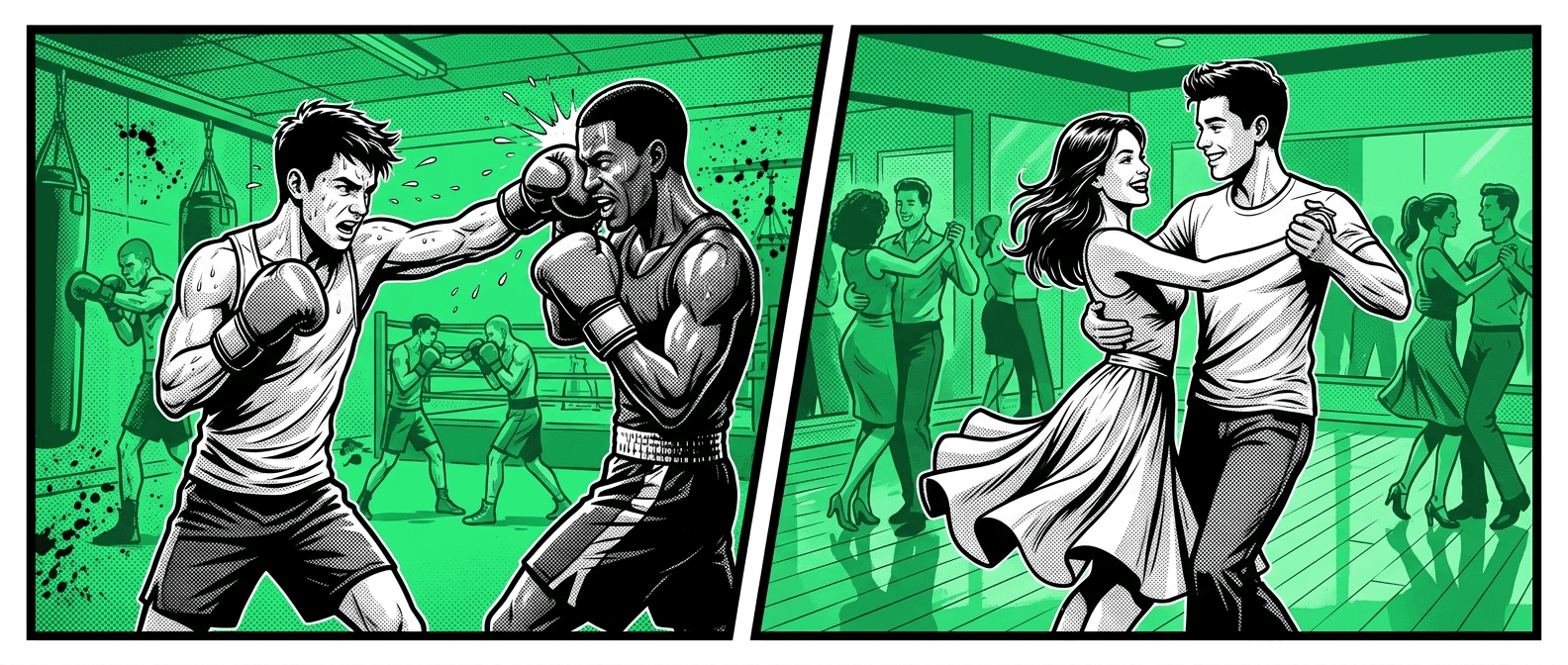
Two Elite Replacement Habits: Combat Sports and Dancing
Within the category of exercise, two specific formats stand out.
Combat Sports
Muay Thai, Brazilian Jiu-Jitsu, MMA, boxing. Pick one. You get everything exercise already gives you (BDNF, impulse discipline, metabolic health), and then some.
It's also one of the best ways I know to develop healthy masculinity. Have you ever noticed that guys who've trained in a martial art for a few years just have a certain calm confidence about them? That's what I'm talking about. In combat sports, your competitiveness, aggression and strength are welcomed. But you also have to temper them with discipline and awareness. You bring skill and technique to those primal urges. This is immeasurably better than just trying to suppress them.
And you get camaraderie. Community. You get into a room with other men who are working hard, and you make friends doing it. Loneliness and isolation are major drivers of addiction, and a training gym addresses both directly.
Dancing
Dancing as in: partner dancing. Ballroom, Salsa, Bachata, that kind of thing.
Yes, really. Hear me out.
Dancing obviously qualifies as physical exercise, and that alone makes it a strong candidate. But dancing also has a social layer that's particularly relevant for men recovering from porn addiction. In a dance class, you interact with lots of different women in a completely natural, low-stakes context.
Actually, scratch that. You absolutely will be nervous and anxious about rejection the first time you go to a dance class. And then you get over it. Because in this context, being around women, chatting with them, being in physical contact with them, is just so normal. You relax. And then you get genuinely comfortable around women — not as a theory, but as something you've experienced dozens of times in a single evening.
That matters. One of the things porn does to your brain is train it to associate women with screens rather than with real interaction. Dancing is the opposite. You're developing real physical comfort and social ease, and that carries over into your actual dating life in ways that aren't obvious until they happen. Part of this is learning to relate to women as real people rather than as targets — something I get into more here — and dancing is one of the fastest practical routes into that shift.
If you want broader ideas for new skills and activities worth picking up, whether a sport, a craft, or something else entirely, the QBH skills directory is a good place to start browsing.
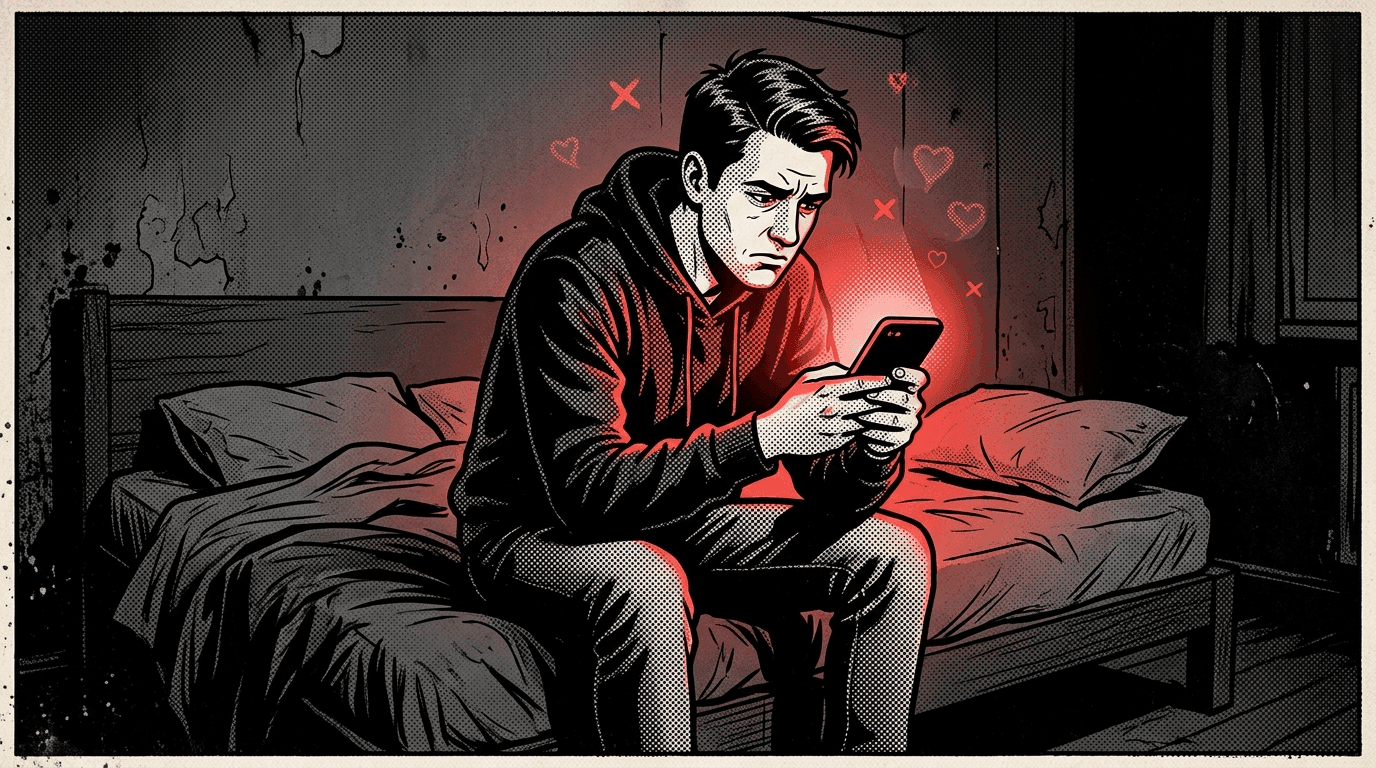
The Dating App Mistake
If you're like most guys, you quit porn and immediately think: right, time to pursue women in real life. Exactly the right instinct.
And that's where you screwed up.
Why? Aren't dating apps how you get dates?
Turns out: nope.
For most men, dating apps are genuinely terrible environments. The platform is optimised around aesthetics in a way that heavily disadvantages men who aren't in the top percentile of looks. Which is most of us. You'll swipe for days to get a handful of matches. Most of those will go quiet. You'll feel frustrated and increasingly rejected, and you'll start wrongly concluding that women are just out of reach.
That's a distorted picture of reality. Men are actually in a much stronger position when they show up in real life. Personality, confidence, humour, presence: all of these count enormously in person and barely register on an app. The dating landscape in the physical world is far friendlier than Tinder will ever lead you to believe.
But that's almost beside the point. Because you're also still sitting at home, alone, on a screen. You're not making it harder to relapse. You're making it easier.
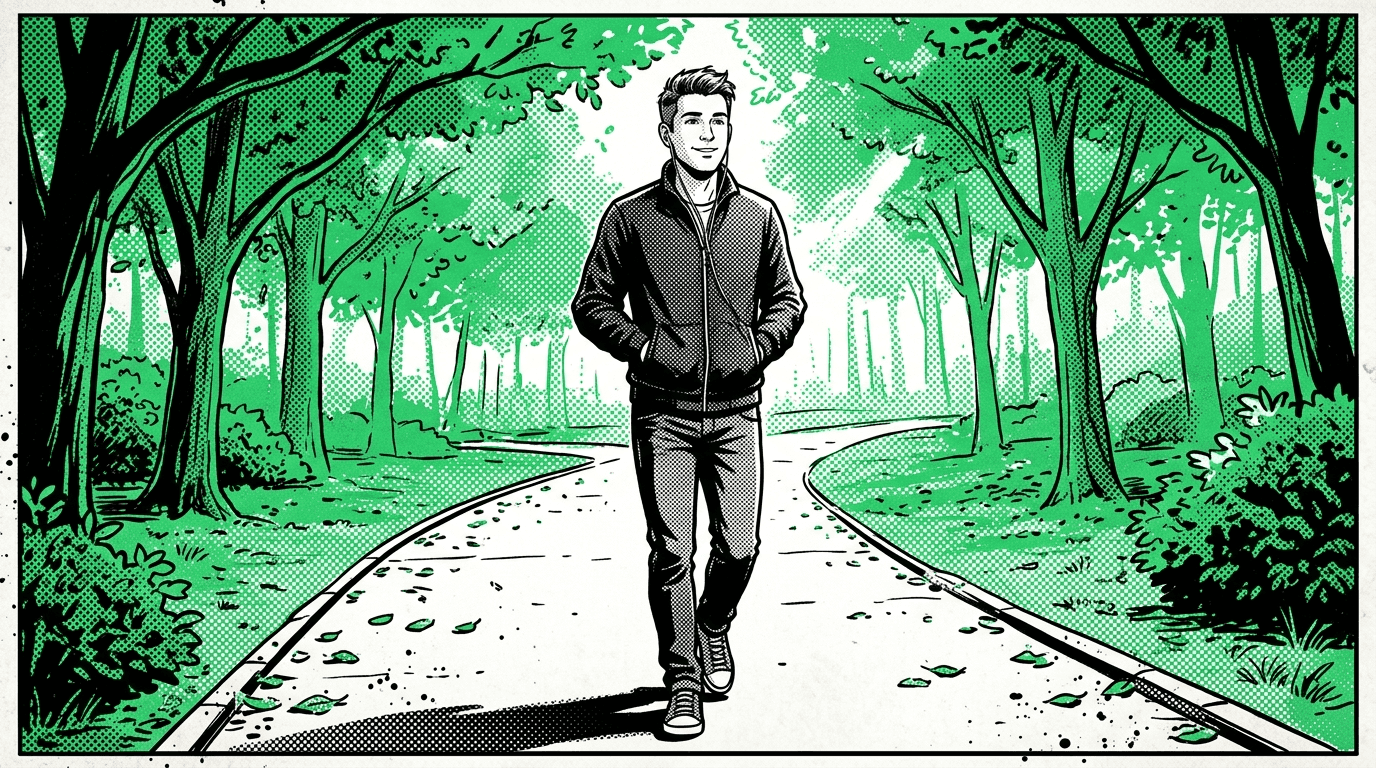
The Underrated One: Walking Outdoors With an Audiobook
This one sounds so simple, but it's actually OP.
The walking-plus-audiobook combination works on multiple levels. First, the action: when you feel an urge, you have an immediate, low-barrier response available. Put your shoes on and walk out the door. You can always do it. Yes, even in bad weather. The moment you're outside and moving, you've physically broken the context where the urge lives.
Second, the content: audiobooks are long-form. Your brain, if it's been in active addiction, has been trained on short, rapid stimulus. Quick cuts, constant novelty, channel-switching. Sitting with a single idea for eight or ten hours is, in a quiet way, a form of rehabilitation. You're retraining your attention span. You're learning to find satisfaction in depth rather than novelty. Pick books on topics you actually care about. Make it something you want to do.
Why audiobooks and not podcasts? Podcasts work too, but they're far more hit and miss. And podcast production is much more optimised for attention and retention than books — closer to the kind of content you're trying to wean yourself off. Books are slower, denser, and more demanding. You get more value out of them, and they're a lot less addictive.
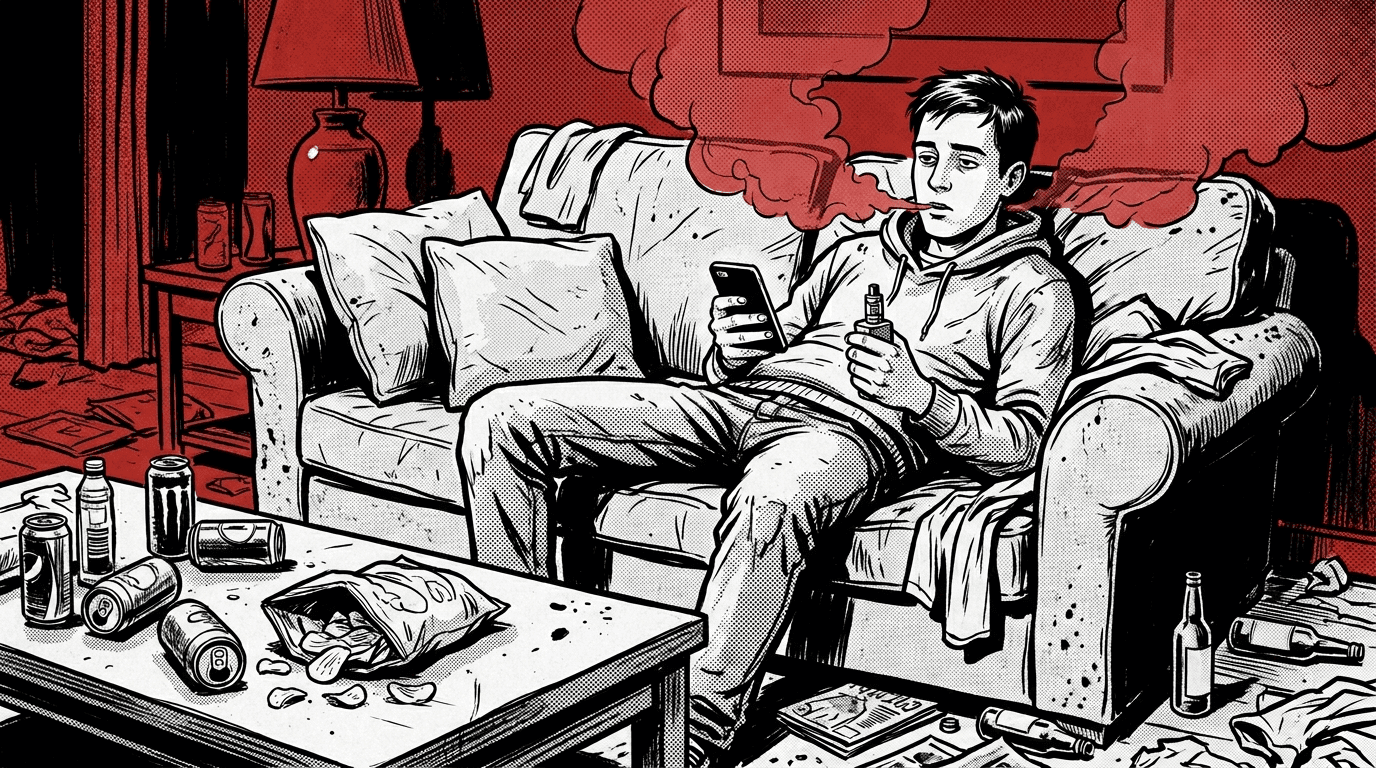
The Obvious Trap: Replacing Addiction With Addiction
Something that commonly happens when you quit is that you'll find yourself doing other compulsive things more. Smoking. Vaping. Eating junk food. Scrolling. None of these are replacements. They're lateral moves.
I understand the logic in the moment. You feel the urge, and you reach for the nearest available relief instead. But you're not healing anything. You're just running the same loop in a different direction. The brain that's been trained to seek immediate relief from discomfort is still doing exactly that.
One of the core goals in recovery is to extend your tolerance for discomfort. To sit with something hard without immediately neutralising it. Swapping one instant-relief mechanism for another doesn't train that at all. It also doesn't address the deeper dopamine problem that's driving the behaviour in the first place.
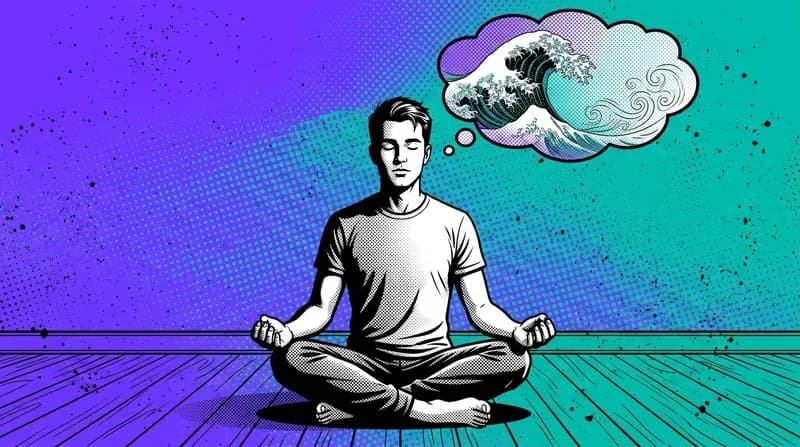
Meditation: Perfect Brain Training
Most people know meditation is "good for you." Fewer people can articulate why it's specifically good for porn addiction recovery.
Here's what happens when you sit down for a twenty-minute meditation. Very quickly, some part of you decides it doesn't want to do this anymore. Your legs are uncomfortable, you're bored, you want to check your phone, you want to get up and do something. Anything. And you stay. You let that feeling be there. And a few minutes later, it passes.
That experience is the exact rehearsal you need for urge management. Right now, when an urge hits, it probably feels permanent. I need to do this right now or I'll feel like this forever. Meditation shows you, concretely, multiple times per session, that uncomfortable feelings pass when you don't act on them. Research on urge surfing confirms this: the technique doesn't reduce the frequency of cravings, but it changes your relationship to them entirely. You build a felt sense of this will pass.
One extension of this that's particularly powerful: you can actually use the urge to relapse itself as your object of meditation. Sit with it. Observe it. Watch it crest and fade. I've written about this technique in more depth here: Sitting in the Fire — it's one of the most effective tools I know.
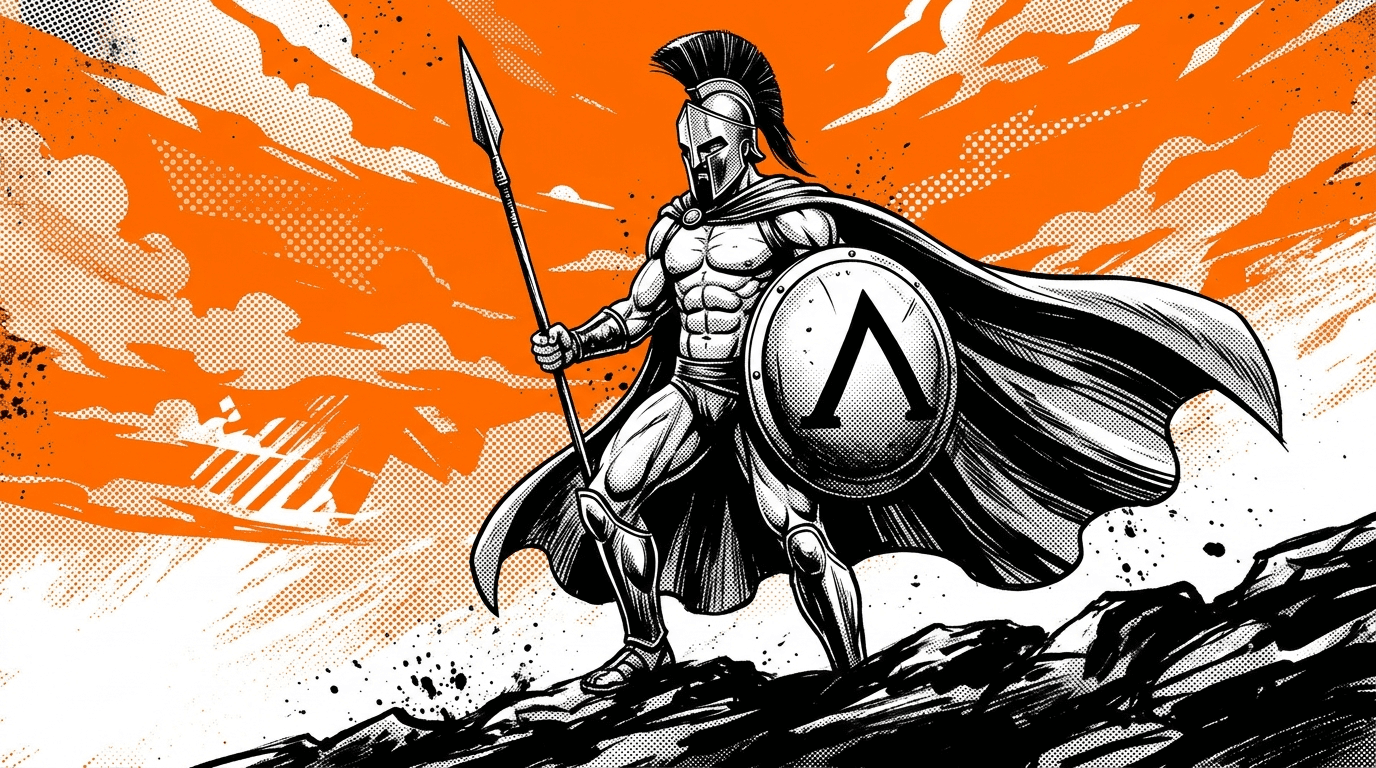
What Happens When You Stack All of This: The Spartan Mode Effect
A few years ago I ran a thirty-day experiment I called Spartan Mode. The basic premise: stack as many of these brain-healthy habits as possible, eliminate as many of the bad ones as possible, and see what happens. Two training sessions a day, no social media, no entertainment, no sugar, daily meditation, daily sunlight, ten hours in bed. If you want the full breakdown of every component, this is the video where I explain the whole protocol.
There were a lot of expected results. My focus improved. My sleep improved. I felt sharper and more grounded. All of that I'd more or less predicted.
What surprised me was what happened to my social life.
I hadn't planned for that. I wasn't trying to make new friends. But simply by spending more time outside and less time in front of screens, I kept running into people. I'd get invited to a dinner. Then a co-working session. Then an Authentic Relating meetup (something I'd never even heard of before. But it was great!). My social world expanded almost automatically, just as a side effect of being in it more.
And then something clicked. I could see the virtuous cycle clearly: the more time I spent away from screens and rooms, the more interesting my life got. And the more interesting my life got, the less interested I was in screen time. The appeal of retreating and switching off from the world just reduced. Not by force. Because life on the other side had gotten good enough that screens stopped competing.
I was already free from porn at this point. But this experience showed me something about how the whole thing works in a way that theory never quite captures. The speed of it genuinely surprised me. How quickly a social life can expand when you simply show up more. Movement and social activity are on the exact opposite end of the spectrum from addiction. Johann Hari put it well: the opposite of addiction is not sobriety. It's connection.
How to Know If a Replacement Habit Is Actually Working
You don't always need someone to tell you which habits are good and which aren't. Once you understand the principle, you can evaluate any habit yourself.
Ask these questions: Does this keep me in the same room, on the same screen, in the same conditions where I watch porn? Does it overstimulate my brain in the same way, with short spiky dopamine hits engineered to keep me engaged? Or does it move me somewhere else, physically and mentally? Does it build something real: a skill, a social connection, a health outcome? Or does it just pass time?
The best replacements move you. They take you somewhere physically, challenge you socially, or heal you physiologically. They put you in conditions where porn would be inconvenient even if you wanted it. They give your brain something worth rewarding itself for. If you want a more complete system for managing urges when they do show up, I've put together a full toolkit covering every option, from immediate physical interventions to longer-term prevention strategies.
The worst replacements keep you exactly where you are.
What replacement habit are you thinking of starting? Drop it in the comments. I'm curious to hear it.
About the Author
Shane is a serial entrepreneur with a long-standing obsession for personal development and life optimization. He has a habit of buying more books than he can ever read. During his childhood his worldview was significantly influenced by Jackie Chan movies, the Vorkosigan Saga and the writings of Miyamoto Musashi.
Shane Melaugh
There is a Better Way to Quit.
Stop relying on sheer willpower. Learn the step-by-step psychological framework that makes quitting inevitable.