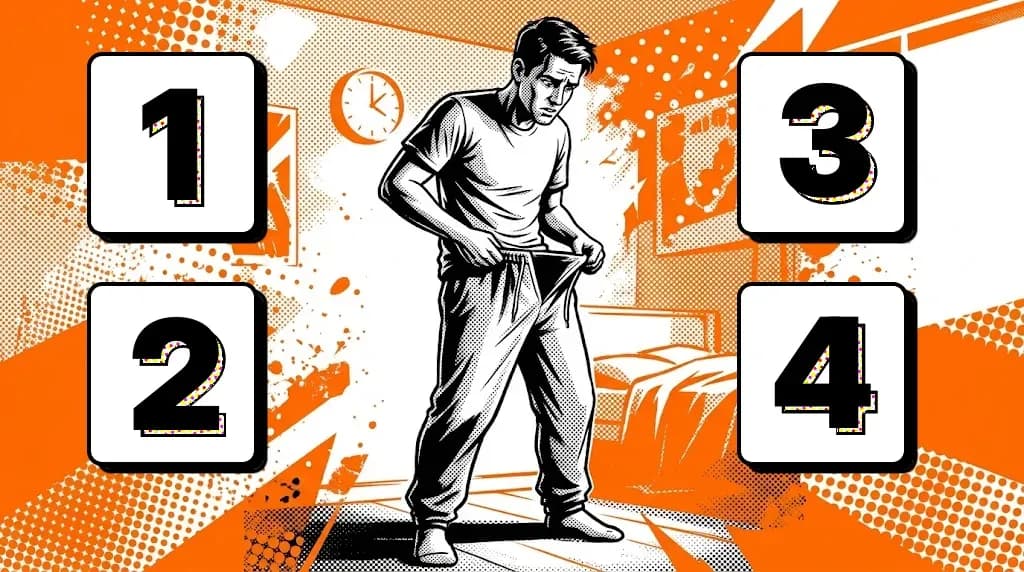
Does porn use lead to erectile dysfunction?
This is a controversial question to ask and we'll get into the science behind it in a moment.
What I can say for sure is that there are many men who report the following experience: they use porn frequently, for a long time. Then, they get into an intimate situation with a partner for the first time in a while and... their equipment doesn't seem to work anymore.
They are with someone they're attracted to, they are ready and willing to have sex, but the body doesn't respond.
This is a really painful experience for any man. And it appears to be happening to young men at a greater frequency than ever.
So it's an issue worth examining. Let's look at all the possible causes of erectile dysfunction (ED) so you know exactly what to do if this has happened to you.
TL;DR: Erectile dysfunction in young men can come from problematic porn use, overly intense masturbation habits, performance anxiety, or physical health issues. A porn and masturbation reset is a good first experiment for many men, but persistent ED is also a health signal worth taking seriously, not something to hide.
Is Porn Really Causing Erectile Dysfunction in Young Men?
Porn can contribute to erectile dysfunction in some men, especially when use becomes compulsive, escalates into more extreme material, or replaces real intimacy. But the current research does not prove that simple porn frequency alone causes ED for most men.
The more useful question is whether porn has trained your arousal away from real life.
This is where the old internet argument gets messy.
On one side, you have guys saying, porn gave me ED, I quit, and my body came back. I do not dismiss that. I've heard enough stories from men in recovery to know this pattern is real for some people. I also have a personal experience with this. I've never suffered from ED, but I could clearly tell that my erections were less, let's say reliable, when I was still using porn.
On the other side, if you look at peer reviewed research, the picture is a bit more complicated. A 2024 US nationally representative study found something very interesting. The proportion of men reporting ED symptoms among age groups were:
- 17.9% of men aged 18 to 24
- 13.3% of men aged 25 to 34
- 12.7% of men aged 35 to 44
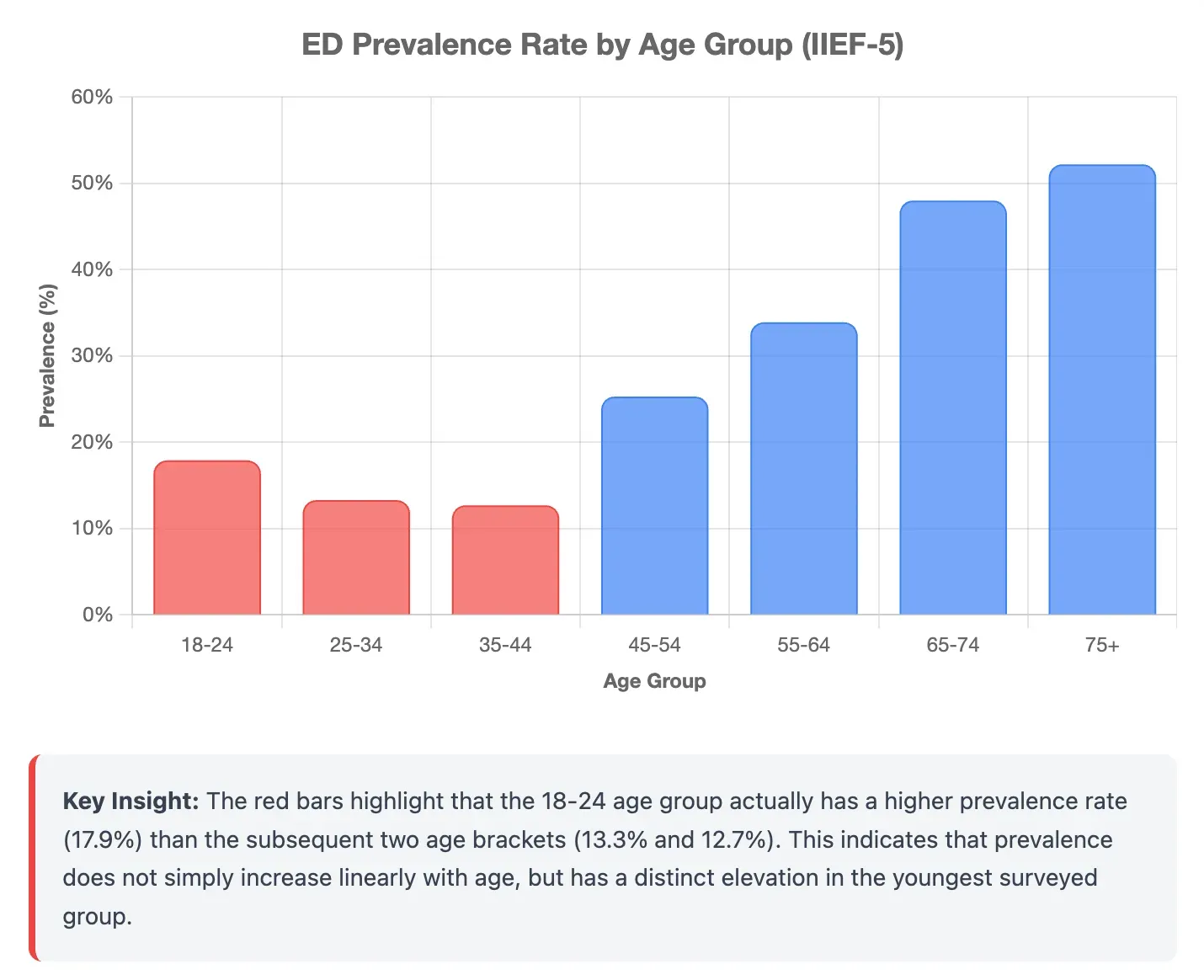
Notice how the number decreases as age increases? That is the inverse of what you would expect.
Generally, erectile dysfunction increases with age. In fact, it used to be looked at as an "older gentleman" kind of problem. But now, we're seeing an inversion.
The age correlation still exists. For men above 45, ED reports climb steadily with age.
But why would the youngest guys have more ED symptoms than their middle-aged peers?
One possible explanation is: these young men are more chronically online and are consuming more and more extreme porn than earlier generations...
BUT we don't know this for sure, because this specific study did not look into porn use.
A large 2023 study in the International Journal of Impotence Research found that frequency of porn use was not related to ED severity after controlling for other factors like age, anxiety, depression, chronic medical conditions, sexual interest, and relationship satisfaction.
That does not mean porn is harmless. What it does mean is that "number of times you watched porn" is a very blunt measurement. The study still leaves room for vulnerable men where heavy porn plus heavy masturbation may interfere with partnered sex. The authors say exactly that in more cautious scientific language.
There Are Levels to Porn Use
The more relevant distinction is porn use versus problematic porn use.
A 2021 web-based survey of 3,419 men aged 18 to 35 found that 21.48% of sexually active participants had some degree of ED, and higher scores for problematic online pornography consumption were associated with a higher probability of ED while controlling for covariates. Masturbation frequency itself was not the major factor in that analysis.
In short: here, we see a more direct connection between porn use and erection problems.
But the paper is not perfect. Web surveys don't provide the cleanest or most reliable kind of data. But it points in a direction that matches what many men report: the problem is not just watching porn. The problem is when porn becomes compulsive, escalated, and disconnected from your real sex life. That study is available open access through JMIR.
As I've written about before, there are levels to porn addiction. And depending what level you are on, the size of your problems and the steps needed to address them can change drastically.
So here is a practical takeaway: if you have ED and you watch porn, quitting porn is the obvious first experiment.
Not because we can prove porn is always the cause. But because it is one of the few variables you can remove immediately, for free, without a prescription, and with a lot of upside.
With that said, let's break down exactly what causes erectile issues, so you get a clearer understanding of what's going on.
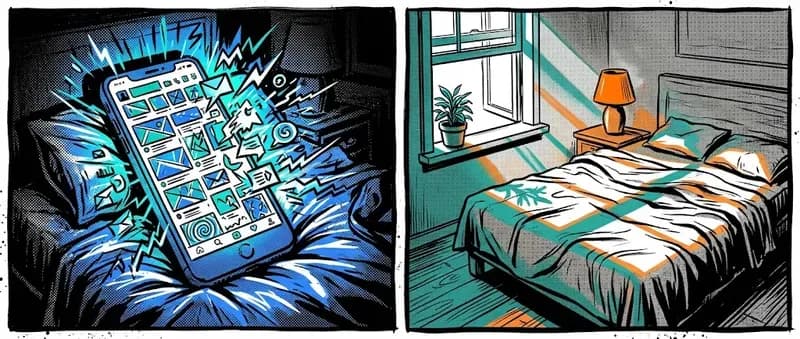
Cause 1: Did Porn Train Your Arousal Toward a Screen?
Here's how I explain how porn use can lead to ED: think of it as "brain training". Masturbating to porn is a completely different thing in a completely different context than real sex. Using lots of porn trains your brain to get aroused when you are: alone, in front of a screen, with a seemlingly endless variety of visual stimulation available to you.
Then, you try to have real sex with a real person and suddenly, everything is different: you aren't alone anymore, there's no screen, there's a whole other person there who has their own desires and needs... your brain is not use to getting aroused in this context. And so, your penis doesn't respond the way you'd want it to.
Add to that the escalation problem:
You start with something mild. Then that gets boring and you need more novelty. Then more intensity. Then more tabs. Then more specific categories. Eventually, seeing a naked woman is no longer exciting. You've trained your brain to need your very specific type of woman performing your very specific favorite fetish and you perhaps need 4 separate tabs of that happening at the same time, to get excited.
One woman, in the flesh, in front of you? That's just not stimulating enough anymore!
This is the hyper-stimulation problem and once you understand it, so much about porn addiction and porn recovery makes much more sense.
Experiment: remove porn for 30 to 90 days
It's pretty easy to find out whether porn use has impacted your ability to get erections and enjoy sex: quit and see what happens.
Thirty days is enough for most guys to notice changes. Don't expect it to solve all your problems (or give you superpowers), but you'll notice something. If you have been using porn for years, especially if it's since a young age, 60 to 90 days is a more realistic experiment.
Pay attention to:
- Are morning erections returning?
- Are you feeling more attraction towards real people?
- Do you feel less numb?
- Are you less dependent on extreme novelty?
- Do you feel more present and less distractable?
If yes, good. Keep going.
If no, it does not automatically mean porn had nothing to do with it. Recovery is not always linear, and some men go through a flatline where libido drops before it returns. I have a full breakdown of that here: The NoFap Flatline: What It Is, Why It Happens, and How to Get Through It.
But if ED persists, especially if you also lack morning erections, feel low energy, have pain, have diabetes risk, smoke, or have cardiovascular symptoms, do not turn this into a purity contest. Speak with a doctor.
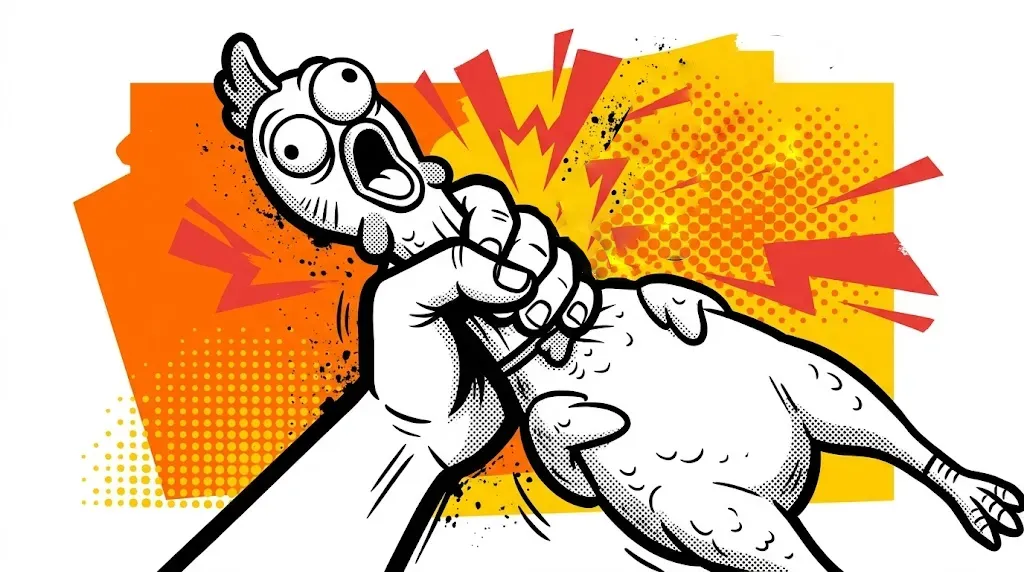
Cause 2: Is Your Masturbation Habit Too Specific?
Masturbation itself is not a problem. But it can lead to "Death Grip Syndrome" which is where you are used to a tight grip and fast motion to get yourself off.
This is a problem that has some similarities to the hyper-stimulation problem we discussed above: you are basically giving your penis too much tension and too much friction and you've trained yourself to feel pleasure in this specific way.
Another person will not grip you in this exact same way. And the tightness and friction/speed of a vagina is much less than what you are used to from masturbation.
If you can get hard easily during solo masturbation, but not with a partner, that tells you something. Your body is capable of erection. The problem is not physical in that sense. It may be context, anxiety, conditioning, or the gap between what you trained and what real sex asks of you.
The solution is not shame. It is retraining.
Experiment: take a break from masturbation
Try 30 days without porn and masturbation. No because there's anything morally wrong with doing it, but because you need to see what happens when your nervous system stops getting the same artificial stimulation on demand.
After that, if you choose to masturbate, keep it porn-free and do not recreate the same high-pressure, high-speed stimulus that real sex can never match.
Yes, this is a little awkward to talk about.
Actually, who am I kidding? This whole article is awkward. But it's the kind of hard-to-talk-about-but-honest discourse we need more of. So let's keep going:
Cause 3: Are You Having Sex or Performing a Role?
It's possible to experience ED for purely psychological reasons. Meaning: your body is perfectly capable of getting an erection, but your mind is getting in the way. You're too nervous, too anxious, too much in your head.
One common cause for this is performance pressure. That's when you feel like you have to be the big, strong super-lover with endless stamina. This can especially happen when you're trying to measure up to what you've seen male performers do in porn.
Years of watching porn make you think you need to be huge, last forever, know every position, make her orgasm repeatedly, never be nervous, never lose rhythm, never laugh, never need a break, never be human for even a second.
Very reasonable. Very normal. Very relaxing.
Then you get into bed and your mind starts commentating:
Am I hard enough?
Am I taking too long?
Does she think I'm bad at this?
What if I lose it?
And there it goes.
This is one of those cruel loops where fear creates the exact thing you fear. The more you worry about losing your erection, the more likely it's going to happen.
Experiment: practice mindful sex
The practical move is to stop making orgasm or performance the goal for a while.
That does not mean becoming passive or pretending you do not care. It means shifting attention from performance to sensation.
Try this:
- Slow down.
- Breathe lower into your body.
- Notice physical sensation without narrating it.
- Make eye contact if it feels natural.
- Touch without rushing to the next thing.
- "Zoom in" on your physical sensations and invite your partner to do the same.
This is also where communication matters. If you are with someone you trust, say something simple:
"I get in my head sometimes, and I want to slow down instead of trying to force it."
That sentence can remove a lot of the pressure.
If you are in a relationship and porn has become part of the issue, hiding it usually adds shame on top of anxiety. I wrote more about that here: How to Quit Porn When You're in a Relationship.
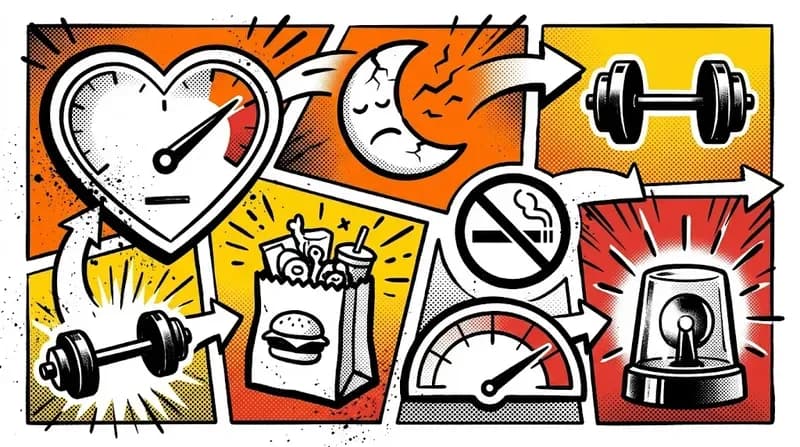
Cause 4: Is Your Body Giving You a Health Warning?
Erections depend on blood flow, hormones and nerves. These biological factors are impacted by sleep, diet, stress and cardiovascular function.
That means ED can show up as an early warning sign. And if you ignore the warning sign, it will turn into more serious health issues later down the road.
This is, in my opinion, the true reason ED was typically associated with advanced age. Nothing about being in your 40s or 50s is inherently making your erections weaker. It's just that poor lifestyle choices accumulate and start showing up around this age.
But just like a guy in his 50s can experience ED as a result of an unhealthy lifestyle, so can a guy in his 30s or even 20s.
Sometimes, the problem is straigh forward:
- You sleep an average of five hours.
- You eat ultra-processed food most days.
- You don't exercise.
- You smoke or vape.
- You drink too much.
- You live with chronic stress and call it ambition.
And then your body fails to deliver a calm, blood-flow-dependent sexual response on command.
Not really that surprising, is it?
The medical world takes this seriously for a reason. The American Urological Association guideline says men with ED should be told it can be a risk marker for cardiovascular disease and other health conditions. The current European guidelines also emphasize medical history, psychosexual history, physical examination, glucose and lipid assessment, testosterone evaluation, and cardiovascular risk assessment where appropriate.
This does not mean you should panic. But it does mean that you should stop treating ED as only a sexual problem.
Experiment: fix the obvious physical inputs
Lifestyle is not complicated. If you have a lifestyle unhealthy enough that it affects your erections, it's not hard to tell (see the list above). And the fix isn't difficult to figure out either.
People love to geek out about bio-hacking and lifestyle optimization but remember, what makes the biggest difference are the boring basics:
- Sleep enough, consistently.
- Lift weights or train hard several times per week.
- Walk daily.
- Eat mostly whole foods.
- Reduce sugar and ultra-processed food to as close to zero as possible.
- Don't smoke or vape.
- Don't drink.
- Get sunlight early in the day.
- Treat anxiety and depression as real health issues, not personality flaws.
I know, that's a lot. I'm asking you to raw-dog life.
You don't have to do it all at once. But the more items on this list you can check off, the better.
Not sure where to start? Start with sleep.
If your sleep is a disaster, start there. Sexual function is not separate from recovery, hormones, mood, and energy. This is why I wrote a full piece on the two things that actually fix your sleep.
And if you have persistent ED, sudden ED, no morning erections, pelvic pain, numbness, very low libido, chest pain, diabetes symptoms, medication changes, or any serious health concern, talk to a qualified clinician. This article can help you think. It cannot diagnose you.
Summary: What to Do in What Order
So, we've laid out the different causes of ED and an experiment you can do for each one, to find out if that's what's causing the problem for you.
Now, keep in mind it can also be a combination of issues. For example, you may be affected by erection problems because of desensitization from excessive porn use AND have performance anxiety at the same time.
The idea of what I'm laying out here is that you can do risk-free experiments that give you clarity and also give you your strong erections back. Here's the order I recommend:
Step 1: Lifestyle Check
Do you have healthy sleep, exercise and diet habits? If yes and you are under the age of 40, you can rule out lifestyle/health as the cause of ED. Meaning: it's unlikely to be a purely physical issue.
If you're not sure or you know that you have some serious vices (e.g. high stress + smoking), consider getting a health checkup.
Step 2: Quit Porn Completely
No "softcore." No edging. No social media substitutes. No excuses. Quit cold turkey and see what happens for the next 30 days. You can still masturbate, but without the overstimulation from porn.
Step 3: Pause Masturbation
If this doesn't clear the issue, take a break from masturbation as well. If sensitivity, libido, and erections start to return, you have your answer.
Step 4: Rebuild Confidence (Slowly)
If you've done all of the above and you're still struggling with ED, we're looking at a purely psychological issue. There's nothing wrong with your penis, the problem is entirely in your mind.
I wish there were an easy solution to this problem, but the truth is, it takes slow rebuilding of confidence. And the best way to do that is to take it slow. Unlearn "sex as performance" and learn "sex as an exploration of pleasure".
Byt the way: phase 3 of the my course is about reconnecting with healthy sexuality, dating, intimacy, and real-life attraction. If you want a structured path for that, the QuitByHealing Program is here to help.
Bonus: Talk to Your Partner if You Have One
Struggling with issues like porn addiction and ED can be even harder in a relationship than solo.
But if you know how, you can get your partner to be your greatest ally. I've written a comprehensive guide on how to do this, right here.
The Real Point Is Not Just Getting Hard Again
Erectile dysfunction is a symptom, but the deeper issue is often disconnection. Disconnection from your body, your partner, your health, your emotions, and your true sexuality. Solving ED is not only about restoring function. It is about becoming the kind of man who can stay present when real intimacy is in front of him.
That is the part porn steals most efficiently.
Porn trains you to consume sex from a distance. Real intimacy asks you to participate. That includes your body, your nervous system, your honesty, your insecurity, your desire, and your ability to stay with another person when you cannot control every variable.
The good news is that most of this is trainable.
You can remove porn. You can reset your body. You can communicate instead of hiding. You can build a lifestyle that supports sexual function instead of draining it. You can learn to be in the moment instead of watching yourself from outside.
You got this.
Frequently Asked Questions
Can porn cause erectile dysfunction?
It can contribute to it in some men, especially when use becomes compulsive, escalates to more extreme material, or replaces real intimacy. The research doesn't show that simply watching porn often causes ED in most men. What matters more is whether porn has trained your arousal toward a screen: being alone, with endless novelty, instead of with a real person.
How do I know if my ED is caused by porn?
Quit porn and see what happens. Thirty days is enough for most guys to notice changes. If you've used porn for years, especially from a young age, 60 to 90 days is a more realistic test. Watch for returning morning erections, more attraction to real people, and less need for extreme novelty.
If you can get hard alone but not with a partner, your body is capable. The problem is more likely context, conditioning or anxiety.
How long does it take to recover from porn-induced ED?
It varies. Most men notice changes within about 30 days without porn, while longtime heavy users should give it 60 to 90 days. Recovery isn't always linear. Some men go through a flatline where libido drops before it comes back, and that doesn't mean it isn't working. If ED persists after that, talk to a doctor.
What is death grip syndrome?
Death grip is when you've trained yourself to reach orgasm with a very tight grip and fast motion during masturbation. A partner won't touch you that way, and sex gives far less pressure and friction, so your body doesn't respond the way it does alone. The fix isn't shame, it's retraining: take a break from masturbation, then keep it porn-free and gentler so you're not recreating a stimulus real sex can't match.
When should I see a doctor about ED?
Erections depend on blood flow, hormones and nerves, so ED can be an early warning sign of cardiovascular and other health problems, even in young men. See a doctor if ED is persistent or sudden, or if you also have no morning erections, pain, numbness, very low libido, diabetes symptoms or chest pain, or if it started after a medication change.
About the Author
Shane is a serial entrepreneur with a long-standing obsession for personal development and life optimization. He has a habit of buying more books than he can ever read. During his childhood his worldview was significantly influenced by Jackie Chan movies, the Vorkosigan Saga and the writings of Miyamoto Musashi.

Shane Melaugh
There is a Better Way to Quit.
Stop relying on sheer willpower. Learn the step-by-step psychological framework that makes quitting inevitable.