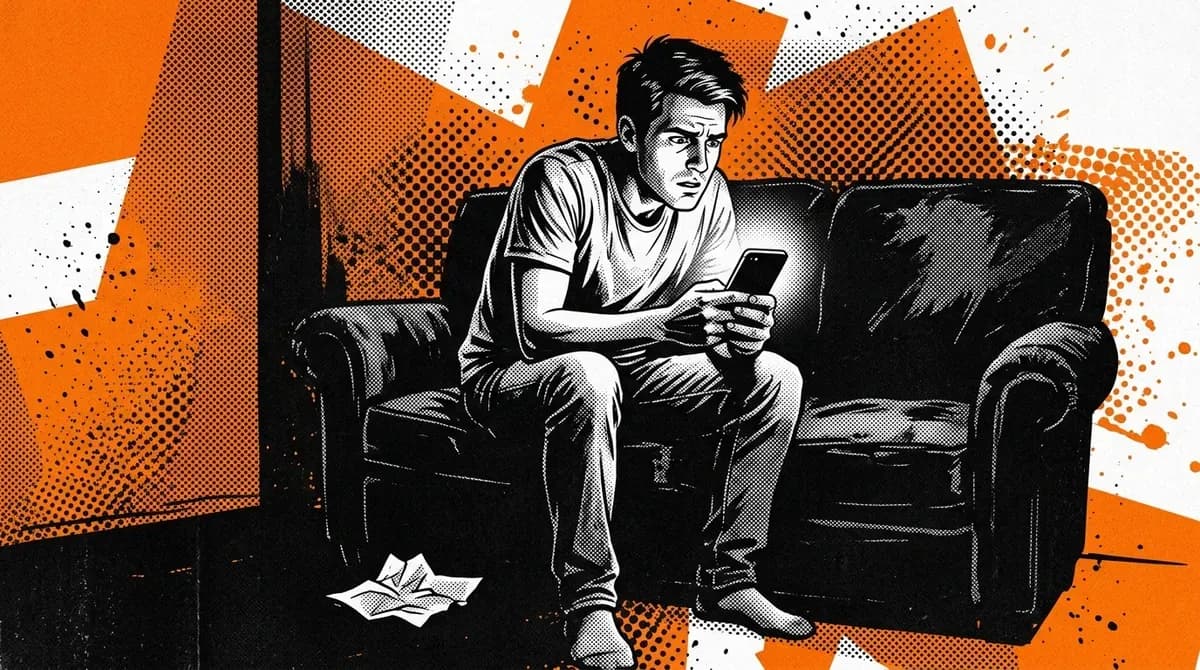
I've lost count of how many guys I've talked to who said some version of this: "I'm not watching porn anymore. I just scroll through Instagram sometimes. Maybe some tasteful nudes. Nothing hardcore."
They say it like they're reporting progress. Like they've climbed halfway up the mountain.
They haven't moved.
TL;DR: Switching from hardcore to softcore content doesn't fix the core problem. You're still training your brain to be aroused by screens, and still running the same habit loop. The "lighter" content feels like progress but preserves every mechanism that keeps you addicted. Real recovery means sitting with the discomfort, not finding a less intense version of the same hit.
What Exactly Is the Softcore Trap?
The softcore trap is the moment you convince yourself that milder sexual content is an acceptable substitute for hardcore pornography. You've quit the extreme stuff. You know it's hurting you. But the urges are strong and you're looking for something to take the edge off.
So your brain offers a deal: What if I just look at some bikini photos? Some suggestive content? Maybe some comics or artsy nudes? It's not really porn, right?
It feels reasonable. It feels like harm reduction. And on exactly one dimension, it is: the raw intensity of the visual stimulus is lower.
But that's one dimension out of five. The other four — screen attraction training, spectator-mode sexuality, the instant gratification loop, and the novelty carousel — are the ones actually destroying your life.
What Are You Training Your Brain to Do?
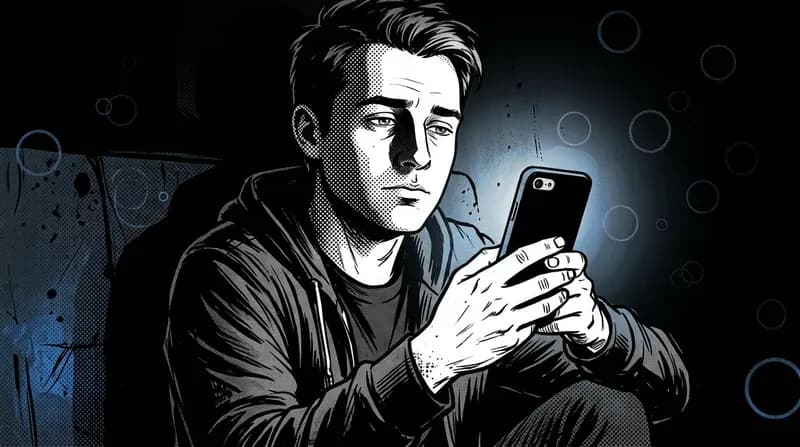
Here's the question that changes everything: stop asking "Is this content less extreme?" and start asking "What am I training my brain to do?"
Because everything you do is brain training. Every time you repeat a behavior pattern, you're strengthening the neural pathways that make you do it again. And when you switch from hardcore to softcore, here's what you're still training:
You're Still Training Screen Attraction
Whether you're watching a hardcore video or scrolling through bikini photos, you're teaching your brain the same lesson: sexual arousal comes from a screen.
Even if what's on that screen is less hardcore, many of the problems will remain the same. Lacking the courage or motivation to engage in real-world dating. Difficulty getting or staying aroused with a real partner. Difficulty staying present during sex.
Only once you quit completely does the brain's healing process really start. And that's when you'll notice real changes in your mood, energy, motivation and more.
Hardcore or softcore, you're reinforcing the same association. You're telling your brain: This is where sex happens. Me, by myself, on this screen.
You're Still in the Third Person
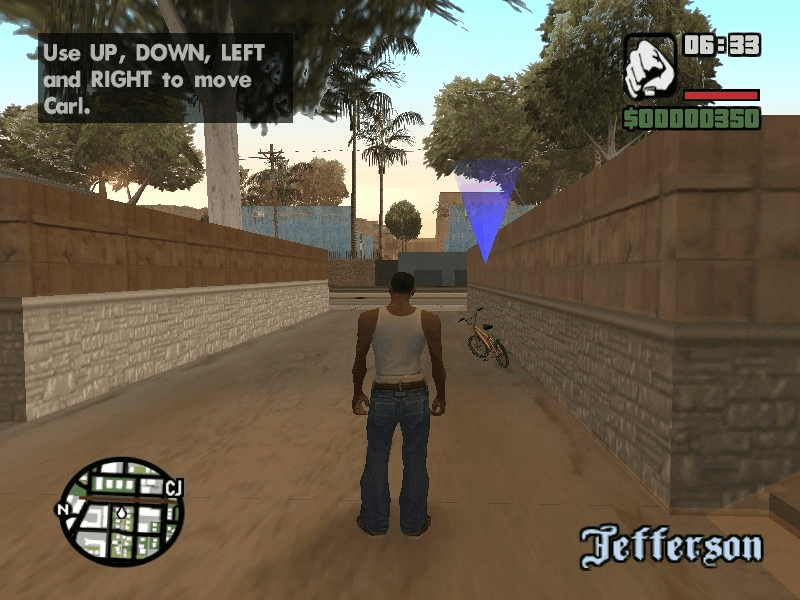
If you've ever played a game like GTA, you know the difference between first-person and third-person mode. In third person, you're watching your character from the outside. You see everything happening, but you're not in it.
That's exactly what you're doing with any sexual content. You're in the observer position. Watching. Not participating. Not connecting. Not being present with another person.
You're training your brain to experience sexuality as a spectator sport.
Real intimacy is first-person. It's messy and vulnerable and alive. It requires you to be in your body, not watching from outside it. And every time you scroll through content, you reinforce the third-person wiring. You get more comfortable watching, less comfortable doing.
You're Still Getting the Instant Hit
You feel an impulse, you pull out your phone, and you see something arousing within seconds. That loop is identical whether the content is hardcore or softcore.
The way this trains your brain is exactly the same mechanism behind the dopamine problem that silently erodes your drive and motivation. Instant access to stimulation rewires your reward system to expect everything fast and cheap.
Real attraction doesn't work this way. Real connection takes time, vulnerability, patience. But your brain is being trained to expect instant access to sexual stimulation. And when something that used to take effort and risk becomes something you can summon in two taps, you lose the capacity to tolerate the slower, richer process of real human connection.
Why Scrolling Is Just as Overstimulating
Here's the thing most guys don't realize about the softcore trap. Even if each individual image is less extreme than what they used to watch, the volume is the same.
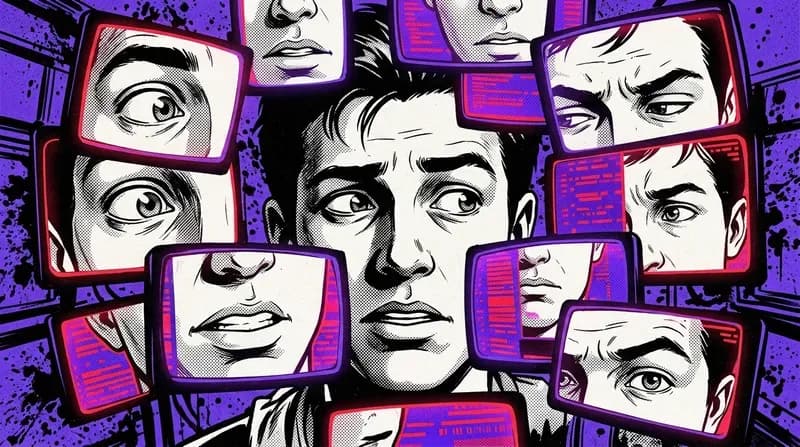
Think about what actually happens when you scroll through Instagram. You see one attractive person. Then another. Then another. Hundreds of faces and bodies in the span of a few minutes. Each one slightly different. Each one triggering a tiny dopamine bump as your brain registers: new, new, new, new.
This is what I call the carousel effect. You're swiping through a never-ending display of potential partners at a speed that no human being was ever designed to process.
Now think about what your brain was actually built for. Evolutionarily, seeing an attractive person meant approaching them. Getting to know them. Building some kind of connection. Eventually, maybe, reaching a point of intimacy or arousal. That process might take hours. Days. Weeks. For one single person.
Your phone gives you hundreds in three minutes.
This is exactly what digital hyper-stimulation does to your brain. It exploits the same evolutionary wiring that porn does, just with a different wrapper.
And the whole time, you're in seeking mode. Looking for just the right one. Just the right pose, just the right face, just the right body. This seeking behavior is one of the most damaging parts of pornography use, and it's 100% present in softcore consumption.
After a session like that, a real person cannot compete. Not because they're not attractive, but because they're one person. Your brain has been trained to expect constant novelty, and a single human being will never provide that.
Softcore Content Keeps You a Hair's Width from Full Relapse
The biggest reason the softcore trap is dangerous: it preserves the entire habit loop. Same triggers, same device, same motions, same reward. You're just swapping one version of the routine for a slightly milder one.
Because nothing fundamental changes, your brain doesn't heal. The pathways stay active. The associations stay strong. So what happens inevitably? You're scrolling through the "acceptable" content, and one day you think: Well, this isn't really working anyway. My life hasn't improved. I might as well go back to the real thing.
And you do. Because you were never more than a hair's width away.
The Pain is the Point
This is the part that's genuinely hard to sit with.
The discomfort you feel when you stop consuming sexual content is not a problem to solve. It's the healing process itself.
When you withdraw from any habit, your brain protests. It sends distress signals. It tells you something is wrong and you need to fix it immediately. This feels terrible. And the natural response is to find something, anything, to take the edge off.
The softcore trap is exactly that: a way to take the edge off without technically going back to porn. And every time you use it, you interrupt the healing that was happening underneath the discomfort.
Here's what I've found, both with myself and with guys I work with: it is genuinely easier in the long run to quit properly. To sit with a few weeks of real withdrawal. To let the discomfort do its work. I've written about what this healing process actually looks and feels like in detail. Because on the other side of that discomfort is actual progress. Your brain starts to rewire. Real things start to feel interesting again. Real people start to feel attractive in ways they haven't in years.
Or you can keep softcore in the rotation, feel slightly less terrible in the short term, and stay stuck for months or years. I know which one I'd choose.

What Actually Works Instead?
If you're reading this and recognizing yourself in it, here's what to do.
🚫 Cut All Screen-Based Sexual Content
Not just the extreme stuff. All of it. Instagram models, Reddit forums, suggestive TikToks, everything. If it's on a screen and it's designed to arouse you, it goes. This is the only way to break the screen attraction training.
🌊 Expect the Withdrawal and Welcome It
The discomfort is not a sign that you're doing it wrong. It's a sign that your brain is actually healing. Name it when it happens. Say to yourself: This is the healing process. This is what progress feels like. It won't make it painless, but it changes your relationship to the pain.
🔄 Replace the Behavior, Not the Content
The answer to urges isn't finding something less intense to look at. It's doing something completely different with your body and attention. Go for a walk. Do push-ups. Take a cold shower. Call someone. I've built a complete urge response toolkit with every strategy available to you when those moments hit.
The goal is to break the loop at the trigger level, not to find a softer version of the reward.
🌱 Reconnect Sexuality with Real Life
This is the long game, and it matters more than anything else. Every time you choose a real interaction over a screen, you're training the opposite pattern. You're teaching your brain that connection, presence, and vulnerability are where sexuality actually lives.
By the way, this is explicitly part of the QuitByHealing Program. The third phase is all about how to reconnect and re-cultivate a healthy relationship with your sexuality. It's not just about stopping the bad stuff. It's about building something real in its place.
The Question That Matters
Stop asking yourself "Is this content okay to look at?" That question is a trap in itself because it keeps you negotiating with the addiction.
The better question is: What am I training my brain to do right now?
If the answer involves a screen, seeking behavior, instant gratification, and zero human connection, it doesn't matter how "mild" the content is. You're training the same patterns that got you here.
What's on the other side of this discomfort is a life where real things feel real again. Where another person's presence is enough. Where you don't need to scroll to feel something.
That's worth a few weeks of pain. Can you sit with it?
About the Author
Shane is a serial entrepreneur with a long-standing obsession for personal development and life optimization. He has a habit of buying more books than he can ever read. During his childhood his worldview was significantly influenced by Jackie Chan movies, the Vorkosigan Saga and the writings of Miyamoto Musashi.
Shane Melaugh
There is a Better Way to Quit.
Stop relying on sheer willpower. Learn the step-by-step psychological framework that makes quitting inevitable.