The If-Then Plan: How to Beat Porn Urges Before Your Brain Goes on Autopilot
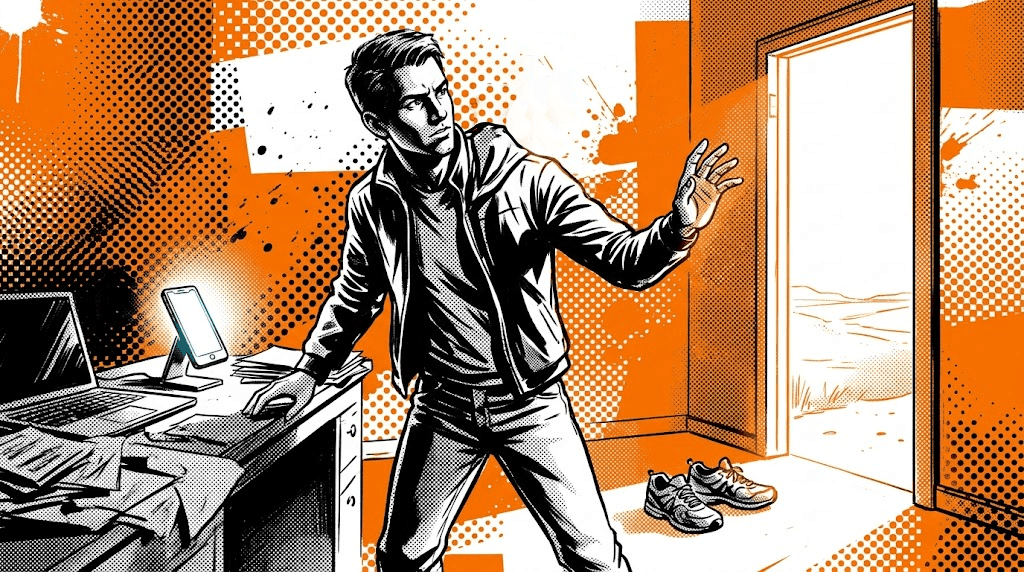
I was in my home office, staring blankly at my laptop's screen. I'd been chewing on a design problem for hours and I felt stuck.
It was a workday like any other. Nothing crazy going on, just the regular kind of "I don't know what to do next" feeling. I closed my laptop and, without really thinking about it, reached for my phone.
That's how it usually started. A sense of discomfort, frustration or boredom. Then I'd reach for my phone for some distraction. And before I knew it, I'd find my way to a porn site...
The problem wasn't that the urge for porn was very strong in these moments. The problem was that I had no plan for what to do with it.
TL;DR: The moment you feel triggered, your brain's rational decision-making system goes offline. That's exactly the wrong time to decide how to respond. The If-Then Plan solves this by writing your response in advance, then practicing it until the new response becomes as automatic as the old one.
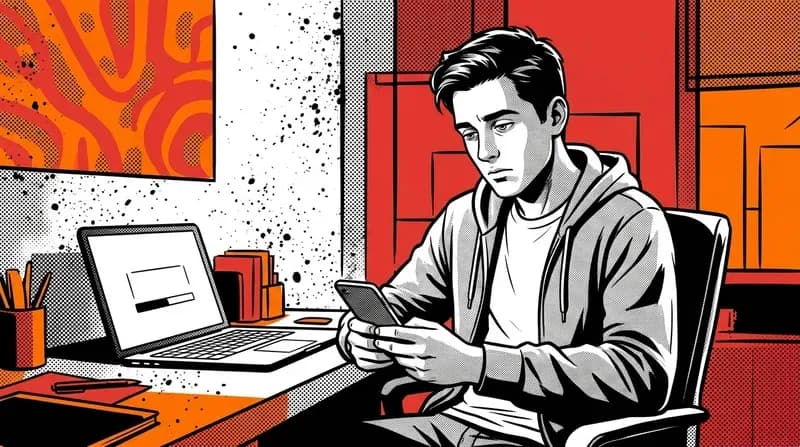
Why Your Brain Checks Out the Moment You're Triggered
Research shows that addiction affects the prefrontal cortex, the part of the brain responsible for planning, reasoning, and making long term decisions.
The moment you get triggered, this part of the brain down-regulates. Meaning: there's less activity there and instead, the more instinctive, reward-seeking midbrain takes over. This is why the experience of being triggered feels so much like switching into autopilot. You didn't decide to open that tab. You just ended up there.
To be clear: the rational brain doesn't fully switch off in these moments. But it takes enough of a hit that the version of you who wants to quit porn (usually for rational, long-term reasons) isn't fully in charge anymore.
This creates a catch-22: the moment you need good judgment the most, you have the least of it.
This is why willpower-based approaches to quitting porn generally don't work (and why QuitByHealing is based on a completely different approach).
What is an If-Then Plan for Quitting Porn?
The fix is simple, but not easy: make the decision before the trigger ever fires.
In other words: you decide now how you want to respond the next time you feel that pull towards porn. And to make the decision stick, you put it into writing.
Literally grab a pen and paper and write down a statement in this format:
IF I feel an urge to watch porn, THEN I will do X.
Then, every time an urge comes up, you follow the plan. No negotiating. No deciding in the moment. Just predetermined steps.
It sounds almost too simple, but whether this works or not depends on a few key factors.
First, let's look at some examples of a good "then" part of the plan.
Five Options for Your "Then"
As I explained in my post about the best and worst replacement habits, not all options are made equal. Here are five specific suggestions that are optimal, each working through a different mechanism. Pick the one (or two) that appeal to you and try them out.
Option 1: Breathwork
Breath is the bridge between your bridge between the autonomic and voluntary nervous systems.
What does that mean, exactly?
Breathing is a rare bodily function that runs automatically, without you ever thinking about it, but that you can also take direct control over. And controlled breathing is the best tool you have to influence the otherwise unreachable automatic parts of your nervous system (like your heart rate, digestion, stress response etc).
This is highly relevant when we consider that addiction is exactly a problem of switching your behavior from deliberate to autopilot mode.
Two specific techniques worth knowing:
Box breathing: Inhale for a count of four, hold for four, exhale for four, hold for four. Repeat. Use a slow count. Slower is better, within what feels manageable without gasping. The counting has a useful side effect beyond calming your nervous system: it occupies your mind.
When I do box breathing, I literally think in my mind: "In-two-three-four, hold-two-three-four, out-two-three-four, hold-two-three-four,..."
Extended exhale: take a deeeeep inhale, all the way in. At the top, take one more extra sip of air. Then hold until it gets a little uncomfortable. Then, exhale as slowly as possible. On each round, try to extend the exhale by one count: five, then six, then seven. The ratio of exhale to inhale is what drives the calming effect. The longer the exhale relative to the inhale, the more your parasympathetic nervous system activates and pulls you back from the stress state.
The great thing about breathwork is that you can do it anywhere, any time.
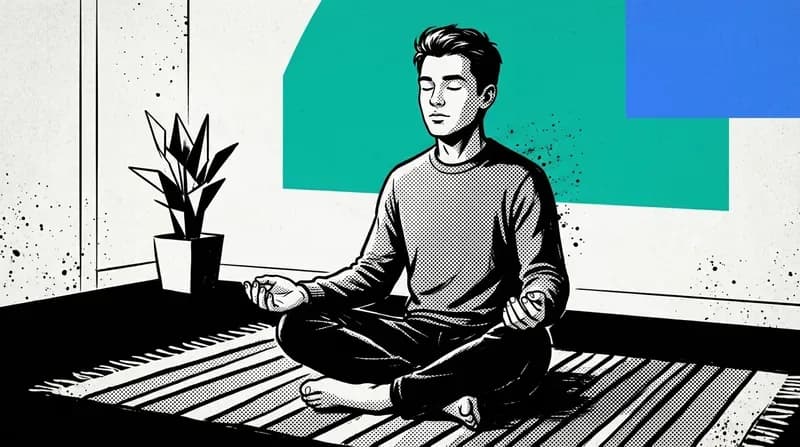
Option 2: Sitting in the Fire
Rather than fighting the urge or distracting yourself from it, you bring your attention directly to the physical sensations of the urge in your body and observe them without acting on them. You sit with the discomfort instead of running from it.
The key thing here is to drop from your mind into your body. This is a move that may take some practice.
Doing this builds a fundamentally different capacity than distraction-based techniques. Distraction puts a pause on the urge. Sitting in the Fire changes your relationship with it. This article covers the full process in detail and I recommend you give it a read. It's worth learning properly rather than improvising from a brief description. Done right, it's one of the more powerful tools available for getting through urges without relapsing.
Like breathwork, it has the advantage that you can do it any time, anywhere, no excuses.

Option 3: Leave the Room and Go for a Walk
This one changed more for me than I expected.
When I started paying attention to the pattern behind my restless, uncomfortable feeling, I noticed two things almost every time.
- Either I was mentally stuck: too much input, a problem I didn't know how to move forward on.
- Or I'd been indoors and sedentary for too long and I started feeling stagnant.
Going for a walk turned out to be the most effective response I found. And I mean actually leaving the house, not just moving to another room. Within a few minutes of walking, I feel better and more settled. And I completely forget about any desire for porn.
There are also tremendous creative benefits. On longer walks, I often work through whatever has me stuck in the first place. My best ideas come on walks.
Another great side effect since I started this habit: on an average day, I effortlessly clear 10,000 steps, which is great for longevity (and helps me not get fat despite my love for snacking).
There's also an important environmental factor at work here. Context-dependent cravings explains how your environment itself becomes a trigger over time. Leaving the house physically removes you from the cues that were priming the urge in the first place. Which means you're not just distracting yourself, you're breaking the chain.
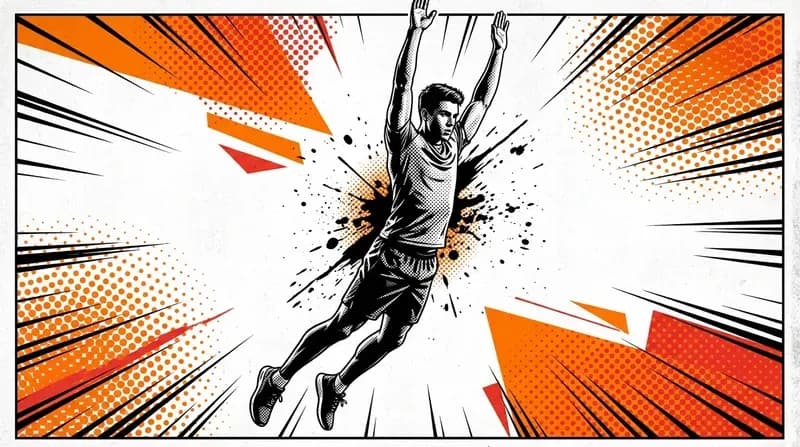
Option 4: Burpees (Ideally Real Ones)
If walking is a gentle redirection, burpees are a hostile takeover of your nervous system.
The mechanism is blunt: burpees are so physically demanding that your body has no resources left to focus on anything other than survival. Before you start, your nervous system is in a low-grade "I'm bored, give me something" state. Halfway through a hard set, you're in gasping for air, muscles on fire.
All your processing power is pointed at keeping you upright and breathing. The urge loses its grip because you simply flood your system with an overpowering input.
Now, allow me to be a bit gatekeep-y about burpee technique: don't do them CrossFit style. Those are designed for endurance competition: conserve energy, rack up reps.
And also they look cringe.
What you want here are ninja burpees, which look badass. Here's how to do them: do a full-range push-up with strict form, jump as high as you can, land softly (like a Ninja, see?). The goal is to reach exhaustion faster, not to pace yourself through reps. The side effect, if you use this consistently, is that you might end up in surprisingly good shape. That's not the point. But it's not a bad trade-off either.

Option 5: Write About What You're Feeling
Sit down and write directly about the urge. Not as a way to escape it, but as a way to look at it. What does it feel like right now? What thoughts are running through your head? What sensations are coming up in your body? What was happening in the ten minutes before this started?
Writing turns the experience into something you can observe rather than a current you're caught in. And when you start looking closely at what's underneath the urge, actually looking rather than scrolling past it, things start to surface. Patterns. Memories. The shape of what the addiction has been covering.
This is one of the entry points into deeper work. Not just managing urges, but understanding why they keep appearing. The surface behavior is rarely the whole story.
To learn more about how to use writing as a self-awareness superpower, check out my free Introspective Writing Crash Course.
How to Build a Plan That Actually Works
Pick one or two of the options above. Then write out your plan.
Make it specific. Don't write: "I'll go for a walk." Write: "I'll put my phone in the drawer, close the laptop, put my shoes on, and walk at least to the end of the street and back."
Specificity matters because your brain will try to negotiate when you're triggered. Do I really need to do the full thing? Maybe I'll just step outside for a moment. A vague plan creates space for that negotiation. A detailed plan closes it. The more specific the steps, the less there is to decide in the moment.
Time to Put in the Reps
Once you've written it down, treat it as your current standing decision. Then use every urge, including the weak ones, as an opportunity to practice. Weak urges are the easiest practice reps you'll get. Don't save the plan for the hard moments. Build the habit while the resistance is low. In fact, do a few reps even when you aren't feeling an urge.
The more you practice, the better.
Stay with the exact same sequence for at least ten repetitions before making any changes. A good plan can feel awkward at first just because it's new. That's not a sign it's wrong. Give it time to settle in before tweaking. After ten reps, you'll have much better information about what's actually working and what genuinely needs adjusting.
The Only Moment That Matters Is Before You Need It
The plan only works if you make it before you need it. Once an urge hits, that version of you that has good judgment has already stepped back from the wheel. Making the plan now, with a clear head, before anything triggers you, is the actual intervention.
Write it down. Make it specific. Then follow it the next time your brain tries to hand the keys to autopilot.
What's your "then" going to be?
About the Author
Shane is a serial entrepreneur with a long-standing obsession for personal development and life optimization. He has a habit of buying more books than he can ever read. During his childhood his worldview was significantly influenced by Jackie Chan movies, the Vorkosigan Saga and the writings of Miyamoto Musashi.

Shane Melaugh
There is a Better Way to Quit.
Stop relying on sheer willpower. Learn the step-by-step psychological framework that makes quitting inevitable.