Sitting in the Fire: The Technique That Makes Dealing With Urges EASY
Shane Melaugh
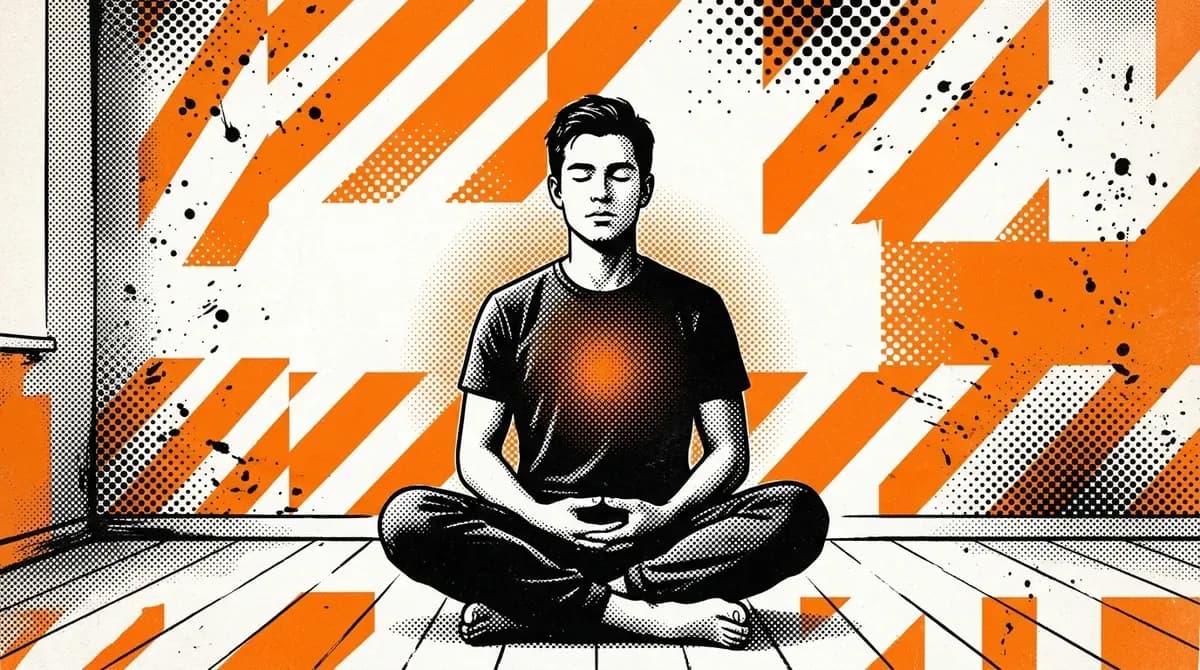
Every guy who's tried to quit porn knows this moment. You've decided you're done. You're committed. And then, a few days in, you start to feel it... the urges start rising. You try to resist. The urge gets stronger. And at some point you hear yourself think: "I can't take this anymore!"
That's when you relapse.
Here's what I've learned from working with my clients: "I can't take it anymore" is not a description of your body's actual experience. It's a story your mind is telling.
When you learn to bring your attention to what's really happening in that moment, everything changes, urges become less challenging and quitting becomes easy.
Read on to learn the exact technique.
TL;DR: Sitting in the Fire means doing the opposite of your instinct: instead of avoiding or acting on an urge, you direct your full attention to the physical sensation in your body and do nothing about it. The sensation is almost always mild. The overwhelm comes entirely from the mental narrative layered on top. This technique dismantles that narrative by showing you the truth.
What Is Sitting in the Fire?
Sitting in the Fire is the practice of directing your full attention to an unpleasant feeling (for example an urge, a craving, an anxiety) and doing absolutely nothing about it.
No distracting yourself. No taking action to make it stop. Just staying present with the sensation as it is.
That sounds incredibly simple - too simple to be effective, right?
But it's more sophisticated than it might seem at first. Sitting in the Fire runs directly against two of the deepest instincts we have.
- The instinct to avoid uncomfortable feelings.
- The instinct to do something about it.
This is especially true when the feeling is an urge and the addiction is telling you that the only solution is to give in. Sitting in the Fire is the opposite of both moves, simultaneously.
I've taught this technique to men working through porn addiction and more broadly with clients on whatever they're trying to quit. The full toolkit of urge management strategies covers everything available when a craving hits — but this one sits at the core of real healing, not just management. Once you understand what it actually does, you'll see why.

The Spotlight of Your Attention
The key to using this technique is attention. Think of your attention as a spotlight: you can direct it and choose what to focus on.
Most of us think of attention as something we point at the world. You look at your phone, you listen to a song, you watch a show. That's attention aimed outward. But the same spotlight works internally. You can turn it toward sensations inside your body, and when you do, those sensations suddenly become vivid in a way they weren't a moment before.
Try it now, if you want. Close your eyes and point your attention at the soles of your feet. Are they warm or cool? Is there pressure from the floor? Are your shoes tight somewhere?
Before I mentioned your feet, you weren't thinking about them at all. But the moment you direct the spotlight of your attention there, you can feel all kinds of sensations.
Now try the same thing with your neck. How does it feel? Stiff? Relaxed? Scan for any tension.
Here's the second move: once you've found a sensation, zoom in. Don't just note "tension in my neck." Ask yourself — where exactly? Is it static or moving? How intense? What's the texture of it? When I check my own neck right now, I can feel a mild tightness, mostly in the back, running down toward my shoulders. Static. Maybe a two out of ten. That's zoomed in — specific, detailed, precise.
So, these are the two moves that make up the Sitting in the Fire technique:
- Direct your attention to a sensation in your body.
- Zoom in on the sensation.
How We Usually Respond to Difficult Feelings
When an unpleasant feeling shows up, most of us respond in one of two ways:
Response 1: Try to Escape!
You feel the urge, and immediately your mind starts looking for the exit. Distract yourself. Scroll something. Go to the fridge.
The mental story that accompanies this is usually layered with secondary fears: if I give in, I'll feel terrible again, I'll have failed again, I'll never get free. So now you're not just managing the urge, you're managing the urge plus the fear of relapsing plus the shame spiral that follows...
No wonder it feels like too much.
Response 2: Quick, Do Something!
The second instinct is to act. The urge carries a command inside it. The feeling itself says: you must do this thing to make me go away. There is no other solution. A lot of guys in early recovery believe this completely. The discomfort feels so specific, so pointed, that acting on it seems like the only possible choice.
Unfortunately, neither of these responses are helpful.
So then, what is?
Research into this has consistently shown that observing cravings as physical sensations (without reacting) decouples the craving from the compulsive action.
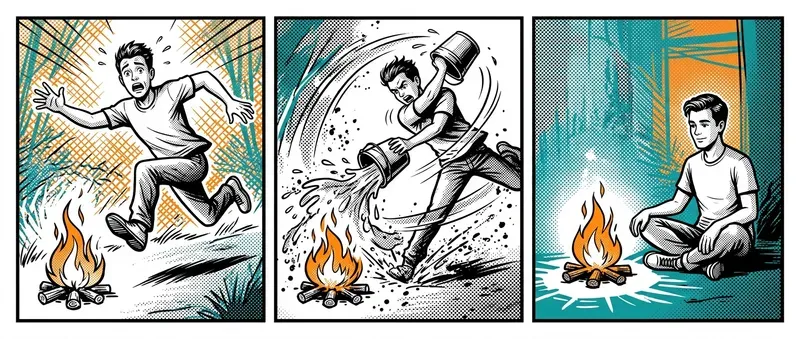
Sitting in the Fire is exactly that. Instead of escaping, you pay more attention. Instead of acting, you do nothing. The urge has nowhere to go.
How to Actually Do It: Step by Step
Here's the full practice. The first few times, go somewhere private, sit down, and close your eyes. Eventually you'll be able to do this whole thing quickly and efficiently, even while going about your day.
Step 1: Notice the Trigger
You've caught yourself reaching for your phone for no good reason. Or you feel the pull toward porn starting. Or some feeling is rising that you normally run from. This is the moment. Instead of letting the autopilot engage, pause and recognize: this is a chance to practice.
Step 2: Locate the Feeling in Your Body
Ask yourself: where do I actually feel this? Not "I feel anxious". That's just a label.
The trick here is to drop into your body. Where in your physical body is the sensation? Your mind will be running a narrative at this point. Let it. But behind the narrative, there's a physical experience happening somewhere in your body. Find it.
Step 3: Zoom In
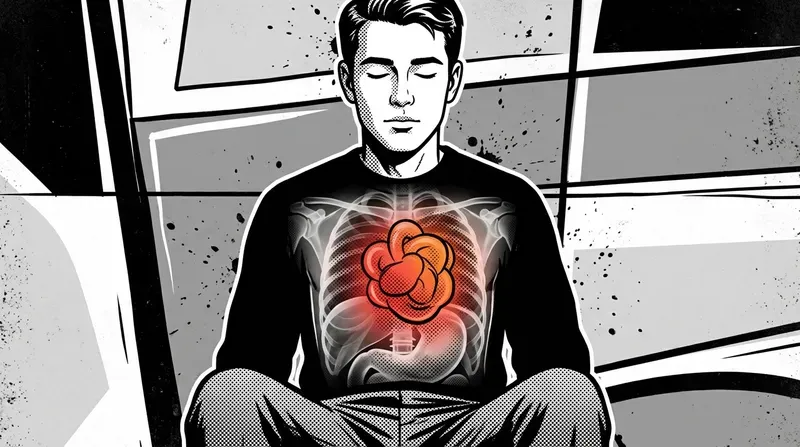
Once you've located it, describe it to yourself in as much detail as possible. Is it in the center of your chest or the left side? Is it tight like a fist or diffuse like a cloud? Does it feel hot or cold? Is there a texture to it — smooth, spiky, fuzzy? Is it moving or static? Does it have a color that comes to mind? Does it pulse or stay constant?
The more specific you get, the more complete your attention becomes. Most urges, when you do this honestly, reveal themselves as something like: mild tightness in the upper belly, leftish, slightly shifting, feels kind of like a knot but not a severe one, maybe a three. That's it. That's the terrifying urge.
Now, note: the description is just a way to direct your attention. Once you get the hang of it, you can let go of the words. Just feel the sensations exactly as they are.
Step 4: Stay
You've found it. You've zoomed in. Now comes the hard part: do nothing.
You're not trying to make it go away. You're not trying to hold it in place. You're not trying to change it, intensify it, or do anything at all with it. You're watching it, the way you'd watch clouds from a hillside. Clouds move or they don't. They change shape or they stay fixed. You're not responsible for any of that. You're just watching.
Something worth knowing: in most cases, when you genuinely attend to a sensation this way, it starts to loosen and dissipate on its own. Usually within a few minutes, it's significantly weaker. Sometimes it's gone completely. This is a side effect of the practice, not the goal. The moment you start using the technique in order to make it stop, it stops working. Your intention has to be: I'm just here to be with this.
If the sensation changes, just follow it. Keep attending.
Step 5: Reset When You Drift
Your mind will narrate. It will say: this isn't working, you should get up, this is pointless, you're doing it wrong. When you notice this, don't fight the thought. Just redirect: am I still feeling the sensation?
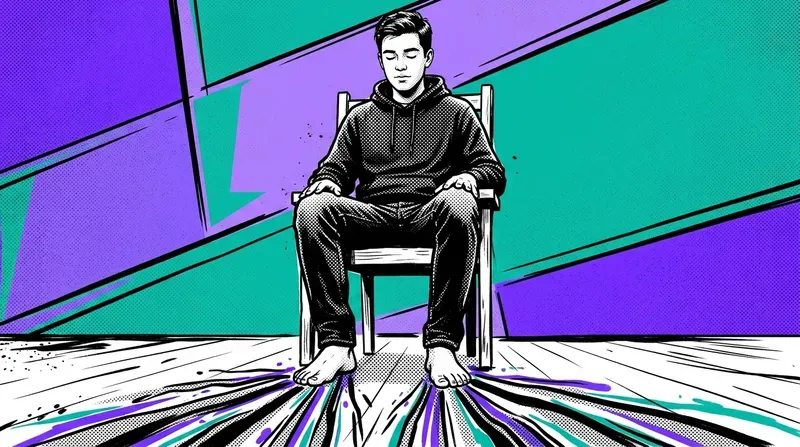
If you've completely lost contact with the bodily sensation, use this reset: press your feet hard into the floor and focus on the soles of your feet. This is the furthest point in your body from your head. Attending there forces the drop from mental noise down into the physical. Then scan slowly upward — ankles, shins, knees — until you find the sensation again.
IMPORTANT DISCLAIMER: What I'm describing next works for almost everyone, in almost all cases. However, if you have severe trauma in your past and you are at risk of dangeroud panic attacks, please work with a professional and don't attempt the follwoing techniques.
The Illusion of "I Can't Take It"
The most common objection is that the urge is too much. That you can't handle it. That sitting with it is impossible because the feeling is so overwhelming.
The story is always "I relapsed because I just couldn't take it anymore!!"
Sitting in the Fire proves this story is a lie.
When you do this technique, you locate the physical sensations of your "unbearable" urge, what do you actually find? A slighly unpleasant knot in your stomach? A fluttery, restless feeling in your throat? Some tension in your neck?
On a scale from 1-10 how painful is this?
Like, compared to a bad headache or a twisted ankle, it's a 3 at best.
Do you see how this is almost funny? Your mind is on full alert, telling you "I can't take it anymore" and meanwhile, you've survived much worse, more times than you can count.
What if It Gets Stronger?
Now maybe you're wondering: what if what I experience is more than a 3? And what if it gets worse as I try to sit with it?
If the sensation does get stronger as you attend to it, try this: lean into the sensation.
Say to yourself: let's feel more of this. If this is a 5, give me a 6. Give me a 7.
This sounds counterintuitive, and it is. But studies show that paradoxical intention works. That's when you deliberately engage with the feared symptom. It short-circuits the anticipatory anxiety that makes resistance feel necessary. You're no longer at war with the sensation.
How to Really Call Your Mind's BS
Here's one way you can take this even further. If your mind keeps protesting and sticks with the "this is too much handle!" story, try this:
Tell yourself: I'll allow this urge get so strong it kills me.
What I love about this is that it's really calling the bluff. And it reveals that the urge actually has no real power over you. It cannot kill you. In fact, it can't get anywhere near killing you. It can't even begin to harm you.
Do you see how liberating that is?
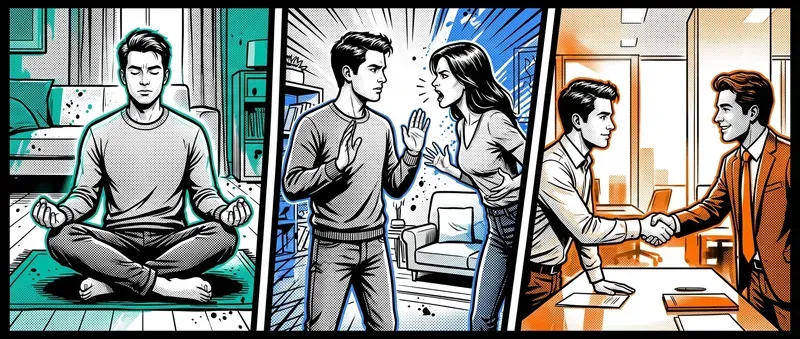
This Works Everywhere, Not Just for Urges
Once you learn this from urges, you have it for life. That's what I keep telling clients who feel embarrassed about having a porn addiction: the problem is annoying, but if you solve it properly, you come out the other side with something genuinely powerful.
Think about relationship conflict. Someone says something that triggers you. The usual script: your nervous system fires, you react from that state, you say something you later regret, or you shut down completely. The rupture happens. But if you've been practicing Sitting in the Fire, you can catch that moment — that activated, charged feeling — and instead of following it outward, you drop inward. What am I feeling in my body right now? That brief drop creates distance between the trigger and your response. Enough distance to make a choice. I've written more about how this connects to the broader healing process — it's the same mechanism that allows you to eventually lose interest in porn entirely, rather than just manage the urge indefinitely.
It works in high-stakes professional situations too. You're about to put a number on the table in a negotiation that makes you nervous. You're about to ask for a promotion. You're about to step on stage. There's a cluster of mental noise making you hesitant. But when you drop into the body and actually feel what's there — it's a tightness in the chest, maybe a quickening, and usually it's workable. Most people never learn to do this. They stay in the noise. They get smaller under pressure. You don't have to.
The same skill is active in the Rule of Opposites framework — the "going toward" orientation that accelerates healing. Sitting in the Fire and going toward an uncomfortable sensation is one of the cleanest expressions of that principle.
One More Layer: Talking to the Feeling
Once you're comfortable staying with sensations without trying to escape them, there's an additional move available. Instead of just watching, you can actually interact with what you find.
Ask the sensation: what do you want? What are you trying to protect me from? What do you need right now?
This sounds like something from a therapy manual, and it kind of is — it's related to parts work and Internal Family Systems approaches. But it's simpler in practice than it sounds. Most urges are protecting something: a fear of being alone, a wound around sexuality that never healed, a moment of unprocessed pain that got buried. When you ask a direct question and stay quiet in your body for the answer, something often surfaces. Not always. But often enough that it's worth trying.
If you want to go deeper into that kind of inner work, the free shadow work course available through QuitByHealing walks through exactly how to do it. Several practical lessons on accessing what's actually underneath the urge.
But start with the basics first. Find the sensation. Stay with it. Let it be there. That alone — just that — is enough to make "I can't take it anymore" feel like someone else's line.
Is there a feeling you've been avoiding this week? You know what to do with it.
About the Author
Shane is a serial entrepreneur with a long-standing obsession for personal development and life optimization. He has a habit of buying more books than he can ever read. During his childhood his worldview was significantly influenced by Jackie Chan movies, the Vorkosigan Saga and the writings of Miyamoto Musashi.

Shane Melaugh
There is a Better Way to Quit.
Stop relying on sheer willpower. Learn the step-by-step psychological framework that makes quitting inevitable.