Why Habit Change Feels Impossible: The Problem of Invisible Consequences
You already know what you should do. Exercise more. Eat clean. Quit porn. Stop doomscrolling so much. Sleep earlier.
Unfortunately, knowing what to do doesn't really make a difference.
When it comes to actually changing your habits, nothing sticks. Or it sticks briefly and then snaps back.
Why is this? Why is it so difficult to change your habits and why are bad habits seemingly so much stickier than good ones?
TL;DR: The biggest reason habit change fails is not a lack of willpower. Your brain learns primarily through immediate feedback and when the consequences of your behavior (good or bad) are delayed, learning is slow or nonexistent. This is why instant gratification is so hard to resist and good long term habits are so hard to establish. Knowing this, you can update your strategy.
Your Brain Learns From Burns, Not Plans
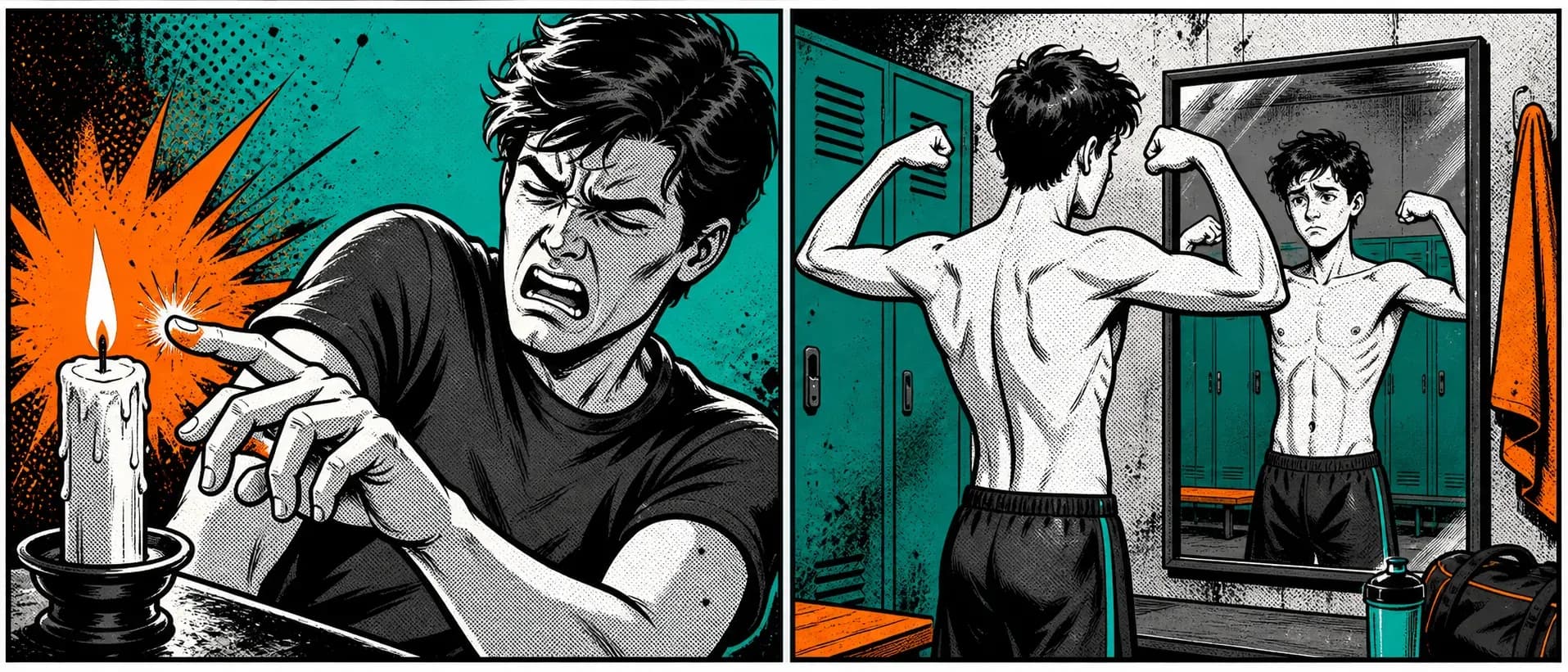
The most reliable way your brain learns anything is through immediate consequences. Touch a hot flame, feel the burn, never touch a flame again.
A single experience of touching a flame is enough for a lifelong lesson. You update your behavior immediately, no willpower, accountablity partner or habit tracking app was needed.
And you can see why: the consequences of touching a flame are unmissable and immediate. This is basically the ideal way for your brain to learn.
Unfortunately, almost none of the most important behaviors in your life work like this. Behavior that has the most profound long term effects on your life quality doesn't come with an immediate and obvious feedback loop.
It's often the opposite: the consequences are too slow, and/or too abstract for your brain to register as feedback.
I call this the invisible consequences problem. And once you see it, the struggle to change your habits starts to a lot of sense.
Exercise: The Best Thing that's Hard to Stick With
The research-backed case for exercising regularly is almost ridiculous.
Exercise has been studied extensively and it's possibly the single most beneficial habit a human being can have. Benefits include:
- Longer lifespan
- Improved mood
- Improved focus
- Better sleep
- Lower risk of anxiety, depression and other mental health issues
- Lower risk of cardiovascular issues, blood sugar issues and a host of other common chronic health conditions
Exercise has been shown to have so many different benefits in so many different studies, it might be a shorter list if you compile the things it's not good for.
And yet... millions of people struggle to build a consistent exercise habit. Why?
The immediate experience of exercise is uncomfortable. You get out of breath. You sweat. Your muscles burn. Even if you genuinely enjoy training, it's less comfortable in the moment than sitting on the couch.
So the immediate feedback loop says: this is hard/uncomfortable.
But the benefits? Those are anything but immediate.
Sure, exercise makes you look better (let's be honest, that's the main reason most of us do it for), but it does that slowly, over many months and years.
What's worse, many of the most important benefits are basically invisible.
You Don't Know That You're Living Longer
Take longevity: exercise done consistently over decades meaningfully increases your health span (the number of years you remain physically capable and mentally sharp).
But you cannot actually experience this benefit directly.
First of all, if you're in your 20s, "you'll feel healthier at 60" doesn't register as a reason to go for a run tonight. It's just too abstract and too far in the future.
And even if you're 60 and in great shape thanks to all the regular exercising you've done, you still have the same problem. Even though you're technically on the receiving end of the promised payoff, you still can't really feel it. You can tell that you're fit and healthy, but you don't know what you'd feel like if you hadn't done all the exercise you did. You can only guess or imagine what it might be like.
What Does a Healthy Brain Feel Like?
Perhaps the most striking benefit is this: exercise is one of the most powerful ways to increase BDNF in your brain.
Research consistently shows that physical activity triggers the release of brain-derived neurotrophic factor (BDNF), which supports nerve growth and rewiring throughout the brain. More BDNF means a healthier, more capable brain. Better learning. Better mental health.
Think about how important a healthy brain is for... basically everything in life. This one factor is one of the strongest arguments for exercise that exists.
And also, it is a completely invisible benefit. You cannot feel the difference between your brain on consistent exercise and your brain without it.
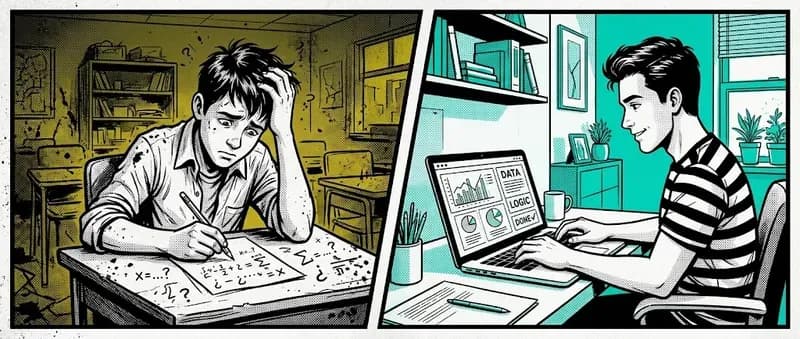
I have a confession to make: I was one of the slow kids in school. Genuinely struggled to learn things. Bad grades. Really had to fight to get anything to stick.
I'm glad to say that as an adult, I don't have this problem anymore. I don't struggle to learn new things, I seem to have a good memory. I've been paid to use my brain in one way or another for most of my life.
Is this because I've been exercising regularly for many years and all the BDNF fixed my brain?
Well, maybe. How could I really ever know?
You can't know what it's like to inhabit a different version of your own mind. But I have my suspicions. And that's exactly the point. Even when the benefit is enormous, you might not be able to trace it clearly.
Btw all of this is why exercise is one of the best replacement habits for breaking a porn addiction (or any bad habit). Check out The Best (and Worst) Replacement Habits to Quit Porn for more on this.
The Same Problem Works in Reverse
Let's look at how this relates to porn addiction:
The immediate experience of pornography is comfortable, pleasurable, soothing. It's a near-perfect escape from anything uncomfortable. The immediate feedback loop says: this is good, this is relief, do this again.
The costs of porn use? Those accumulate slowly and invisibly. Research shows that heavy pornography use affects brain health and reinforces patterns of objectification and social disconnection. But these consequences don't announce themselves with a clear signal. They creep up on you and you'll never even know it.
Most men who are suffering the downstream effects of a porn habit never connect the dots. They feel anxious and flat. Their motivation is low. Their social life feels thin. Something is off but they can't name it. Maybe the world is just difficult. Maybe everyone feels this way.
This is the problem. From the inside, it always feels like: this is just the way the world is.
The leap from slow invisible damage to recognizing your own behavior as the cause is genuinely hard to make. And then you're asked to give up something that feels good in the moment for what are, in effect, long-term invisible benefits. That's a difficult sell to your nervous system.
Understanding how the habit loop keeps this cycle running is useful here — because the cue, the craving, and the reward all operate below conscious awareness. By the time you feel the urge, the loop is already in motion.
What You Can Actually Do About This
Knowing the problem doesn't automatically solve it. But it gives us something to work with.
Here's what I've found personally useful for getting myself to stick to long term positive habtis (and avoiding the bas ones).
Trust the Research, Not Just Your Feelings
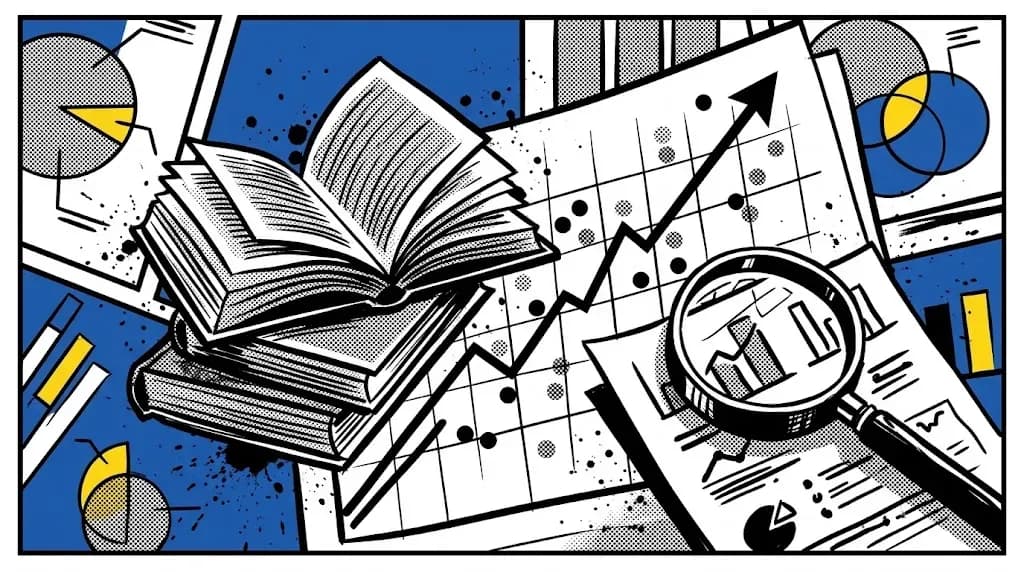
The first tool is borrowed evidence. Since you can't feel the consequences directly, you borrow the feedback loops of people who've been further along the path.
Research on exercise tells you about the countless health benefits of exercise, even when no single session feels transformative.
Converseley, stories from men who spent years falling down the rabbit hole of porn addiction and eventually hit rock botto give you a sense of what might happen if you don't do anything to change your habits.
I think of this as learning from other people. Learn from other people's wins. And more importantly: learn from other people's mistakes. That way you don't have to make all of them yourself.
Run Medium-Term Experiments
While the feedback loop on good habits is slower than instant gratification, it's not so slow that you can't reasonably detect it.
The trick is to do medium-term experiments.
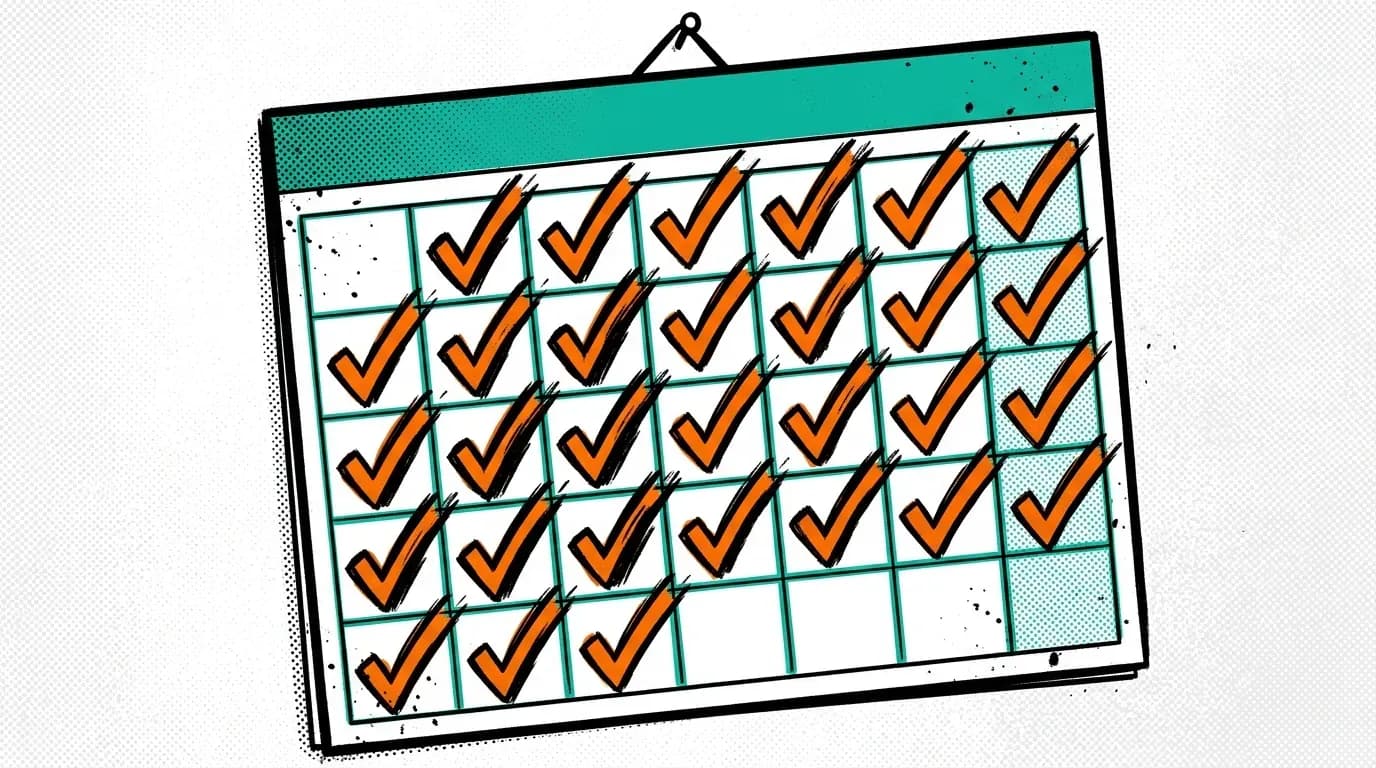
I love a 30-day challenge for this. 30 days is enough time for effects to become apparent and it's also short enough to give you a sense of motivation and forward momentum.
30 days of daily exercise can change how you look and how you feel - enough to give you the motivation to make it a long term habit.
The same goes for 30 days of daily meditation. 30 days of Introspective Writing. 30 days of daily creative output.
I like 30 day challenges so much, I made this simple habit tracker you can print out and stick on your wall, to keep track of them (works way better than any habit tracking app I've ever tried).
Write It Down and Look Back
Your progress is invisible partly for the same reason you don't notice your hair growing. From day to day, nothing seems to change. But week over week, month over month, the changes are obivous. The problem is you don't have a record of where you started.
My favorite fix for this is writing. Take 10 minutes at the end of each day and write out what's on your mind, how you're feeling, what you're struggling with. Just write down whatever is on your mind.
Then, a few months in, go back and read your early entries.
This is such a simple habit, but for me it has been a game changer.
Often, I look back on a journal entry from a few months or a few years ago and I'm shocked. Reading my older notes, I realize how much my life has changed without me noticing.
I might realize that I was struggling with things and worrying about things that I've since completely resolved (and then forgot about).
Or I realize there are things I used to dream of and hope for that I've since achieved (and started taking for granted).
I've also seen this effect with my coaching clients. A client might tell me that they are still struggling so much and that they feel stuck. But when we examine it more closely, here's what happened:
A month ago, they felt bad most of the time, most days they experience emotional struggles, brain fog etc.
Now, they have 2-3 bad days a week. That's a 50%+ reduction in bad days! This is actually a huge win and a clear sign that you're making progress. But if you don't have a record to look back on, you can literally miss it entirely!
Become the Guy Who Enjoys the Long Term Benefits
The invisible consequences problem is real. Unfortunately, the most important feedback loops in your life run on timescales your nervous system wasn't built to track.
But you can overcome this limitation. And being someone who is good at playing long term games and avoiding short term traps puts you at an enormous advantege.
Use evidence and other people's experience to create the feedback your own nervous system can't generate yet. Use writing to make slow, invisible progress visible in a way you can actually register.
Stick with it and build the meta-habit of building long term habits. The payoff is tremendous.
If porn addiction is one of the issues you struggle with and you want help in eliminating it from your life, the QuitByHealing Program is here to help.
About the Author
Shane is a serial entrepreneur with a long-standing obsession for personal development and life optimization. He has a habit of buying more books than he can ever read. During his childhood his worldview was significantly influenced by Jackie Chan movies, the Vorkosigan Saga and the writings of Miyamoto Musashi.

Shane Melaugh
There is a Better Way to Quit.
Stop relying on sheer willpower. Learn the step-by-step psychological framework that makes quitting inevitable.