Dopamine Regulation: The Most Important Skill You're Not Developing

For years I coached entrepreneurs on productivity. My specialty was the real in-the-weeds stuff: wokflow efficiency, focus, execution. I helped founders and teams ship the most important tasks, consistently.
And the thing I kept running into, over and over, wasn't what I expected.
People didn't have a knowledge problem. They knew what they needed to do. The plan was usually fine.
The problem was always in the execution. They'd procrastinate, drift, get pulled toward the phone, the YouTube tab, the inbox. They'd sit down to work, fall into a rabbit hole of distraction and then wonder where the time went at the end of the day...
At first, I thought this was a problem of focus.
I agreed with Cal Newport's framing: focus is the skill of the century, the most valuable thing you can develop in a world of constant digital distraction. It's a compelling argument, and it's not wrong exactly.
But I've changed my mind on it. The root is something deeper than focus: it's self-regulation. And self-regulation, in the world we're currently living in, is being systematically attacked.
TL;DR: The inability to focus isn't a character flaw. It's a predictable response to an economy built to override your self-regulation. Reclaiming control over where you get your dopamine is the single highest-leverage change you can make. This article covers why, and the three tools that actually build this skill.
The Economy Nobody Talks About
There's a dirty secret about some of the most valuable markets and most successful businesses in the world. Nobody names it for what it truly is.
You might have heard the term "attention economy" to describe what's happening on social media. Netflix popularized the term in their The Social Dilemma documentary.
But "attention economy" is too kind of a label. The truth is, it's all part of a much larger force in the world: the addiction economy.
Meta, Google, TikTok, video game studios, gambling platforms, sports betting, prediction markets, the junk food industry, alcohol, cigarettes... These businesses share one core competency: getting people hooked. They do it systematically and at scale. And they accomplish it thanks to millions spent in research and development with the express purpose of making their products as addictive as possible.
The Business of Manipulating People
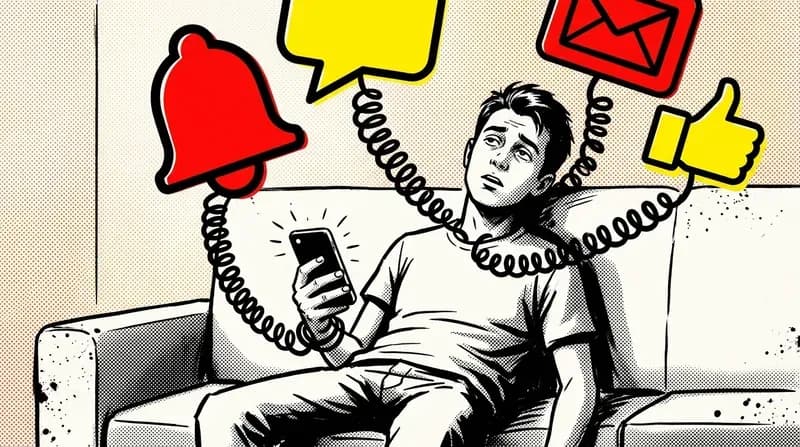
When you own an app that a billion people use, your business success is measured by behavior change. You need people to stop doing whatever they were doing and start doing your thing instead, and then keep doing it. That's not a metaphor. That's the actual KPI. So these companies hire thousands of data scientists, run continuous experiments, deploy machine learning algorithms, all pointed at one question: how do we reach into the human brain and make this behavior happen again and again?
This is the same playbook the food industry ran thirty years ago. They moved from providing nutrition to engineering addiction. The result is an obesity epidemic and a wave of chronic diseases (diabetes, heart disease, liver disease) that are largely preventable. If you zoom out and look at someone who got captured by that industry versus someone who didn't, the difference in life outcomes is staggering. One person ends up on six medications managing conditions that didn't have to exist. The other doesn't.
The attention economy is running the same play. The damage just isn't as visible yet, because you can't see a cognitively dulled attention span the way you can see an expanding waistline. But the divergence is happening. Project forward ten or twenty years, and the gap in life outcomes between someone who developed self-regulation and someone who didn't is going to be just as large.
Why Focus Advice Misses the Point
When I was coaching entrepreneurs, I tried the standard focus interventions. Time-blocking. Phone in a drawer. Pomodoro timers. Some of it helped. But the guys who were really struggling, the ones whose attention had been captured by phones and social media and online entertainment, couldn't sustain it. A few days in, old patterns returned.
That's because those interventions treat focus as a skill you can develop through discipline alone. And there's something missing from that picture.
The apps in your pocket were built to defeat discipline. They were designed specifically to interrupt you, recapture your attention, and make you reach for your phone even when you've decided not to. The notification, the red dot, the variable reward of the feed. None of that is an accident. It's all features. The result of millions of dollars of research into exactly how to override your intentions.
So the person who says "I just need more willpower" is bringing a butter knife to a gun fight. It's not that willpower is worthless. It's that you're up against a system purpose-built to defeat it.
Self-regulation is different from willpower. Willpower is brute-forcing your way through an urge. Self-regulation is developing the underlying capacity to notice what's happening in your nervous system, interrupt automatic behavior before it takes hold, and redirect your attention deliberately. It's a trainable skill. But training it requires understanding what you're actually dealing with.
As Jaron Lanier explains in Ten Arguments for Deleting Your Social Media Accounts Right Now, the entire business model of these platforms is behavior modification through algorithmic manipulation. That's exactly why resisting them through sheer willpower alone is so unreliable.
Dopamine Isn't the Problem. The Hijack Is.
Here's what most of the conversation about dopamine gets wrong: it frames dopamine as the enemy. Dopamine fasting, dopamine detoxes, the idea that you need to suppress this system. That's not the right frame.
Dopamine is why humans built the Sistine Chapel. It's why people train for years to run a four-minute mile. It's the molecule behind every act of extraordinary persistence and ambition in human history. The system isn't broken. It's one of the most powerful drives we have.
What's happened is that external actors have learned to exploit it. Porn, social media, junk food, mobile games: all dopamine delivery systems. They give your brain a hit and train it to want more. Quick spike, steep crash, pull toward the next hit. Research on dopamine's role in habit formation shows your brain doesn't distinguish between "this reward is building my life" and "this reward is hollowing it out." It just registers: reward here, come back.
The move is not to suppress dopamine. The move is to take back control over where you get it.
Think about the activities that also give you dopamine: a genuinely hard workout, building something financially, going on an adventure with people you care about, doing creative work that challenges you. These are also addictive. You'll want more of them once they're established. The difference is the reward profile. The ramp is slower, the high lasts longer, and the come-down is gentler. More importantly, the side effects are a better body, more money, deeper friendships, a sense of accomplishment.
You're not escaping the dopamine system. You're redirecting it. And over time, your brain learns to prefer the sources you've been feeding it. I've written a full breakdown of how this happens neurologically here: Why Your Brain Craves Porn More Than Almost Anything Else.

Why Porn Recovery Is a Masterclass in This Skill
I want to be direct about something, because it matters.
Porn is a strong digital drug. It delivers one of the most potent neurological reward signals available in a modern environment: sexual arousal at high intensity, on demand, with infinite novelty. That makes it highly addictive and genuinely hard to quit. It also makes overcoming it one of the best training grounds for self-regulation that exists.
When you learn to interrupt the autopilot pull toward porn, develop awareness of your triggers, learn to manage your stress response, and build new dopamine sources, you've developed a muscle that transfers everywhere. Every other attention economy product is using a weaker version of the same mechanism. Beat the strongest one, and the rest get a lot more manageable.
Here's what I've found, both in my own experience and working with hundreds of men: the ones who approach this as a self-regulation problem, not a willpower problem, are the ones who actually get free. And not just free from porn. Free from the whole puppeteering. They become genuinely self-directed people. For more on what that shift actually looks like from the inside, see How to Actually Heal Instead of Just Managing Your Addiction.
If you're still in the frustrated stage, still struggling, still not where you want to be, I want to say this plainly: you are miles ahead of people who haven't even acknowledged the problem. The moment you named it and started working on it, you stepped out of the majority. That's real.
The Three Tools That Build Self-Regulation
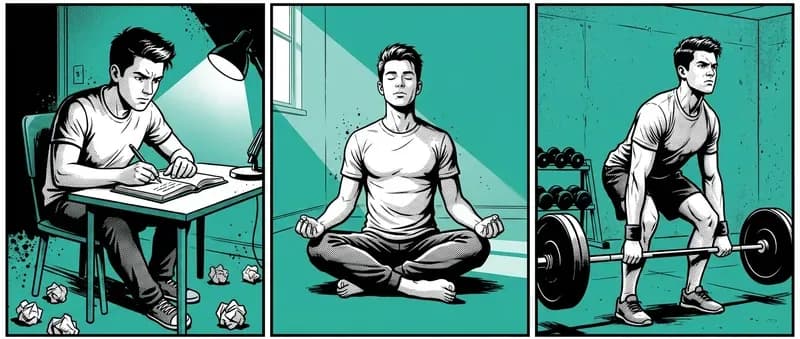
This isn't abstract. There are specific practices that build this skill directly. These are the three I return to most consistently, and that I've seen work with the men I work with.
Tool 1: Introspective Writing
Writing is the fastest path I know to developing real awareness. The kind where you catch yourself before autopilot takes over, not after.
When you're in the grip of an urge or a compulsive behavior pattern, what's happening neurologically is that your midbrain has taken the wheel. The rational prefrontal part of your brain is still technically online, but it's not driving. The addicted brain is. And you usually notice this after the fact: I don't know what came over me.
Introspective writing trains you to catch the shift as it's happening, or at least shorten the delay. You build a language for your internal states. You start to recognize the specific flavors of the trigger: the particular kind of stress, boredom, or loneliness that sends you toward the behavior, instead of just waking up already in it.
It also addresses the underlying wound. Most addictions function as an avoidance strategy. Something uncomfortable is being suppressed by the behavior. Old pain, unresolved conflict, a feeling you don't want to sit with. Writing is, in my view, the most accessible form of self-therapy that exists. Start with something that's bothering you. Write about it without editing. Follow it. You'd be surprised how often full expression alone dissolves the charge.
Tool 2: Breathwork
Breathwork is the bridge between conscious intention and your autonomic nervous system. That's the part of your biology that runs on autopilot.
Stress is one of the most common triggers that sends people toward their addiction. And here's what gets missed: the act of trying to quit, the willpower battle, the vigilance: that itself is a stress trigger. You're often dealing with a feedback loop where the effort to quit creates the conditions that make quitting harder.
Breathwork can break that loop. Through specific breathing patterns, you can directly change the state of your nervous system, from activated and dysregulated to calm and grounded, in a matter of minutes. Research on controlled breathing and the vagus nerve shows this is physiology, not metaphor. When you can shift your state on demand, you have a real tool for the moment an urge is building and you need to change course before you lose the wheel.
Tool 3: Redirect Where You Get Your Dopamine
This is the strategic layer, and it's where the long game is won.
You're not going to out-discipline the attention economy permanently. Willpower depletes. Life gets stressful. Defenses come down. The sustainable answer is to make the healthy dopamine sources so established, so reinforced, so genuinely rewarding, that they compete successfully with the hijacked ones.
Exercise is the clearest example. It spikes dopamine. It's also self-reinforcing. Once the habit is established, you feel genuinely off when you miss it. The reward comes slower than a scroll session, but it lasts longer and the downstream effects compound. Same principle applies to building something financially, to developing real friendships, to creative work, to physical adventure.
You're not trying to have no appetite for reward. You're cultivating a preference. The brain is plastic. Feed it better things, consistently, and its preferences shift. This takes time. It won't feel as compelling as the quick hit in the early stages. But you're playing a different game, one that compounds. The replacement habits article goes deep on the specific activities worth building and why some work better than others.
This Is the Real Game
Most men who come to this work think they're solving a porn problem. They are, in the practical sense. But the deeper thing being built is the capacity to live a self-directed life in an environment specifically engineered to prevent that.
The attention economy will keep getting better at what it does. The tools will get more sophisticated, the algorithms more precise. Your only real answer is to become someone who can't be puppeteered. Not through heroic willpower. Through genuine skill.
That's what's on the other side of this work. And every man who gets there did it by building exactly the three things described here. Awareness through writing. State control through breath. Dopamine redirection through better habits.
Which of these three do you feel is most underdeveloped for you right now?
About the Author
Shane is a serial entrepreneur with a long-standing obsession for personal development and life optimization. He has a habit of buying more books than he can ever read. During his childhood his worldview was significantly influenced by Jackie Chan movies, the Vorkosigan Saga and the writings of Miyamoto Musashi.
Shane Melaugh
There is a Better Way to Quit.
Stop relying on sheer willpower. Learn the step-by-step psychological framework that makes quitting inevitable.