
I spent two years trying to quit porn through sheer determination. I’d wake up with resolve, make it three days, maybe a week if I was lucky, then find myself right back where I started. Same chair. Same screen. Same shame spiral.
The frustrating part wasn’t the relapse itself. It was how automatic it felt. Like my body knew what to do before my brain caught up. I’d sit down to work, and within minutes, I wasn’t working anymore.
TL;DR: Your addiction isn’t a willpower problem. It’s an environment problem. Context-dependent cravings explain why you can feel strong everywhere except where you usually act out.
I thought I was weak. Turns out I was just sitting in the wrong chair.
What Science Knows About Cravings That You Don’t
Here’s something that blew my mind when I first learned it. Researchers studying addiction recovery noticed a pattern that didn’t make sense at first glance.
Take someone struggling with alcoholism. Put them in a rehab facility for 30 days. They learn coping mechanisms, practice meditation, work through their triggers. By the end, they’re managing cravings beautifully. Staff are impressed. Family is hopeful.
Then they go home.
Within hours of walking into their old neighborhood bar, surrounded by the same friends, sitting on the same barstool they occupied for years, they’re drinking again. Not because they forgot what they learned in rehab. Not because they’re weak or uncommitted.
Because the environment itself became the trigger.
Research on environmental context and relapse has consistently shown that drug cues and environmental triggers are among the strongest predictors of relapse across all forms of addiction.
This is called context-dependent cravings, and it explains why your porn addiction feels so much stronger in certain places. Your brain has learned to associate specific environmental cues with specific behaviors. The chair you always sit in. The time of day you usually browse. The particular angle of your screen.
When you understand how to stop porn urges, you realize you’re not fighting the urge to watch porn. You’re fighting years of environmental conditioning.
Your environment gives you all kinds of cues and triggers that lead to certain behaviors, both good and bad. You’re not fighting the urge to watch porn. You’re fighting years of environmental conditioning.
Why Your Bedroom Feels Like Enemy Territory
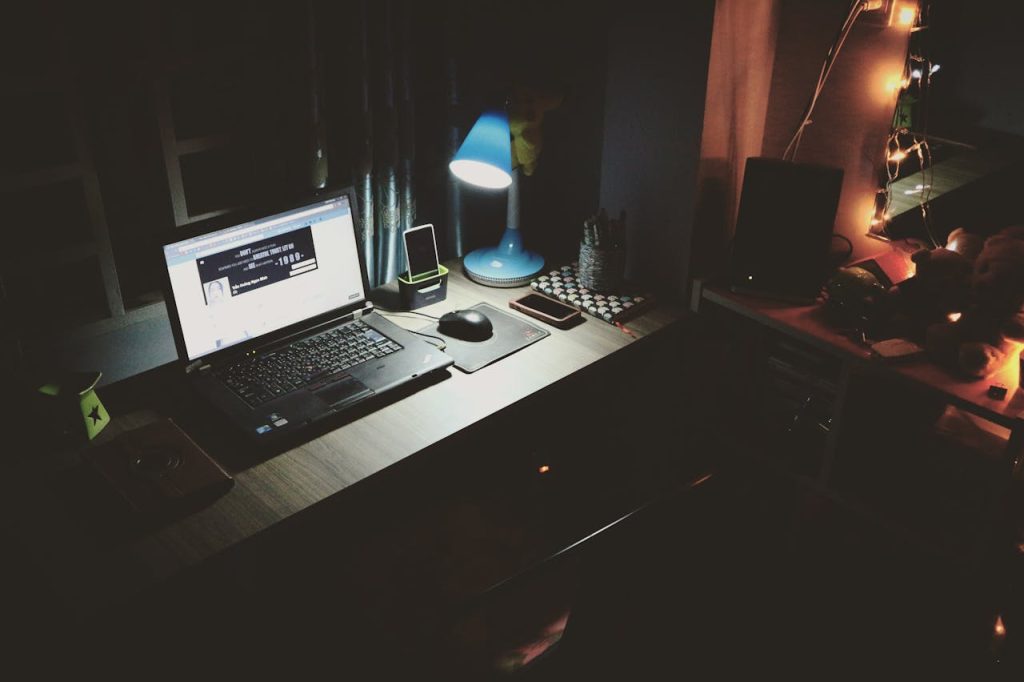
I used to think my problem was that I couldn’t resist opening my laptop and navigating to the you-know-what sites. If I could just develop enough self-control around this one device, I’d be free. But here’s what I discovered: the laptop wasn’t the trigger. The entire context was.
The way the light hit my desk at 2 PM. The specific chair I’d sink into after a frustrating work call. The particular browser I’d open when I told myself I was “just checking email.” The privacy of the space, the boredom I often felt there…
I could take that same laptop to a coffee shop and work for hours without a single urge. But the moment I brought it back to my bedroom? Game over.
This is just how human brains work. We’re pattern-recognition machines. When you’ve watched porn in the same physical context hundreds of times, your brain starts the craving process the moment you enter that space.
The environment itself becomes a trigger, regardless of what you consciously intend to do there.
The Change I Made That Surprised Me
After learning about context-dependent cravings, I tried something that felt almost too simple to work.
I moved my work setup from the little desk in my bedroom to the kitchen table. Not gonna lie: neither of those were particularly great work spaces, so it didn’t really matter that much.
I was still at home, still working on my same laptop, just sitting in a different room, at a different table.
The first day, I sat down to work and felt… nothing. No familiar pull toward the browser tabs I usually opened. No restless energy building toward a relapse. Just the weird sensation of sitting in a space that looked almost the same but felt completely different.
I thought it was a fluke. But day after day, the urges stayed quiet. Not because I’d developed superhuman willpower overnight. Because I’d broken the environmental pattern that had been running my behavior for years.
The Three-Level Environmental Reset
Here’s the framework I developed after that first breakthrough. Think of it as environmental intervention for addiction recovery.
Option 1: Remove (The Nuclear Option)
If you can completely eliminate the device or space where you typically act out, do it. Got an iPad you mostly use to waste your time and act out? Toss it.
Hey, maybe it’s time for even more radical change. Move out of your apartment. Sleep on a friend’s couch for a month.
This sounds extreme, and for most people, it’s not practical. But if you can remove the primary environmental trigger, even temporarily, it’s the most effective approach.
Option 2: Replace (The Strategic Swap)
When removal isn’t possible, replacement is your next best option. This means changing key elements of your environment so completely that your brain doesn’t recognize the old pattern.
Get a different chair for your desk. Buy a new laptop and only use it for work, never entertainment. If you always acted out in your bedroom, move your computer to the living room. If you always acted out late at night, restructure your schedule so you’re never alone with your devices after 9 PM.
The key is changing something significant enough that the space feels genuinely different, not just slightly rearranged.
Option 3: Rearrange (The Minimum Viable Reset)
Even small environmental changes can disrupt established patterns. Move your desk to face a different direction. Change the lighting in your room. Rearrange the furniture so you have to walk a different path to reach your computer.
I know this sounds almost absurdly simple. You’re thinking: “My addiction is going to be solved by… moving my desk?”
Try it for two weeks. You’ll be surprised at how powerful this is.
What to Do When You Can’t Change Everything
The reality is that most of us can’t completely redesign our living situations. You still need to use your computer. You still need to sleep in your bedroom. You still need to live in the space where your addiction developed.
But you can change more than you think.
Start with the smallest change that feels meaningful. If you always sit in the same chair, get a different chair. If you always use the same browser, switch browsers and block the old one. If you always act out at the same time of day, schedule something else during that time.
The goal isn’t to make your environment unrecognizable. It’s to make it unfamiliar enough that your automatic patterns don’t kick in.
Think of it this way: your addiction lives in the details. The specific sequence of actions that leads from “I’ll just check my email” to “I can’t believe I did it again.” When you change the environmental details, you interrupt that sequence before it starts.
Why This Works When Willpower Doesn’t
Here’s the thing most people don’t understand about addiction: it’s not primarily a conscious process. By the time you’re aware of having an urge, your brain has already started the behavioral sequence that leads to acting out.
Environmental changes work because they interrupt this process at the unconscious level. Your brain starts to initiate the familiar pattern, but the environmental cues don’t match what it expects. The pattern breaks down before it reaches your conscious awareness.
This is why you can feel completely in control at a coffee shop but completely out of control in your bedroom. It’s not about your character or your commitment. It’s about which environmental patterns have been established in which spaces.
When you change your environment, you’re not relying on willpower to overcome the urge. You’re preventing the urge from forming in the first place.
The Question That Changes Everything
Before you try to quit anything through sheer determination, ask yourself this: “What would need to change about my environment to make this behavior genuinely difficult to perform?”
Not impossible. Just difficult enough that you’d have to make a conscious choice rather than acting on autopilot.
For porn addiction, this might mean using your computer only in public spaces for a month. Or removing your bedroom door so you can never be completely alone with your devices. Or switching to a phone that can’t access the internet.
These changes feel dramatic because we’ve been taught that overcoming addiction should be an internal process. But your internal world is constantly shaped by your external environment. Change the external, and the internal often follows.
What’s one environmental change you could make this week that would interrupt your usual pattern? If you’re ready to build a comprehensive plan, check out the complete process for overcoming porn addiction or explore healthy replacement habits that can fill the space where your old patterns used to live.
You might also want to understand the deeper psychological work that addresses the root causes behind the addiction patterns, or learn about building a sustainable recovery environment with others who understand this journey.