The Two Signs Your Porn Use Is Becoming an Addiction
Shane Melaugh
The Two Signs Your Porn Use Is Becoming an Addiction
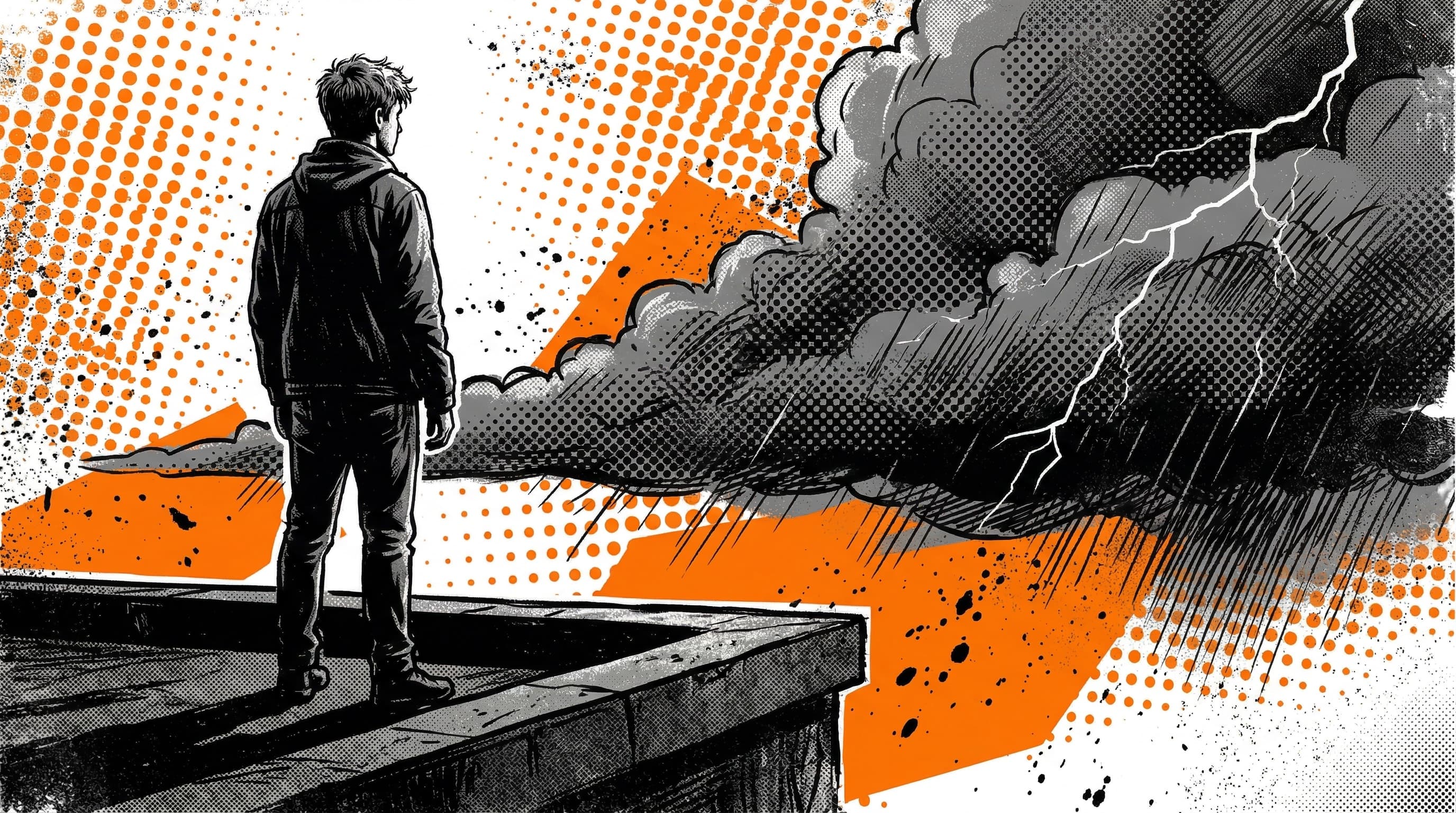
I call it the SHTF moment (when the Sh*t Hits The Fan...)
It's the moment when you can no longer pretend. The moment when you're trying to have sex with someone you're actually attracted to, and nothing is happening. Or the moment your partner sits you down and tells you that she's done. That it's been going on too long and she's fed up.
In that moment, something finally becomes undeniable: porn was a problem. Maybe for a long time. And you missed it.
It's unfortunate but true: by the time most men hit that moment, the damage is already done.
TL;DR: Most men wait until a crisis to acknowledge they have a porn problem. By then, the damage is already done. Two reliable early warning signs let you catch it before the crisis: escalation (needing more and more extreme content to feel anything) and compulsion (doing it out of habit and need, not desire). See them early and you can change course before your SHTF moment arrives.
Why the SHTF Moment Is a Terrible Diagnostic Tool
The standard way most men assess whether they have a problem is: has it wrecked my life yet? If the answer is no, the case is closed. No problem. Moving on.
But this is exactly backwards. The "has anything fallen apart?" benchmark only catches the problem at the worst possible moment. After the ED. After the breakup. After you've already hurt people in your life...
What if you could catch it earlier? What if there are reliable warning signs that something is going off the rails before everything falls apart?
There are. Two of them.
Warning Sign #1: Escalation
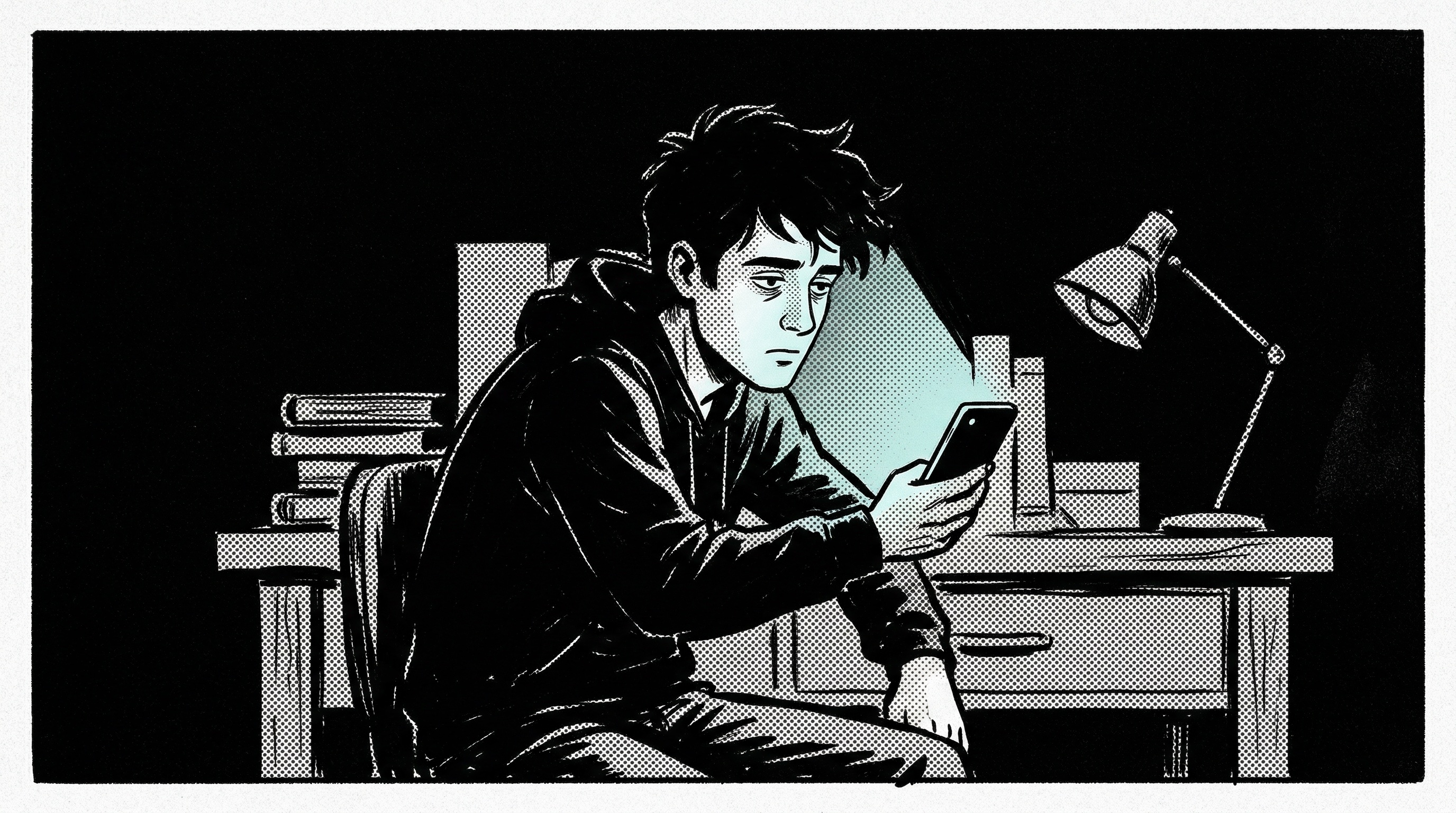
Escalation is when the things that used to excite you no longer do.
Take a moment and think about how your porn use has actually changed over time.
What did you used to watch when you started? And what are you watching now?
Are you doing it more often than you used to? Are your sessions getting longer? Did you go from watching a single clip to having fifteen tabs open, still browsing, still not satisfied, still looking for just the right one?
Are you increasingly drawn to specific niches, specific categories, specific fetishes that never interested you before? Are you finding yourself consuming content that doesn't actually align with how you'd describe your sexuality?
That's escalation. And it matters because it's one of the clearest markers of addiction.
How the Desensitization Cycle Works
Here's what's happening: you are experiencing the dopamine problem at the heart of modern addiction.
With any addictive behavior, your brain adapts over time. The dopamine hit that used to arrive from something relatively mild now barely registers. You need a stronger signal to produce the same response.
In practical terms: a simple nude used to be exciting and arousing. Now, it's boring. So you look for something spicier, something more extreme. Your brain adapts to that, too. Next, you need something even more extreme than.
And so on... the cycle tightens, the addiction gets stronger.
What makes this particularly damaging is that it doesn't stay contained. This is the same digital hyper-stimulation that erodes motivation across every area of life. Your dopamine system isn't just used for sexual arousal. When you've spent years flooding it with extreme stimulation, ordinary things start to feel grey. Work feels dull. Hobbies feel pointless. Real people, in real situations, with real complexity... none of it can compete with the artificial dopamine spikes your brain has gotten used to.
Warning Sign #2: Compulsion
Here's the question that cuts through most of the rationalizing.
When you use porn, how often is it because you want to? How often is it because you need to?
The difference between the two is subtle but extremely important.
Natural, healthy desire is at the core of your sex drive. It's something that is primarily physical, it comes and goes with its own rhythm and most importantly: it generally feels good.
Compulsive porn use feels different. It feels more like scratching an itch. You do it at the same time every day, almost automatically. You do it every time you're home alone. You do it to fall asleep. You do it whenever you're stressed or angry or bored, as a way to regulate a feeling you don't want to sit with.
This is exactly how the habit loop works in porn addiction — a cue fires, a routine runs, a reward arrives. The loop becomes so grooved that you're barely conscious of initiating it.
And very often, it doesn't feel that good.
The Routine Test
Ask yourself: is this desire, or is it routine?
Because those are not the same thing. Desire means you want this. Routine means your brain has slotted this in as the automatic response to a trigger. Morning alone = porn. Stressed after work = porn. Can't sleep = porn.
When a behavior becomes that automatic, it's no longer a choice.
That's what compulsion looks like. Not necessarily desperate craving. Mostly just invisible, automatic, habitual.
You Have a Choice Right Now
Here's what I want you to sit with.
Most men wait. They tell themselves it's fine. They look at their life and nothing has exploded yet, so they don't act. And then something explodes. And they wish, genuinely, that they'd paid attention to the earlier signs.
You're reading this before that happened.
That makes you one of a fairly small number of people who might actually do something before the SHTF moment arrives. Not after. Before.
If you're seeing escalation in your own use, or you're noticing that the behavior feels compulsive rather than chosen, you don't have to wait for the crisis to confirm what you're already seeing. The trajectory is visible. You can look at it and simply know: this is going to keep heading in this direction unless I change something.
Understanding how long healing actually takes is one of the most useful things you can do at this stage. It resets your expectations and removes the pressure of arbitrary day counts.
So change something now. Because if you want a structured path through this, the QuitByHealing Program walks you through it systematically — from breaking the initial compulsion all the way through to rebuilding a healthy relationship with your own sexuality.
What's your honest answer to the diagnostic questions above?
About the Author
Shane is a serial entrepreneur with a long-standing obsession for personal development and life optimization. He has a habit of buying more books than he can ever read. During his childhood his worldview was significantly influenced by Jackie Chan movies, the Vorkosigan Saga and the writings of Miyamoto Musashi.

Shane Melaugh
There is a Better Way to Quit.
Stop relying on sheer willpower. Learn the step-by-step psychological framework that makes quitting inevitable.