The Rule of Opposites: How Your Addiction Points Toward the Cure
Shane Melaugh
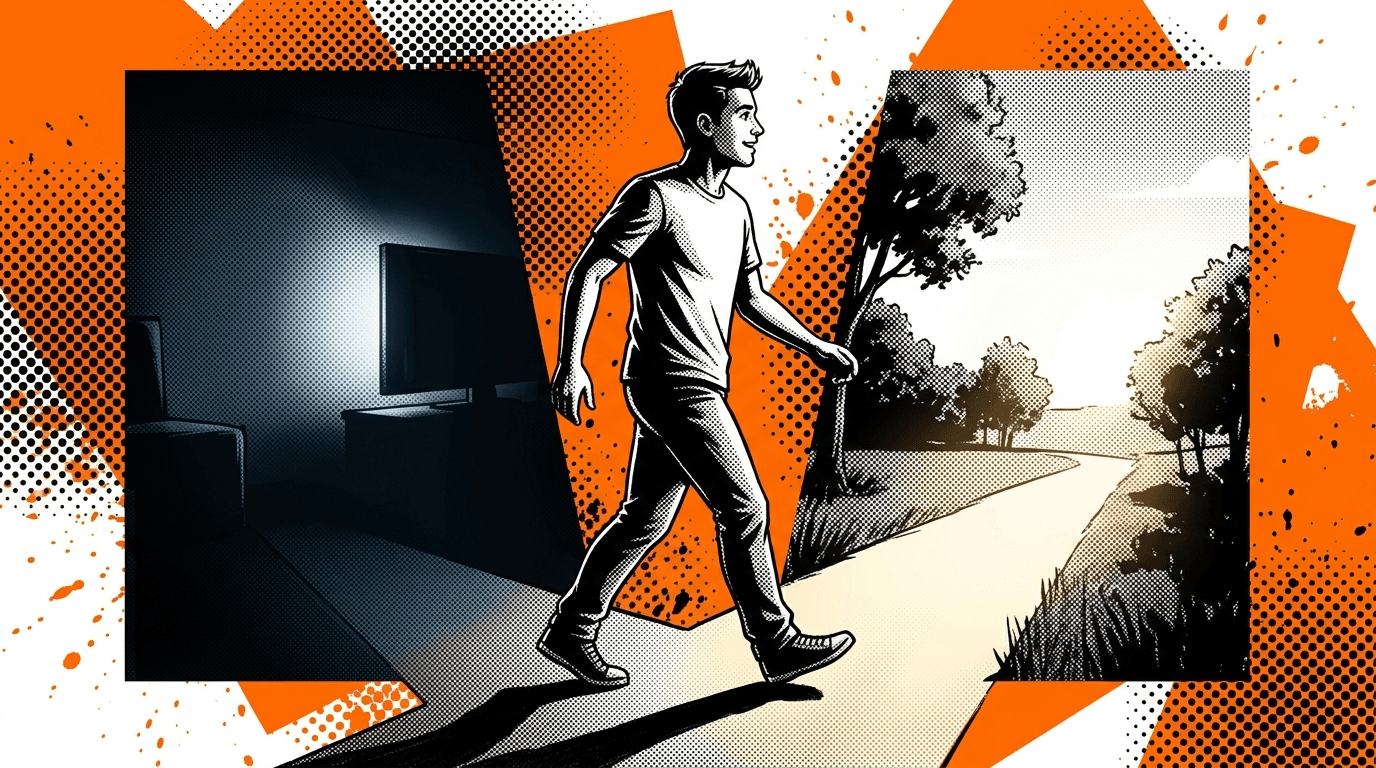
I was 22, and I used to lose entire weekends to video games. Not a few hours on a Saturday. I mean twenty hours over a weekend, sometimes more. I was consuming content at a pace that made any other way of spending time feel kind of slow and unsatisfying by comparison.
At some point I had to get real with myself about what trajectory that was putting my life on. So I got rid of all my games. And I replaced them with something I didn't fully know how to do yet: I started building things. A business. A website. Products I could sell. Content I could create. I threw myself into it.
What happened next was strange. The challenges were bigger, more complex, more frustrating. But they were also more rewarding in a way the games never could match. And one of the things you win when you level up in real life, instead of a video game, is money instead of points. That alone made it massively more satisfying.
I didn't know it at the time, but I was applying what I now call the Rule of Opposites.
TL;DR: The specific behaviors that define your porn addiction — passive, screen-based, solitary, secretive, avoidant — contain their own antidote. Inverting each one gives you the exact formula for rapid healing and a dramatically better life. You don't have to do everything at once. Any single inversion moves you in the right direction.
The Binary Trap That Keeps You Stuck
Here's the thing most guys don't realize: the way you're thinking about your recovery is probably making it harder.
The most common frame is binary. Either you're on a clean streak or you've relapsed and you're back to zero. Either you're winning or you've failed. This feels logical, but it's actually one of the biggest hidden obstacles to getting free.
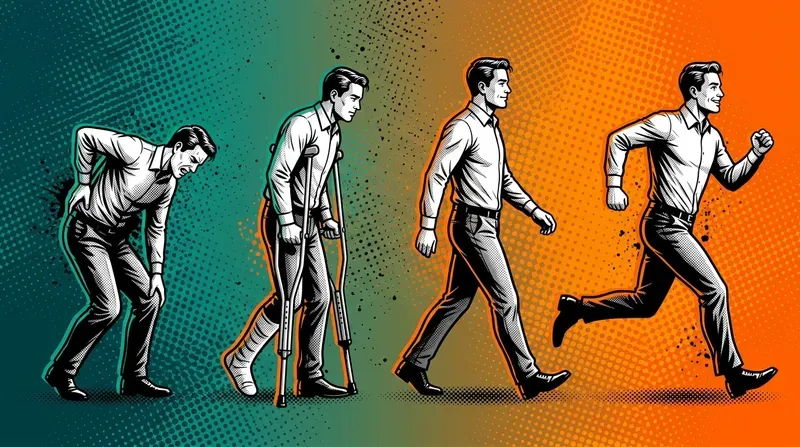
Think about what happens when you break your leg. The healing isn't binary. It's not like your bone is broken for several weeks and then it snaps to "healed" in an instant and the cast can come off.
What happens is that given the right conditions — rest, nutrition, not re-injuring the same spot — the bone gradually mends over time. You're always moving in the direction of healing.
Addiction recovery works the same way. Research on the gradual neurobiology of porn recovery shows that your brain is literally healing — and that healing is a physical process that happens over time. It isn't on or off. It isn't clean or relapsed. It's a spectrum, and you are always somewhere on that spectrum, always moving in some direction.
When you relapse, you haven't gone back to zero. You've taken a step backward on a spectrum. That's very different. And understanding that difference changes how you recover. I've written about how recovery moves through three distinct stages — the binary mindset tends to trap men in stage one indefinitely.
Why Your Addiction Is a Map
Here's where it gets interesting:
Every problem contains the guidance toward its own solution, if you know how to look for it.
Think about why you started looking for a way to quit in the first place. You have a problem: porn addiction. That problem creates suffering in your life. That suffering eventually becomes unbearable enough that you go looking for a solution. The problem already contained the seed of its undoing. You're here because the problem pushed you here.
But we can go much further than that. We can look at the specific behavior patterns that make up the addiction itself and read them as a set of instructions.
What Does Porn Addiction Actually Look Like?
When you're using porn, what are you actually doing? Let's be precise about this.
You're doing something on a screen. You're consuming — passively receiving, not creating. You're doing it alone, in isolation. You're doing it in secret, probably with some degree of shame involved. You're doing it compulsively, not because you chose to but because something switched on. And you're doing it as an escape — running away from uncomfortable feelings rather than going toward something.
That's your behavioral fingerprint. Perhaps there are a few additional factors that come to mind for your specific case. The basics are:
- Screen-based
- Passive
- Consuming
- Alone
- Secret
- Compulsive
- Avoidant, numbing
Now here's the rule of opposites. Understanding why the habit loop of porn addiction forms the way it does makes every inversion below make more sense — you're not just substituting activities, you're breaking specific cues.
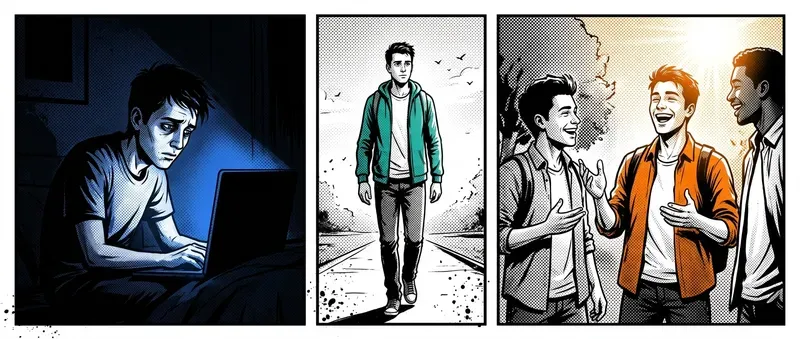
Invert the Fingerprint
Every single item on that list has a direct opposite. And every opposite is an activity that accelerates your healing.
Away from screens
Any time you spend doing things that don't involve a screen, you're doing the opposite. Walking. Working with your hands. Being outdoors. Training. These aren't just "healthy habits." They're the direct inversion of a core feature of the thing that's hurting you.
Creating instead of consuming
This one is subtle but it's probably the most powerful. When you're using porn, you're a passive receiver. The industry pumps content at you and you absorb it. The direct opposite is being a maker. Writing, building, cooking, making music, starting a project, working on a skill. Research on lifestyle-based neuroplasticity shows that active, creative engagement supports the recovery of dopamine receptors in ways that passive consumption simply cannot.
The reason this one hits so hard is because the same brain mechanisms that make passive consumption feel easy — immediate stimulation, no effort required — make creation feel effortful at first. You're training the same system in the opposite direction.
With other people instead of alone
Addiction thrives in isolation. Context-dependent cravings research confirms this: the environments and emotional states associated with solitude become powerful relapse triggers over time. The opposite of isolation is connection — doing things with other people, in community, in relationship. It doesn't have to be deep sit-down conversations. Playing sports, working alongside someone, joining a group, calling a friend — any of it counts.
Openly instead of secretly
The shame and secrecy that surround addiction are part of what sustains it. Doing things out in the open — even small things — chips away at that dynamic.
Going toward instead of running away
This might be the most important inversion of all. When an uncomfortable feeling comes up, the addict's default move is to numb it, escape it, run from it. The opposite is going toward it. Taking on a challenge instead of avoiding it. Facing the difficult conversation instead of disappearing. Doing the hard creative work instead of giving up when it gets frustrating.
This "going toward" orientation is something you'll start doing naturally as soon as you begin the other inversions. When you're spending time creating something with other people in real life, problems show up. Friction shows up. The question is what you do with it.

You Don't Have to Do All of It at Once
Here's what I want guys to hear when they first encounter this framework, because the natural response is to feel overwhelmed.
You don't have to do five inversions simultaneously. You don't have to overhaul your entire life this weekend. Think of it like a progress bar — one that measures not your streak count, but how fast your healing is happening. Every inversion you add makes the bar fill faster. One is better than zero. Two is better than one.
The best pace is one that feels slightly outside your comfort zone but not completely overwhelming. Slightly stretched, not snapped.
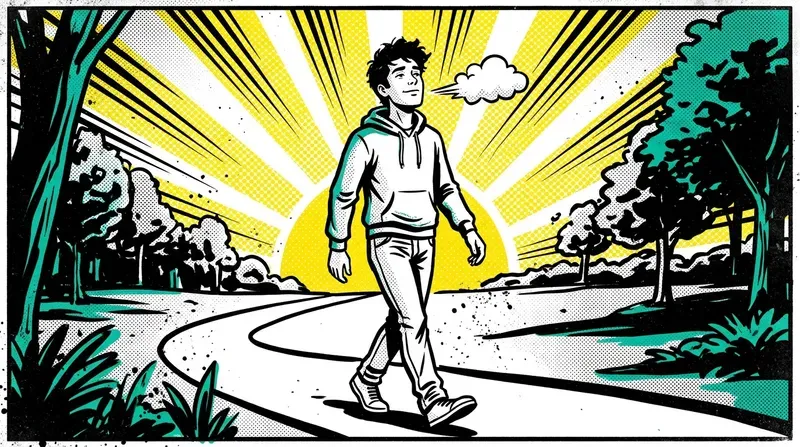
I noticed this with something as simple as walking. When I catch myself feeling that particular kind of exhausted — foggy, slow, like there's a film over everything — I check what I've been doing. Usually the answer is obvious: I've been indoors staring at screens all day, sitting, not moving. The opposite of that is also obvious. Go outside. Walk. Don't take your phone if you can help it. Let your mind wander.
It seems too simple, right? Too small to actually matter? I thought the same thing. But the shift it creates in mood and mental clarity is disproportionate to how little effort it takes. Screen-drained, sedentary, and indoors produces one experience. Moving, outdoors, away from screens produces a drastically different one. The contrast is immediate.
That's the rule in its simplest form. Look at what you've been doing. Do the opposite. Notice what changes.
This Works Beyond Recovery
The reason I keep coming back to this idea is that it doesn't stop being useful once you've quit. It's a diagnostic tool you can apply to basically any part of your life that feels stuck or off.
Something isn't working? What are you doing? What would the opposite look like? Try it. Notice what happens.
I've used it in how I spend my time, what I create, how I interact with people, how I handle pressure. It keeps pointing in useful directions. It's simple enough to remember and flexible enough to apply everywhere.
Also, quick recommendation: if you're looking to make healthy habits like these stick long term, identity-based goal setting is the framework for you.
The real promise of the Rule of Opposites isn't just quitting porn. It's that the diagnosis your addiction gave you also happens to be a blueprint for becoming the kind of man you actually want to be.
Stop running from one, and you might find yourself naturally building the other. If you want to understand the brain science behind why passive consumption drains you the way it does, the dopamine problem is the next piece worth reading.
So what's one thing you can try today? One inversion. One step. What does the opposite of your current default actually look like?
About the Author
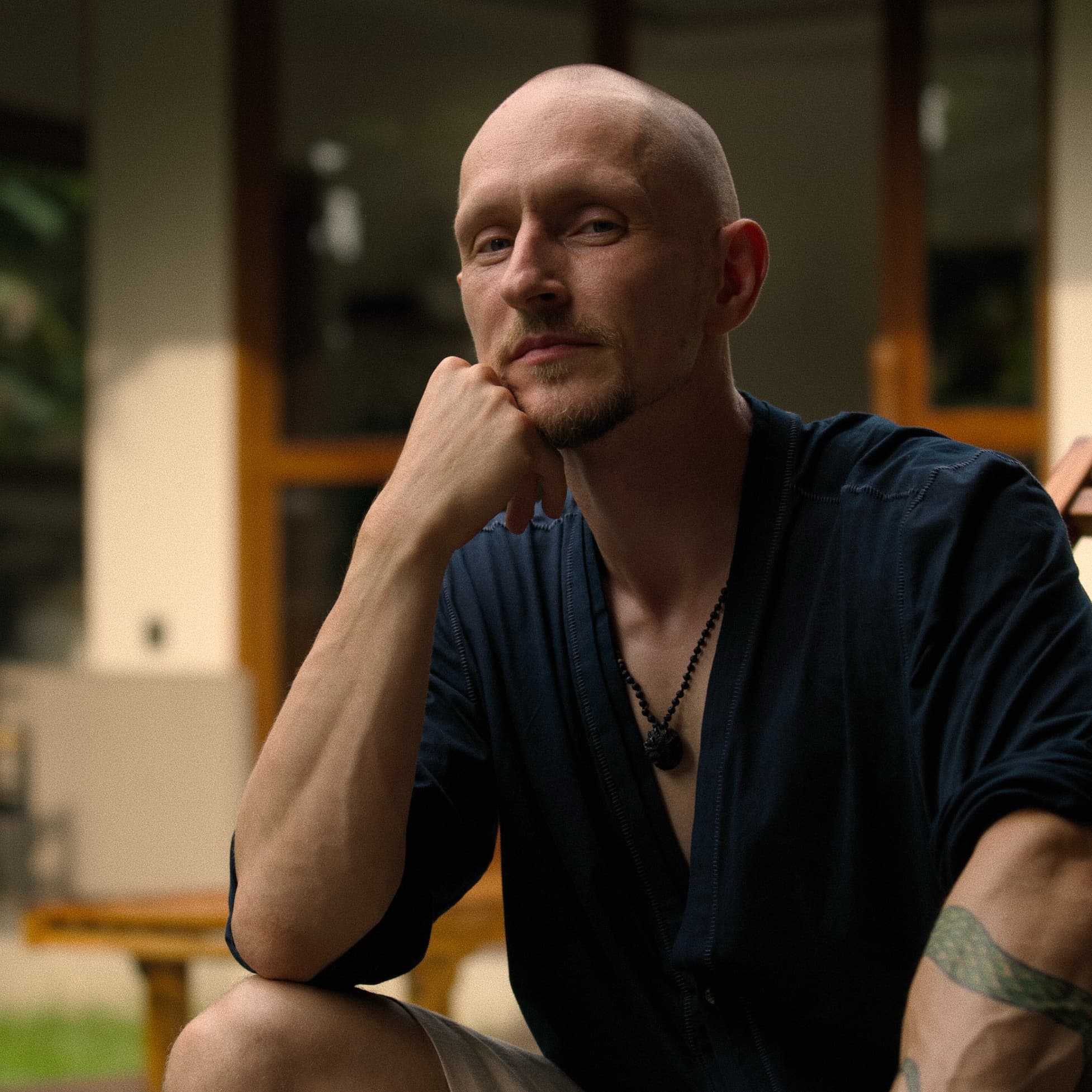
Shane is a serial entrepreneur with a long-standing obsession for personal development and life optimization. He has a habit of buying more books than he can ever read. During his childhood his worldview was significantly influenced by Jackie Chan movies, the Vorkosigan Saga and the writings of Miyamoto Musashi.
Shane Melaugh
There is a Better Way to Quit.
Stop relying on sheer willpower. Learn the step-by-step psychological framework that makes quitting inevitable.