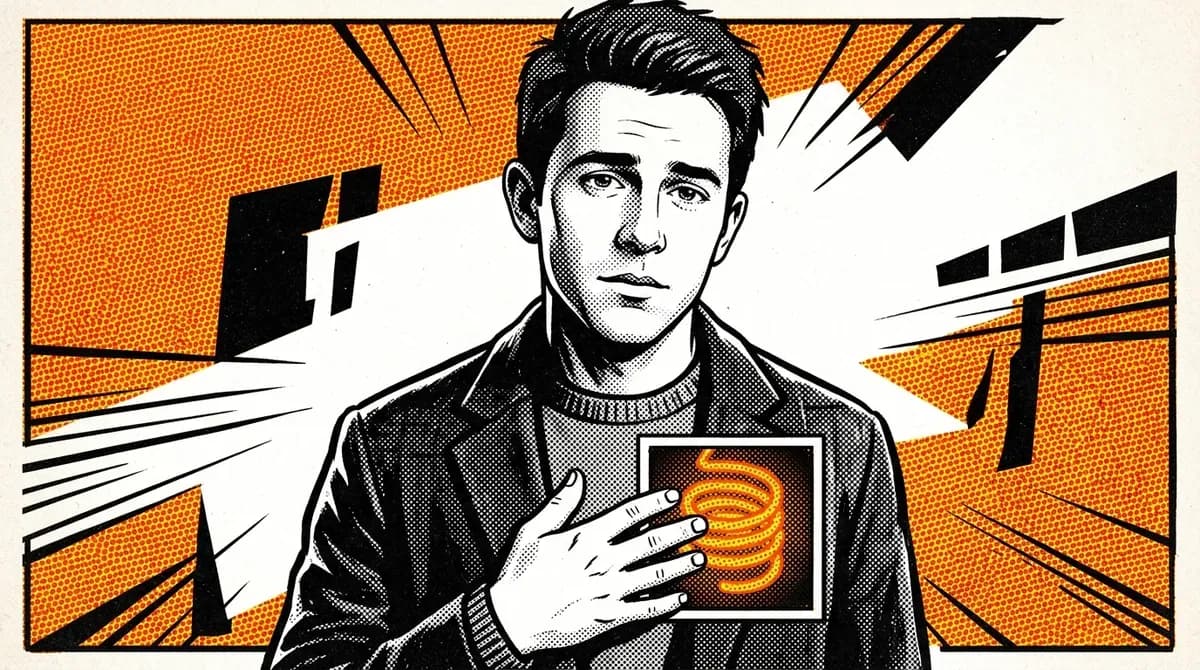
For most of my life, I thought I was just a nice person.
Non-confrontational, agreeable, easy to get along with. When someone pushed, I folded. When conflict started brewing, I'd smooth it over or disappear from it entirely. I told myself this was simply who I was. Not an asshole. That was the internal justification, and I believed it completely.
It took me embarrassingly long to see the truth: I wasn't being nice. I was being a coward.
Looking back, the evidence was everywhere. I was single most of the time, passively hoping some woman would more or less stumble into my life because I didn't have the courage to go after what I actually wanted. In the relationships I did have, I never expressed my needs — which left my partners feeling confused and uncertain. I wasn't giving them anything real to hold onto. When I started building a business and managing people, I had to learn this lesson the hard way: a leader who doesn't give clear direction isn't being polite. He's failing his team.
All that "niceness" wasn't serving me. And it wasn't serving the people around me either.
The painful thing was realizing that what I had framed as a virtue was actually an absence. An absence of honesty. An absence of courage.
TL;DR: Most men confuse people-pleasing with good character. Two questions cut through the BS Am I being honest? and Am I being courageous? Asking these two questions is the easiest way for you to start building real integrity.
Any man who wants to avoid the nice guy trap and develop some backbone needs to ask himself these 2 questions:
Question Nr. 1: "Am I Being Honest?"
This seems really straight-forward. And it is.
But there's also more depth to this question than you might think. So if you're response to "Am I being honest" is something like "sure, I guess..." it's time to look deeper.
Here are some lies you're almost certainly telling:
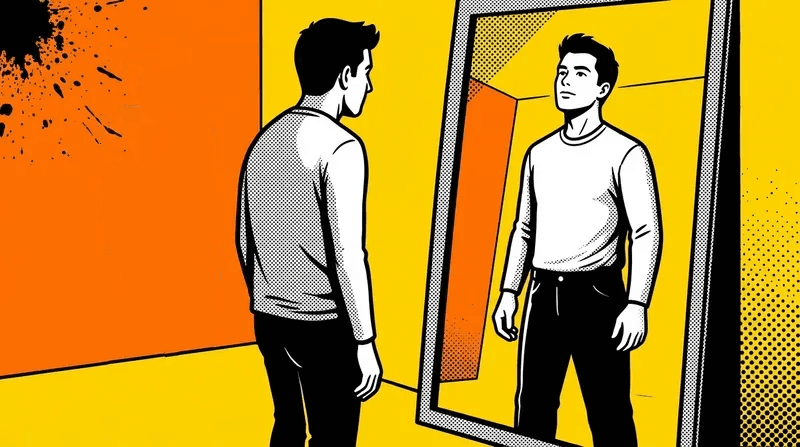
White Lies and Half-Truths
Look most people are honest-ish. We're not going around being bold faced liers and cunning, mustache twirling deceivers.
But how often do you tell small, harmless lies? How often is the small lie so automatic that you barely realize it?
"Yeah, I'm good." "I'll definitely do that." "Yeah I worked on the assignment and it's almost done."
Most of us tell dozens of small lies before noon without batting an eye.
I've got bad news for you: each small lie you tell creates a little bit of tension in your body. It's almost imperceptible when the lie is minor, but it's still real.
Part of you is registering the dishonesty. Part of you is noticing: "I keep saying things that aren't true. I wouldn't trust someone like me..."
Lying to Yourself
This one is genuinely strange when you slow down to look at it. You're both the liar and the recipient of the lie. So who exactly is supposed to benefit?
You promised yourself you'd go to the gym. The time comes and you tell yourself you're too tired, too busy, you'll go tomorrow when conditions are better. But are you actually too tired? Or are you being lazy and building a story around it to make it feel acceptable?
And will you actually go tomorrow? Or are you bullshitting yourself right now?
Self-deception is the gap between who you think you are and who your actual choices reveal you to be. Every flattering story you tell yourself about your own behavior widens that gap. This connects to how your daily behavior is constantly voting for a particular version of your identity — whether or not you're paying attention.
Dishonest Behavior
Here's where it gets more confronting. Dishonest behavior doesn't require saying anything false at all.
You're not lying out loud, but you're not being honest.
I have to confess: I used to do this all the time. I lived my life in such a way that the words I spoke were technically true but I was not being honest in my behavior.
Makes me cringe when I think about it now. You are probably being dishonest in this way too.
For example:
Saying yes when you mean no. Letting people walk all over you while calling it easygoing. Not speaking up when something matters to you.
If you've ever found yourself doing this, the best and fastest antidote is The Friend Zone Challenge.
Or more specifically:
You see someone you're attracted to. You feel that pull... and you do nothing. The moment passes. There's a form of self-betrayal in that. You had an honest impulse and you overrode it. I lived this version for years. Waiting, hoping, avoiding, telling myself stories about why this wasn't the right moment.
Or consider the sadly common "orbiter friend" dynamic: a man is in a woman's life as her friend, showing up, doing favors, being reliably available...
...while secretly wanting something different and never saying so.
Just quietly (pathetically) hoping she'll eventually want him in a romantic/sexual way.
Think about it from her perspective and you can immediately tell how gross it feels to be on the receiving end of this kind of deception.
Your Body Knows Before You Do
Your body has been tracking all of this the entire time.
I challenge you to notice it, next time you lie (even if it's only in a tiny way): there's a physical response. A subtle constriction somewhere in your chest or throat. Almost imperceptible when the lie is minor. But you're doing this dozens of times a day, and it accumulates. That buildup has an effect on how you feel in your own skin by the end of it.
The opposite is just as real. When you're honest, when you say what you actually mean, when you take the action that reflects what you genuinely want, there's an expansion. A sense of more room in your body.
You feel more solid. And other people also perceive you as more solid.
Pay attention to this. Your nervous system is giving you real-time feedback on whether you're living in integrity. Learning to read that signal is one of the most useful things I've encountered. It's the same capacity that makes sitting with difficult internal states without immediately escaping them possible at all.
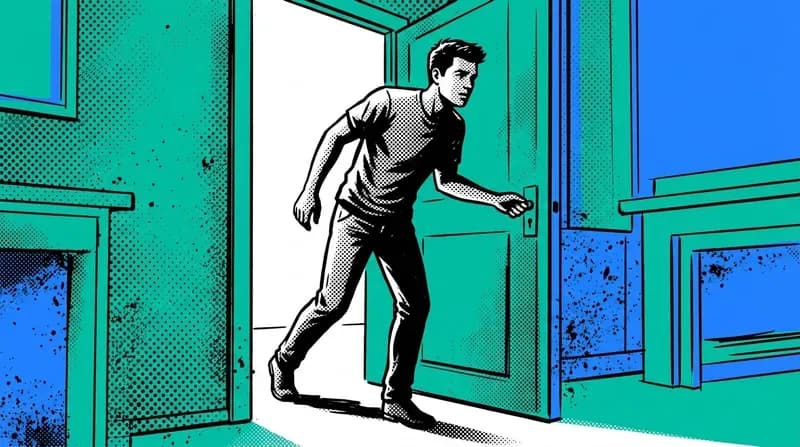
Question Nr. 2: "Am I Being Courageous?"
Courage is the right hand of honesty.
Try this: examine your life and find all the places where you're being dishonest. And then ask yourself: why?
Why the small deceptions? Why the unexpressed desires? Why the yes when you meant no?
9 times out of 10, the answer is cowardice. Not dramatic, trembling in your boots kind of cowardice.
Just a little fear which you immediately shrink away from. Making the comfortable choice even when you know you're betraying yourself by doing so.
That was the reality I had to sit with about my own nice guy years. I wasn't passive because of my personality. I was passive because being direct felt dangerous. Standing up for what I wanted felt dangerous. Being seen as someone who wanted specific things and went after them felt dangerous. It felt like that would be too selfish. Too much.
Years of pain taught me one thing: you cannot betray yourself without also betraying those around you.
What Masculine Energy Actually Feels Like
"Masculine energy" or "masculinity" are terms that get thrown around a lot. But what do they actually mean?
Most men associate masculinity with a certain look, a certain confidence, a certain way of taking up space. "To be masculine is to look like this, to walk with this kind of swagger, to be big and muscly..."
Those can be expressions of it. But they're not the thing itself.
Here's what it actually feels like from the inside: you feel what the honest thing, the right thing to do is. And you're scared. And then you do it anyway.
That specific sensation, acting despite the fear, moving toward what's true when retreating would be easier, that's what being in your masculine actually feels like. Not the result of the action. The act itself.
It doesn't require a particular build. It doesn't require a particular level of confidence. It requires a willingness in that specific moment.
The more you engage with the world (the real world, outside, away from screens) the more this becomes relevant.
Approaching someone you're genuinely drawn to. Having a difficult conversation instead of letting something fester over weeks. Telling your employer what you're actually worth. Giving your employees clear, unambiguous direction. Putting real creative work into the world and accepting that some people won't like it.
This is also what I found at the core of the framework for becoming a man you actually respect: the man you're trying to become isn't perfect. He's someone who takes the courageous action available to him today.

Why Starting Small Beats the Grand Gesture
The natural reaction to realising you've been conflict-avoidant and dishonest for years is to want to compensate immediately. Do something dramatic. Have the massive confrontation. Make the grand declaration. Take the enormous risk. Prove to yourself and everyone else that you're different now.
This almost never works. You reach too far, you stumble, you feel exposed and embarrassed, and the momentum dies before it had a chance to build.
The better approach is also the less exciting one: start small. The smallest white lie you would have told today — don't. The gym session you were about to skip while telling yourself a story — go. The mildly uncomfortable conversation you've been avoiding for a week — have it.
Small courageous acts compound. They produce a felt sense in your body that is the direct opposite of the constriction dishonesty creates. That feeling makes the next honest act slightly easier. Then the one after that.
Starting small is also the realistic entry point into the deeper work underneath all of this. Because the avoidance rarely shows up on its own. The healing process tends to reveal what the avoidance was actually protecting — and that's where the real shift happens.
Using the Two Questions as a Daily Practice
The reason these questions are useful is that they're specific enough to apply in real time, not just in retrospect.
The questions can act like a compass for you to navigate life by.
Am I being honest here? Run it against all three levels: what you're saying out loud, what you're telling yourself, and how you're actually behaving.
Am I being courageous here? Ask what you would do differently if the fear wasn't there.
You can apply both of them to anything. How you start your morning. How you respond to a difficult email. Whether you approach the person you're interested in or invent a reason not to. How you show up in a meeting when you disagree. Whether you put your real work out or keep polishing it until it disappears.
And you can always course-correct. There's no single moment where you've permanently missed. You can ask these questions at any point and steer yourself slightly closer to the man you want to be.
Where, right now, would honest answers to both of them be uncomfortable?
About the Author
Shane is a serial entrepreneur with a long-standing obsession for personal development and life optimization. He has a habit of buying more books than he can ever read. During his childhood his worldview was significantly influenced by Jackie Chan movies, the Vorkosigan Saga and the writings of Miyamoto Musashi.

Shane Melaugh
There is a Better Way to Quit.
Stop relying on sheer willpower. Learn the step-by-step psychological framework that makes quitting inevitable.